
Last updated October 16, 2026
 AC repair
 Furnace & heating
 Heat pumps
 Ductless mini splits
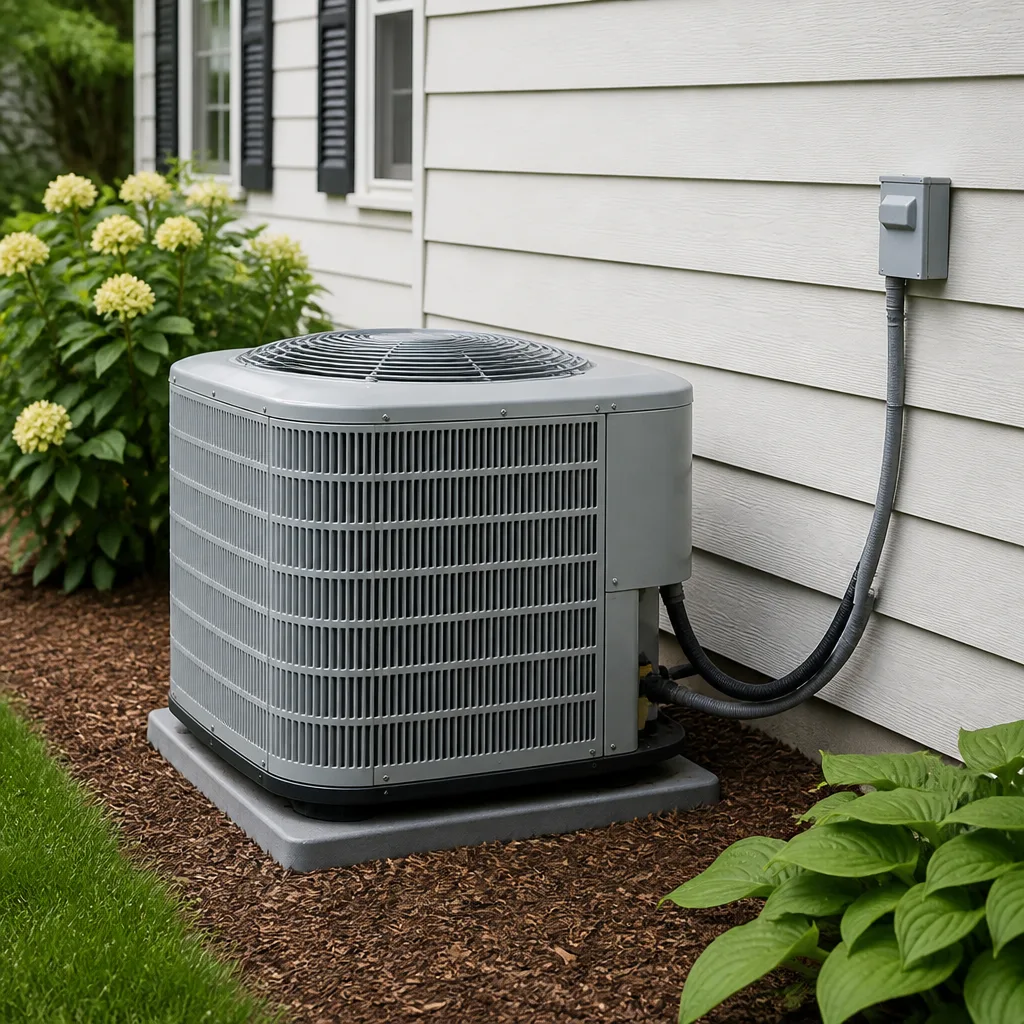 Carrier
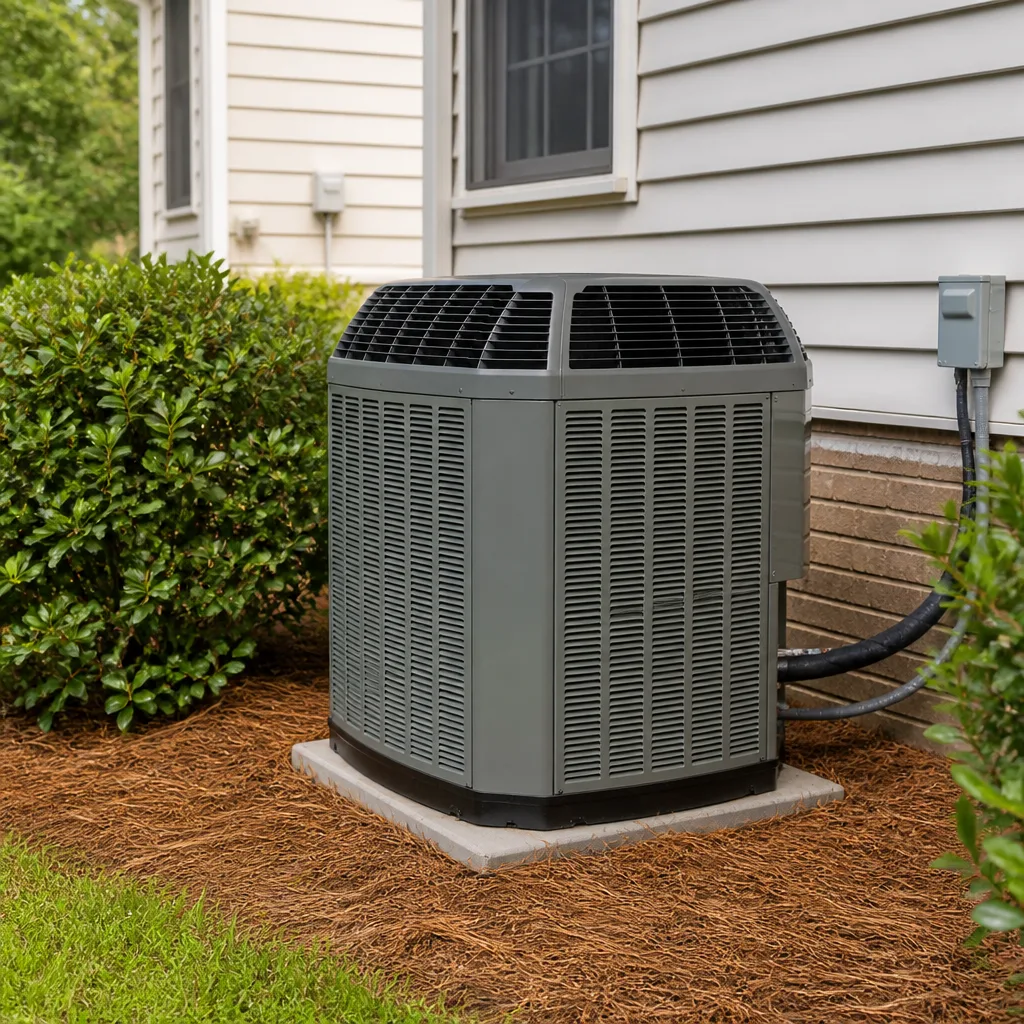 Trane
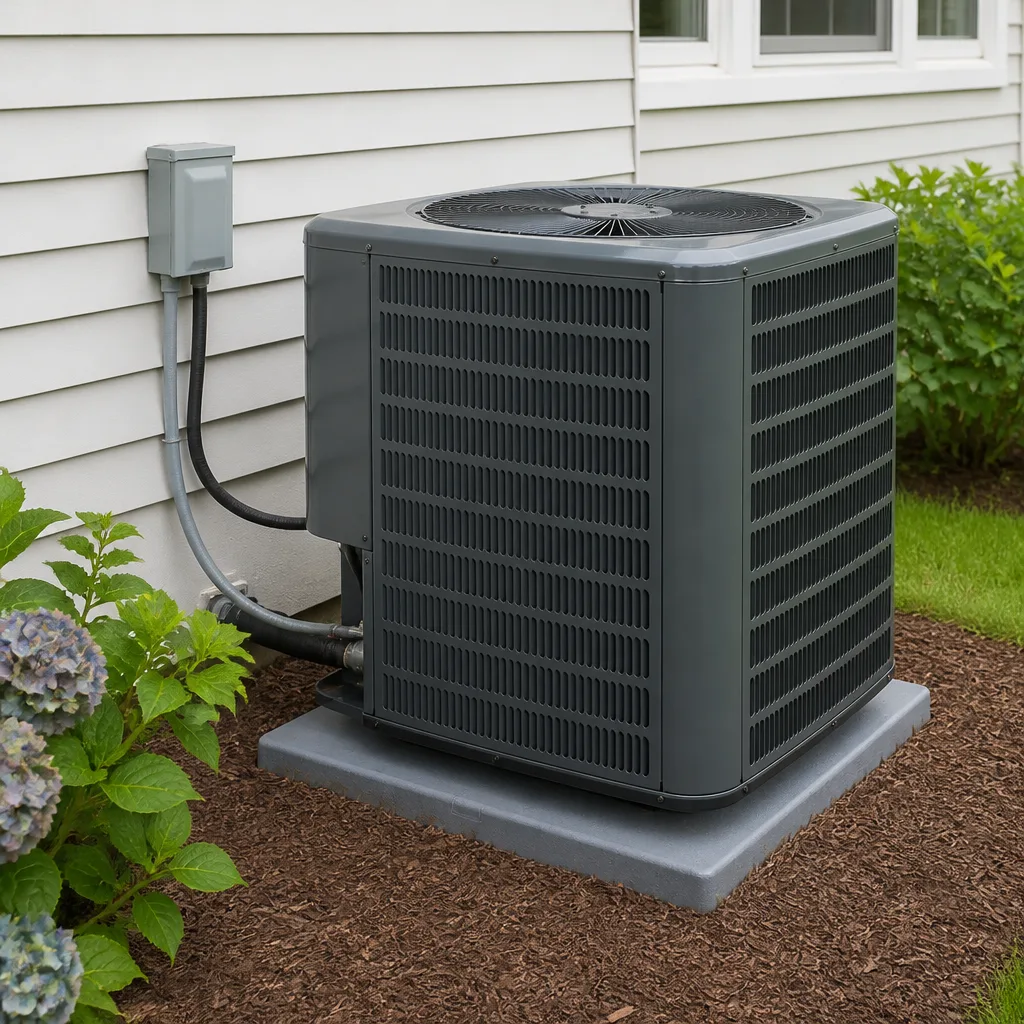 Goodman
Seasonal tune-up and full diagnostic on your Carrier, Trane, or Goodman system - readings shown to you before any repair is proposed
Diagnosis first, numbers second - you approve the repair price before a single part goes in.
Get your free estimateAC Repair Maintenance Checklist for Tampa Homeowners
A clogged condensate drain line is the single most common AC service call we see in Tampa, not a refrigerant leak or a failed capacitor. The reason is simple math: a Florida air conditioning system pulls so much moisture from the air that a single day’s condensate would fill a kitchen sink. Most national checklists mention the drain line once, as an afterthought. This guide sequences every maintenance task around Tampa’s actual calendar, including the humidity-specific checks that prevent the mold and coil freeze problems most common in Florida systems. For a deeper dive, see The Complete Guide to HVAC in Tampa. You’ll learn what to do each month, what to leave to a licensed technician, and how to document your system’s health so you’re never guessing.
Styles & brands we work with
Quick Answer
The most important AC maintenance tasks for Tampa homeowners are clearing the condensate drain line monthly during summer, replacing the air filter every 30 to 60 days, and scheduling a professional tune-up in February before the heat arrives. A second inspection in October, after hurricane season, catches issues that heavy rain and wind leave behind. Skipping these three tasks is what leads to most emergency AC Repair services calls in Tampa.
Table of Contents
- Why Tampa Needs a Different Maintenance Calendar
- The Condensate Drain Line: Your Most Important Monthly Check
- Air Filter Replacement: What Tampa’s Air Actually Does to Your Filter
- The Month-by-Month Tampa Maintenance Calendar
- Coil Cleaning Frequency for Tampa Homes
- What a Technician Should Hand You After a Maintenance Visit
- Three Maintenance Items That Void Warranties if Skipped
- What You Can Safely Handle vs. What Requires a Licensed Technician
- Common Mistakes to Avoid
- When to Call a Professional
- Frequently Asked Questions
- The Bottom Line
Why Tampa Needs a Different Maintenance Calendar
National AC checklists assume four seasons. They tell you to schedule a tune-up in spring and fall, change your filter quarterly, and check your system before the first freeze. That advice fails in Tampa for one specific reason: your air conditioner runs hard for nine to ten months of the year, and the humidity never stops. A system in Tampa accumulates more runtime hours in a single summer than a Chicago system does in three full years. That means parts wear faster, coils foul quicker, and drain lines clog more often.
Our technicians at Meadowsweet Heating and Air Tampa see the same pattern every year. Homeowners who follow a generic checklist end up with frozen evaporator coils in August and water-damaged ceilings in September. The Tampa-specific calendar accounts for three distinct stress periods: the ramp-up in late winter, the peak load months of summer, and the aftermath of hurricane season. Each period requires different attention.
What most guides also miss is the salt air factor. Homes in South Tampa, Westchase, and anywhere within a few miles of Tampa Bay or the Gulf face accelerated corrosion on condenser fins and electrical connections. The maintenance calendar below adjusts for that reality, because a condenser coil that lasts fifteen years in Ohio might need replacement in eight to ten years along Bayshore Boulevard.
The Condensate Drain Line: Your Most Important Monthly Check
Your condensate drain line carries away the water your AC pulls from Tampa’s humid air. That water is a breeding ground for algae, which grows into a gelatinous sludge that blocks the line. When the line blocks, water backs up into the drain pan, overflows, and soaks whatever is underneath it, often drywall, insulation, or the ceiling of the room below. The repair for that damage costs far more than the ten minutes it takes to prevent it.
How to Inspect Your Drain Line in 4 Steps
- Locate the drain line. It’s a PVC pipe, usually 3/4 inch wide, coming off the indoor air handler. You’ll find it near the indoor unit, often in a closet, attic, or garage.
- Check the drain pan. Look for standing water. A small amount is normal after the AC runs. A full pan means the line is already blocked or draining slowly.
- Flush with distilled white vinegar. Pour one cup of distilled white vinegar slowly into the drain line access point, typically a T-shaped fitting with a removable cap. Vinegar kills algae without the harsh chemicals that can damage PVC over time.
- Repeat monthly during summer. From May through October, do this every 30 days. During cooler months, every 60 days is enough.
Early Warning Signs of Algae Blockage
- Water pooling around the base of the indoor unit
- A musty or swampy odor near the air handler
- Gurgling sounds from the drain line while the system runs
- Water stains on the ceiling below an attic unit
- The system shutting off unexpectedly during humid weather
If you catch the blockage early, the vinegar flush usually clears it. If the line is fully blocked, you’ll need a wet/dry vacuum on the drain opening or a professional to blow the line clear. The cost of a professional drain line clearing in Tampa typically runs $75 to $150, which is a fraction of the $800 to $2,500 that ceiling and drywall repair costs when the pan overflows.
Air Filter Replacement: What Tampa’s Air Actually Does to Your Filter
The standard advice is to change your air filter every 90 days. In Tampa, that advice falls short for most homes. The combination of year-round AC runtime, high pollen counts, and the fine dust that gets tracked in from Florida’s sandy soil means a one-inch filter is often clogged by day 45. A clogged filter is more than a comfort problem: it forces the blower motor to work harder, raises your electric bill, and in severe cases causes the evaporator coil to freeze because airflow drops too low.
Here’s the reality for different Tampa households:
- Homes without pets, no carpet: Replace the filter every 60 days.
- Homes with one pet: Replace every 45 days during summer, every 60 days in winter.
- Homes with two or more pets or someone with allergies: Replace every 30 days, especially during oak and grass pollen season from February through April.
- Homes near construction, on unpaved roads, or within a mile of the coast: Check the filter at day 30. Construction dust and salt-laden air clog filters faster than manufacturer guidelines account for.
The filter’s MERV rating matters too. A MERV 8 filter catches pet dander and most pollen. A MERV 11 or 13 catches more allergens but restricts airflow on some older systems. If you’re unsure what your system can handle, ask a technician during your next tune-up. Putting a high-MERV filter into a system designed for MERV 8 can do more harm than good. We service nine major brands including Carrier, Trane, and Lennox, and older units from Goodman and Rheem are particularly sensitive to restrictive filters.
The Month-by-Month Tampa Maintenance Calendar
This calendar replaces the generic spring/fall split with tasks timed to Tampa’s actual weather patterns. We’ve ordered it chronologically, starting with the most important preparation window.
February: Schedule Your Pre-Summer Tune-Up
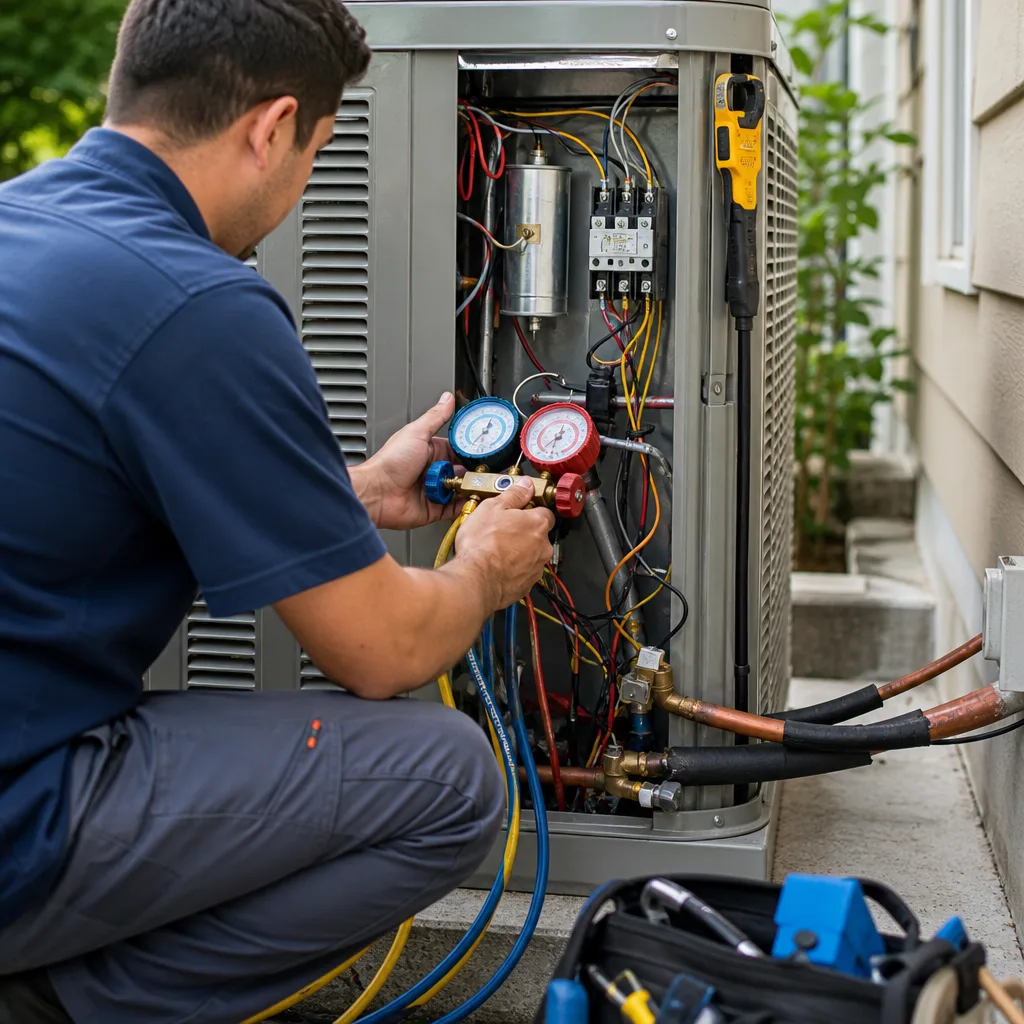
February is the single most important month for AC maintenance in Tampa. The weather is mild, technicians have open schedules, and any repair you need is completed before the first 90-degree day hits. By March, the queue fills up. By April, you’re calling during the first heat wave alongside everyone else. A professional tune-up in February typically costs $89 to $150 in Tampa and includes a coil cleaning, drain line flush, refrigerant pressure check, and electrical inspection. For a full breakdown of what a tune-up includes, see our guide to AC Repair in Tampa.
March: Replace the Filter and Check the Thermostat
Swap in a fresh filter, then test your thermostat for accuracy. Set it five degrees below room temperature and confirm the system kicks on and reaches the set point. If your thermostat is more than eight years old, consider a programmable or smart model. Tampa’s humidity means you benefit from a thermostat that runs the fan in “auto” mode rather than “on” mode, which recirculates moisture that the coil just removed. We’ve replaced York thermostats in South Tampa homes that were still running the older mercury-bulb style, which drifts out of calibration by three to five degrees over time.
April: Inspect the Outdoor Unit and Clear Debris
Walk around your condenser unit. Check for leaves, grass clippings, and oak pollen packed into the fins. Use a garden hose with a gentle spray to rinse the fins from the inside out, never a pressure washer, which bends the delicate aluminum. Trim any vegetation back at least two feet from the unit. Tampa’s summer growth is aggressive; a clear April inspection keeps the system breathing through the peak months. Also confirm the unit sits level. After a year of rain and shifting soil, many Tampa condensers tilt slightly, which puts uneven wear on the compressor.
May: Start Monthly Drain Line Flushes
This is the month to begin the monthly distilled vinegar flush described above. May is also when the daily condensate volume increases sharply as humidity climbs. If you only do one thing all summer besides changing the filter, make it the drain line flush.
June through September: Monthly Filter Checks, Drain Checks, and Visual Inspections
During peak heat, your monthly routine is simple and consistent: check the filter, flush the drain line, and visually inspect the indoor and outdoor units. Look for ice on the refrigerant lines, unusual noises, water around the indoor unit, and any change in cooling performance. If you notice the system running constantly but not reaching the set temperature, that’s an efficiency or capacity problem that needs attention before August’s heat fully loads the system.
October: Post-Hurricane-Season Inspection
Hurricane season officially ends November 30, but October is the right time for a post-season check in Tampa. By then, the worst of the storms and the daily thunderstorms have typically passed. The concerns are specific: water intrusion into the electrical compartment, debris lodged in the condenser fins from wind, and shifting of the outdoor unit from saturated ground. This is also the time to pour a cup of vinegar down the drain line one more time and to check the drain line’s outdoor termination point for ant nests or mud dauber wasps, both of which love a damp, quiet pipe. A fall inspection typically costs $75 to $120 in Tampa and can prevent a failure during the first cold snap, when you switch to heat and discover an issue that developed unnoticed.
Coil Cleaning Frequency for Tampa Homes
The standard industry recommendation is to clean the evaporator coil once a year. But Tampa conditions push some homes past that interval. We’ve pulled coils in Carrollwood and New Tampa homes that were almost completely matted with a gray, felt-like layer of dust, pet hair, and pollen after only eight months. The result is the same every time: poor cooling, higher bills, and a coil that freezes over in the middle of a Tampa August.
Here’s how to adjust coil cleaning frequency for your specific household:
- Homes without pets, standard suburban lot: Annual coil cleaning is sufficient if the filter is changed on schedule.
- Homes with one or more indoor pets: Every six months. Dog and cat hair bypass filters in surprising amounts and cling to the wet evaporator coil surface.
- Homes within two miles of the Gulf coast or Tampa Bay: Every six months. Salt in the air attacks the condenser coil on the outside unit and accelerates corrosion that reduces heat transfer.
- Homes near active construction, major roadways, or unpaved driveways: Every six to eight months. Construction dust in particular is extremely fine and finds its way into the coil matrix.
Coil cleaning is not a DIY job for most homeowners. The evaporator coil sits inside the air handler and requires disassembly to access. The condenser coil can be rinsed from the outside, but a proper cleaning involves removing the outer cabinet and using a specific foaming cleaner. If you’re not comfortable with electrical disconnects, leave this to a professional. The cost of a coil cleaning as part of a maintenance visit in Tampa is typically included in the tune-up price we quoted earlier.
What a Technician Should Hand You After a Maintenance Visit
Most Tampa homeowners get a one-page checklist with checkmarks and a signature after a tune-up. That’s not enough. A checkmark tells you a task was done. It doesn’t tell you whether the result was good, bad, or borderline. Here’s what a thorough maintenance visit should produce, and what we document on every tune-up at Meadowsweet Heating and Air Tampa.
The Four Documents Worth Keeping
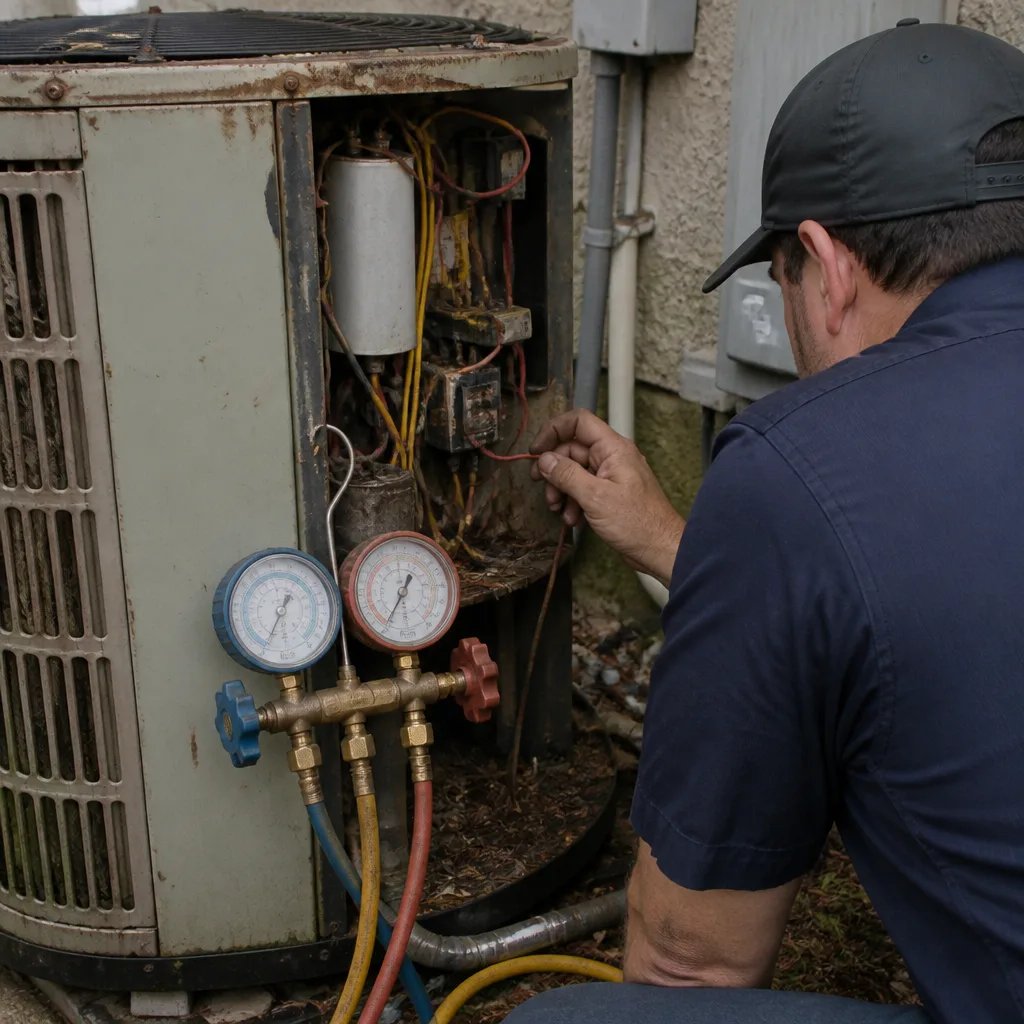
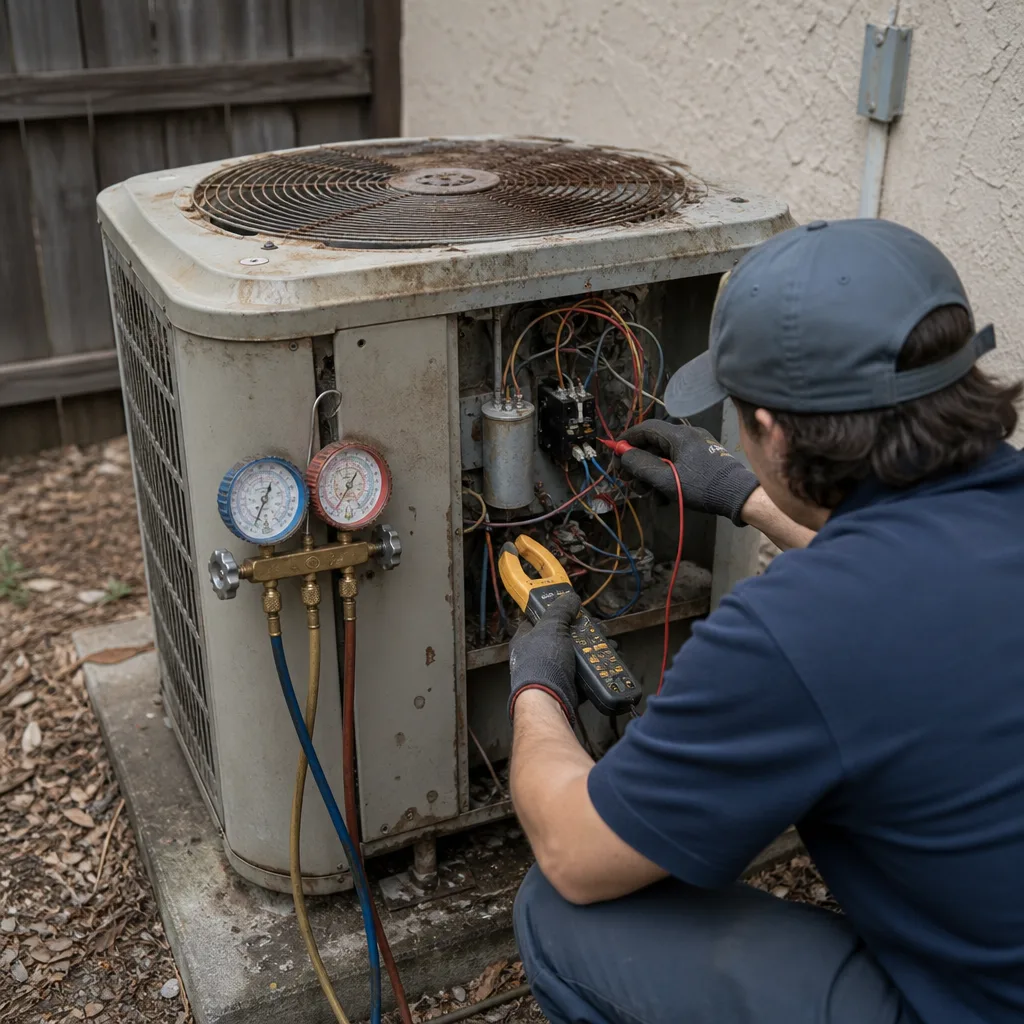
- Capacitor readings. The capacitor is the component that starts your compressor and fan motors. It’s measured in microfarads, and every capacitor has a rated value printed on its side. A healthy capacitor reads within 6% of its rating. A reading 10% to 20% below rating means the capacitor is failing and will eventually prevent the system from starting. Without a numeric reading, you can’t make this decision yourself.
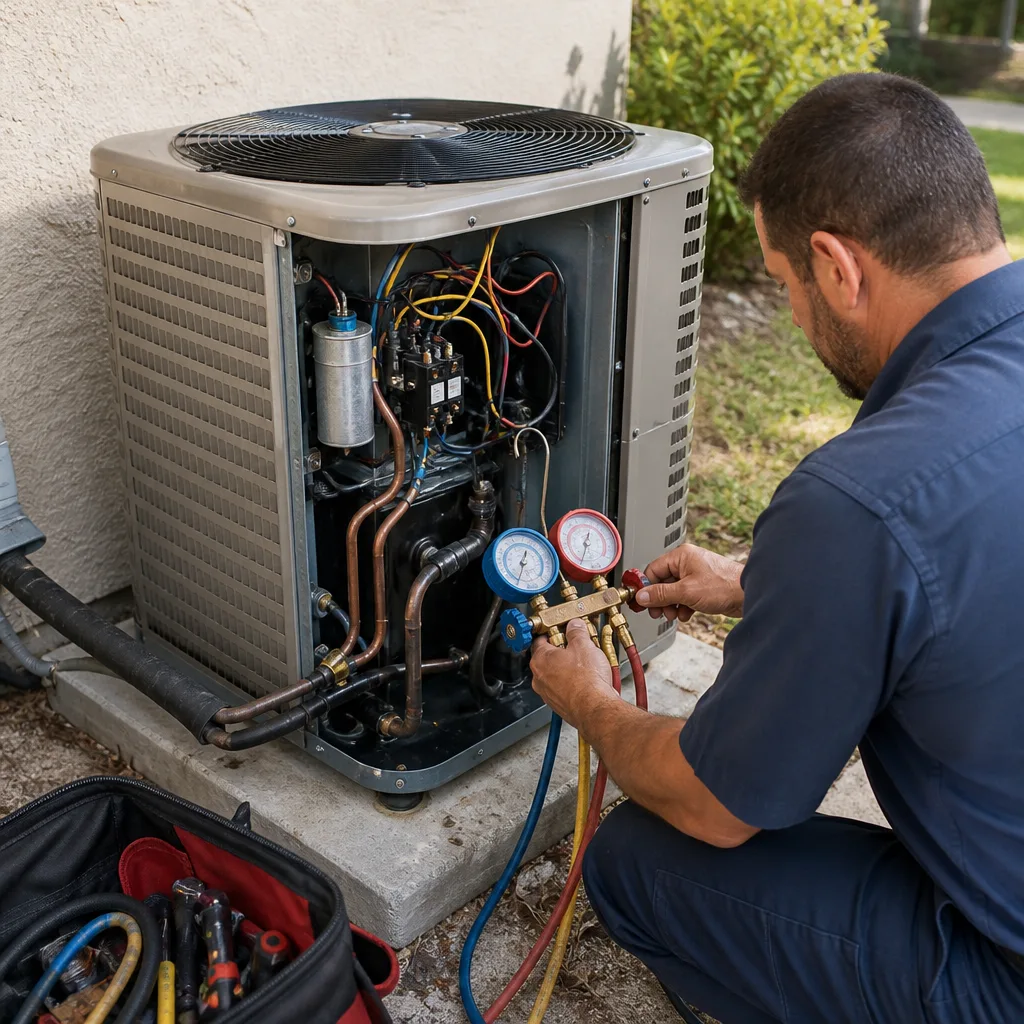
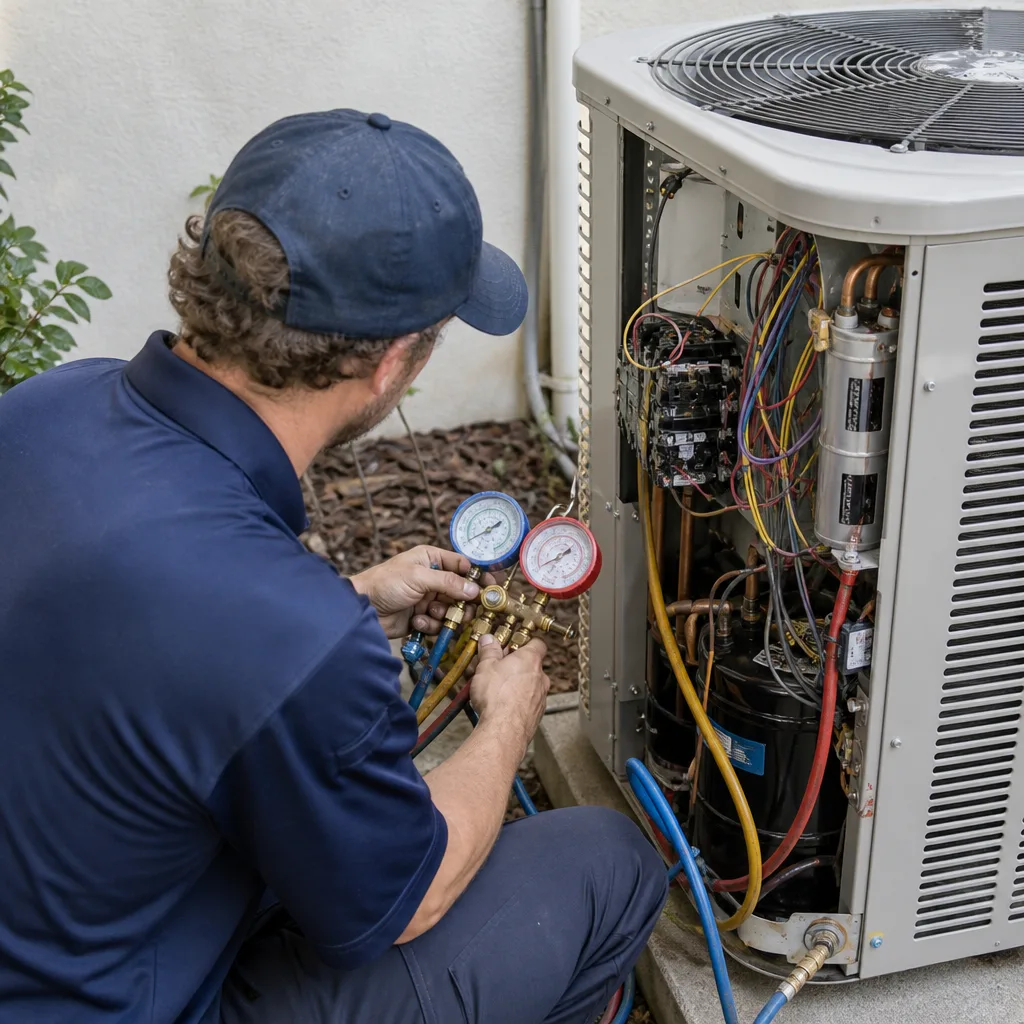
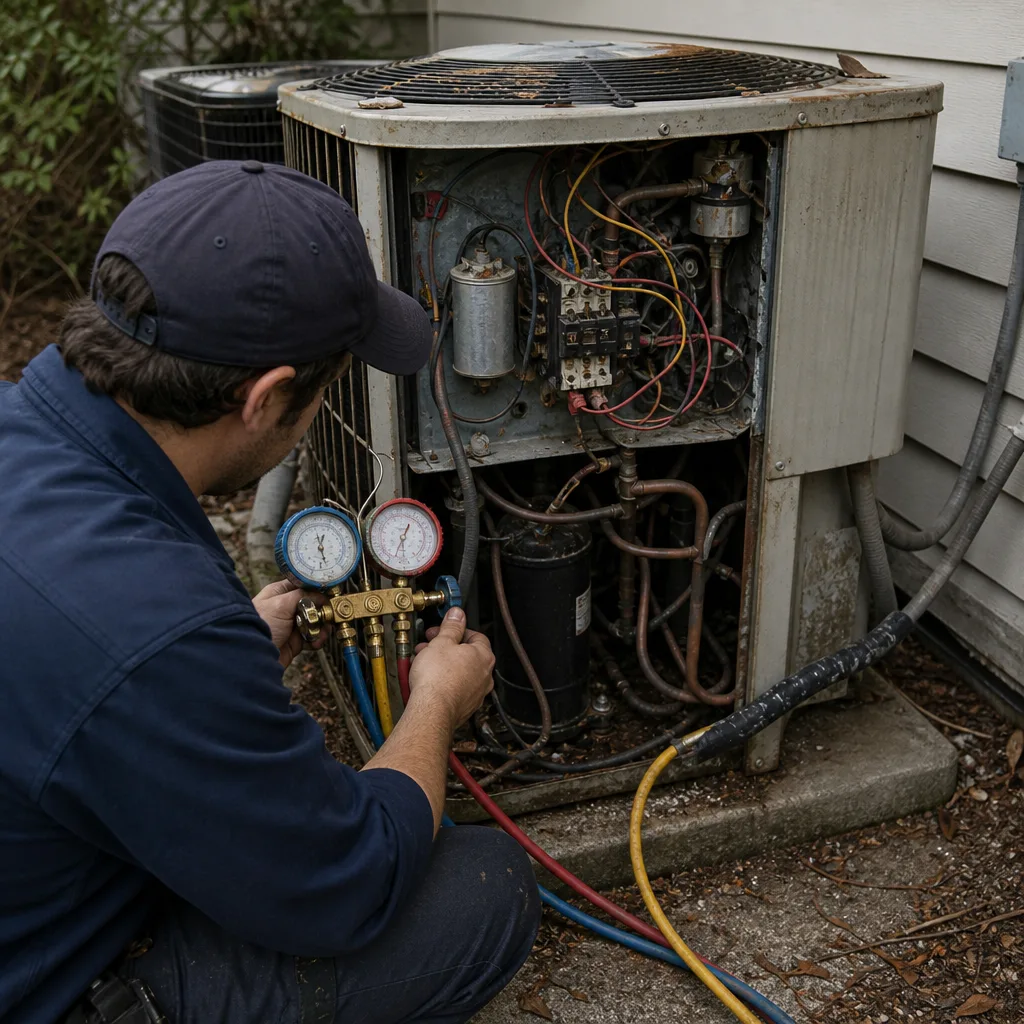
- Refrigerant pressure log. The technician should record both the high-side and low-side pressures, along with the outdoor temperature at the time of the reading. This log matters because you can compare it year over year. A slow decline in pressure over two or three years indicates a small leak that should be located before it becomes a full refrigerant loss.
- Static pressure measurement. Static pressure measures the resistance to airflow in your duct system. Normal range is 0.5 inches of water column. Readings above 0.8 indicate restrictive ductwork, a clogged filter, or a coil that’s restricting airflow. This is the most under-measured number in residential HVAC, and it explains many cases where a system is “working fine” but a room never cools properly.
- Temperature split reading. The technician should measure the supply air temperature and the return air temperature, then record the difference. A properly functioning system shows a split of 15 to 20 degrees. A split below 14 degrees indicates a problem with airflow, refrigerant charge, or coil condition.
These four data points turn a vague tune-up into a documented health record for your system. If your current HVAC company doesn’t provide them, ask. If they won’t, consider whether their tune-up is actually a diagnostic or just a filter change with extra steps. Our team has served Tampa homeowners since 2004 as part of the Cedarwell family of companies, and we’ve always believed that documentation is what separates a real tune-up from a drive-by.
Three Maintenance Items That Void Warranties if Skipped
Manufacturer warranties on air conditioning equipment are conditional. They cover defects in materials and workmanship, but they specifically exclude failures caused by lack of maintenance. Here are the three items that most frequently come up in denied warranty claims we’ve seen in Tampa.
1. Documented Filter Changes
Manufacturers like Carrier, Trane, and Lennox all include language requiring “regular filter replacement” as a condition of warranty coverage. If a blower motor fails and the service history shows no filter changes for two years, the manufacturer can deny the claim as neglect. Keep receipts for your filters or a simple log of replacement dates.
2. Annual Professional Maintenance
Many extended warranties and some manufacturer warranties require proof of annual professional maintenance. A log with the technician’s name, company, date, and what was performed is sufficient. If you buy a home in Tampa with an existing system, track down the maintenance records as part of the purchase process. Without them, you may be inheriting a warranty that’s already void.
3. Coil Cleaning
Evaporator and condenser coils that fail due to corrosion from caked-on debris are considered neglected, not defective. This is especially relevant for coastal Tampa homes where salt and organic matter accelerate coil deterioration. Annual coil cleaning, documented, protects your warranty position on a $2,000 to $4,000 coil replacement.
For a full picture of what a repair might cost you out of warranty, see our AC Repair in Tampa guide. And if your system is at the point where maintenance no longer makes financial sense, read about AC Installation in Tampa to understand your replacement options.
What You Can Safely Handle vs. What Requires a Licensed Technician
There’s a line between homeowner maintenance and work that belongs in the hands of a licensed HVAC technician. Crossing that line in either direction creates problems. Here’s a clear breakdown for Tampa homeowners.
Safe for Homeowners
- Air filter replacement: The single most important DIY task, and it takes two minutes.
- Condensate drain line flushing with vinegar: Safe, effective, and the best prevention you can do monthly.
- Outdoor unit debris clearing: Removing leaves, grass, and vegetation from around the condenser, plus a gentle hose rinse from the outside.
- Thermostat battery replacement and programming: No risk to the system.
- Visual inspections: Looking for ice, water, unusual sounds, or visible damage.
- Any refrigerant handling: Adding, recovering, or checking refrigerant requires EPA Section 608 certification under federal law, not just Florida code. Never let an unlicensed individual touch refrigerant lines.
- Electrical work inside the air handler or condenser: Capacitors hold a charge even when the power is off. A discharged capacitor without proper handling can cause serious injury.
- Coil removal or deep cleaning: Removing the evaporator coil requires de-brazing refrigerant lines or careful disassembly inside the cabinet.
- Duct modification or sealing: Duct work involves airflow calculations and proper sealing materials. Improper duct modifications reduce efficiency and can create moisture problems in Florida’s humidity.
- Closing too many supply vents in unused rooms. Tampa homeowners often close vents in guest bedrooms to direct more air elsewhere. This increases static pressure, reduces overall airflow, and can freeze the evaporator coil. Your system was designed for a specific airflow volume; closing vents disrupts that design.
- Setting the thermostat below 70 degrees during peak heat. When the outdoor temperature climbs past 95 degrees, a system set to 68 runs constantly and may not reach the target. This accelerates wear without improving comfort. Set it to 75 to 78 and use ceiling fans to move air.
- Using bleach in the condensate drain line. Bleach is corrosive to PVC over time and can damage the drain pan. Distilled vinegar is the safe and effective choice.
- Planting shrubs or installing privacy fencing too close to the condenser. The unit needs at least two feet of clearance on all sides for proper airflow. Tampa backyards with dense landscaping often suffocate the condenser, which raises head pressure and shortens compressor life.
- Skipping maintenance because the system “feels fine.” Most catastrophic failures in Tampa occur in systems that gave no warning signs. Regular maintenance catches the slow declines, like capacitor degradation and refrigerant micro-leaks, before they become August emergencies.
- Using a pressure washer on the condenser coil. The high pressure bends the aluminum fins flat, permanently restricting airflow. A garden hose with normal pressure is all you need for an exterior rinse.
- Running the fan in “on” mode during summer. Continuous fan operation recirculates the moisture your coil just removed, which makes the indoors feel muggier and can contribute to mold growth in the ductwork. Use “auto” mode during cooling season.
Leave to a Licensed Technician
The practical takeaway: if the task involves the electrical, refrigerant, or combustion portions of the system, it’s a professional job. If it involves air flow, water drainage, or observation, you can handle it. Our Meadowsweet Heating and Air Tampa home page outlines the full scope of what we service and how we approach each job.
Common Mistakes to Avoid
When to Call a Professional
Some situations should never wait for the next maintenance visit. Call a licensed technician if you notice ice forming on the refrigerant lines or the indoor coil, water pooling around the indoor unit, a burning smell from the vents, a grinding or screeching sound from the outdoor unit, or cooling that has noticeably declined over a week or less. Any of these indicates a problem that maintenance won’t fix and that will cause further damage if left alone. Meadowsweet Heating and Air Tampa offers free estimates in Tampa, call (728) 212-0500 and a live person will answer, day or night. Our written price policy means you’ll know the cost before any work begins, and every job is backed by our 365-Day Done Right Promise.
Frequently Asked Questions
Twice a year is the right cadence for Tampa: once in February before the heat arrives, and once in October after the hurricane season stress period. Annual service is the minimum for warranty compliance, but Tampa’s runtime hours and humidity mean a single yearly visit often misses developing problems. Call (728) 212-0500 to schedule either visit, and ask for a written price before any work begins.
A professional tune-up in Tampa typically costs $89 to $150, depending on the system size and the scope of the visit. Drain line clearing as a standalone service runs $75 to $150. Coil cleaning alone typically runs $150 to $300 if done separately from a tune-up. At Meadowsweet Heating and Air Tampa, our written price is provided before any work starts, so there’s no surprise at the end of the visit.
A clogged condensate drain line is the most common AC problem in Tampa, by a wide margin. The volume of moisture a Florida system removes from the air creates the perfect environment for algae growth inside the drain line. Monthly vinegar flushes during summer prevent the vast majority of these clogs.
No, cleaning an evaporator coil is not a safe DIY task for most homeowners. The coil sits inside the air handler and requires disassembly of the cabinet, access to the electrical compartment, and specialized cleaning agents. Attempting this without proper training risks electrical injury, coil damage, and voiding your manufacturer warranty.
Most Florida homeowner’s policies cover sudden water damage from an overflow, but many exclude damage that results from lack of maintenance. If the claim shows evidence of months of slow leakage or algae buildup that could have been prevented with regular maintenance, the claim may be denied. Prevention is significantly cheaper than a ceiling repair and a denied claim.
It’s normal for a system to run in longer cycles during Tampa’s hottest months, but constant operation during the cooler overnight hours indicates a problem. If the system runs continuously through the night and still doesn’t reach the set temperature, you may have a refrigerant issue, an undersized system, or a coil that’s losing capacity. A temperature split test and refrigerant pressure check will identify the cause. Call (728) 212-0500 for a diagnostic visit and a written repair quote.
The Bottom Line
A Tampa AC maintenance routine built around the city’s actual climate looks different from the generic national checklist. Monthly drain line flushes during summer, more frequent filter changes for homes with pets or coastal exposure, a February tune-up before the heat arrives, and an October post-storm inspection are the pillars that keep a Florida system running. Document everything: filter changes, coil cleanings, capacitor readings, and refrigerant logs. Those records protect your warranty and give you a year-over-year picture of system health. For more guides & resources, visit our blog. And when a task crosses into electrical, refrigerant, or combustion territory, call a professional. The cost of proper maintenance in Tampa runs $150 to $300 a year. The cost of neglect is almost always measured in thousands.
If you’re ready to get your system on a Tampa-specific maintenance schedule, Meadowsweet Heating and Air Tampa is here to help. We service all major brands, we answer the phone 24/7, and every visit includes a written price, shoe covers, drop cloths, and a photo of the clean-up before we leave. Call (728) 212-0500 for your free estimate, and we’ll keep your home cool, dry, and comfortable through every Tampa season.
Written by Luis Serrano, Owner at Meadowsweet Heating and Air Tampa, serving Tampa since 2004.
See the difference
 Before
 After
 Before
 After
 Before
 After