
Last updated October 16, 2026
 AC repair
 Furnace & heating
 Heat pumps
 Ductless mini splits
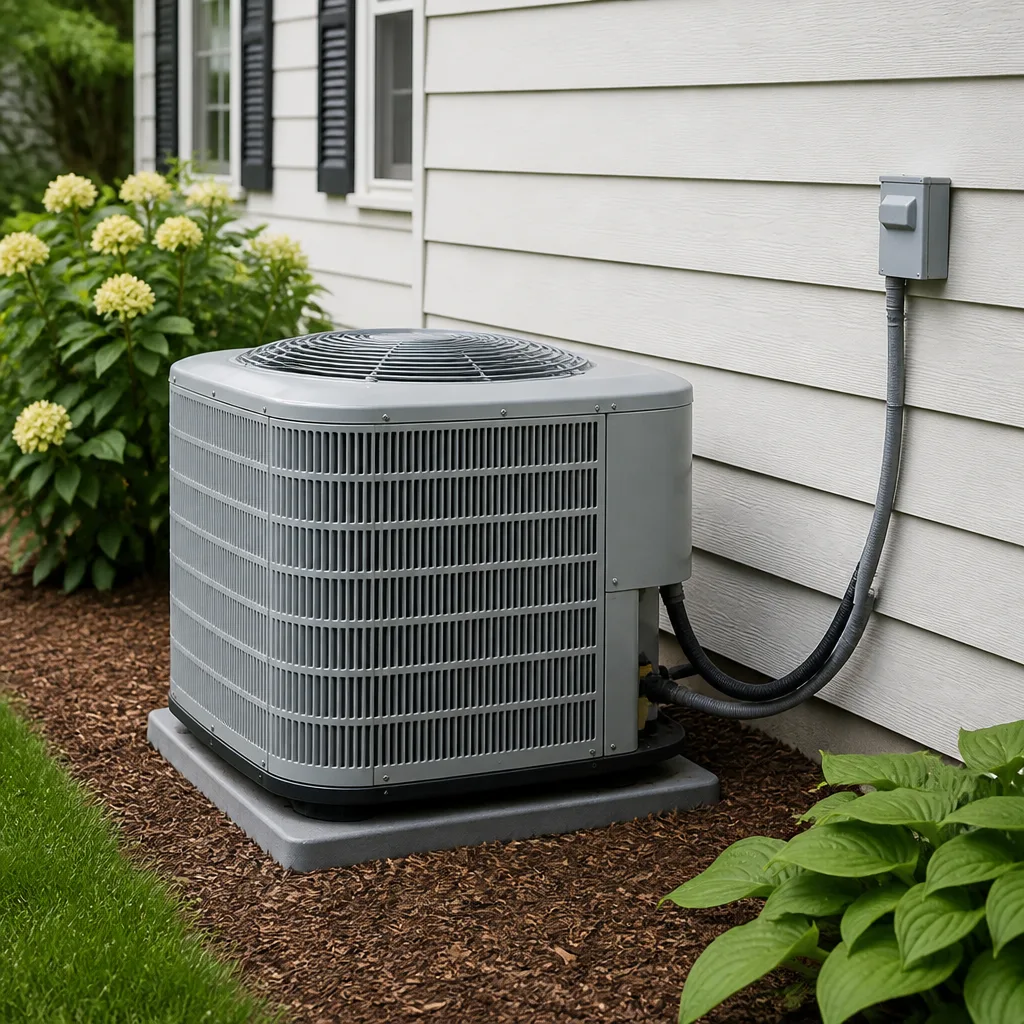 Carrier
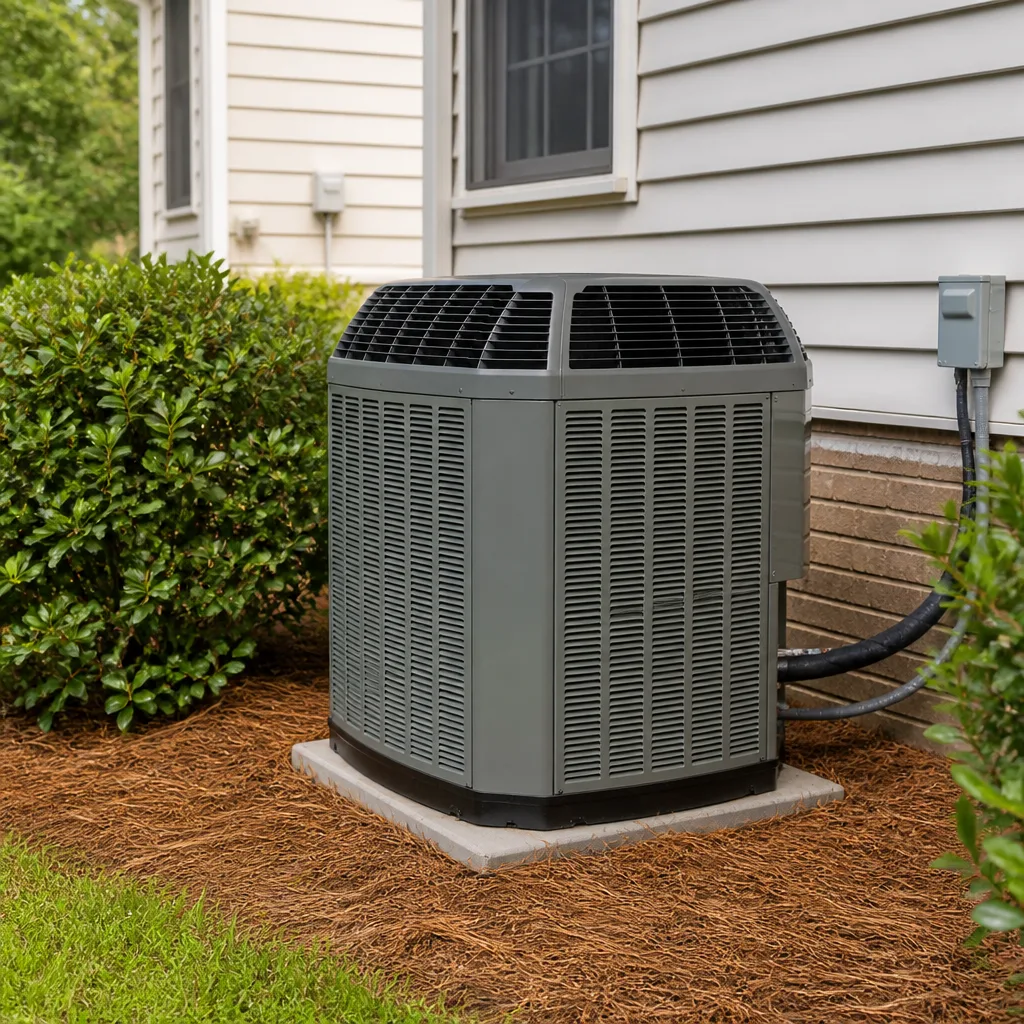 Trane
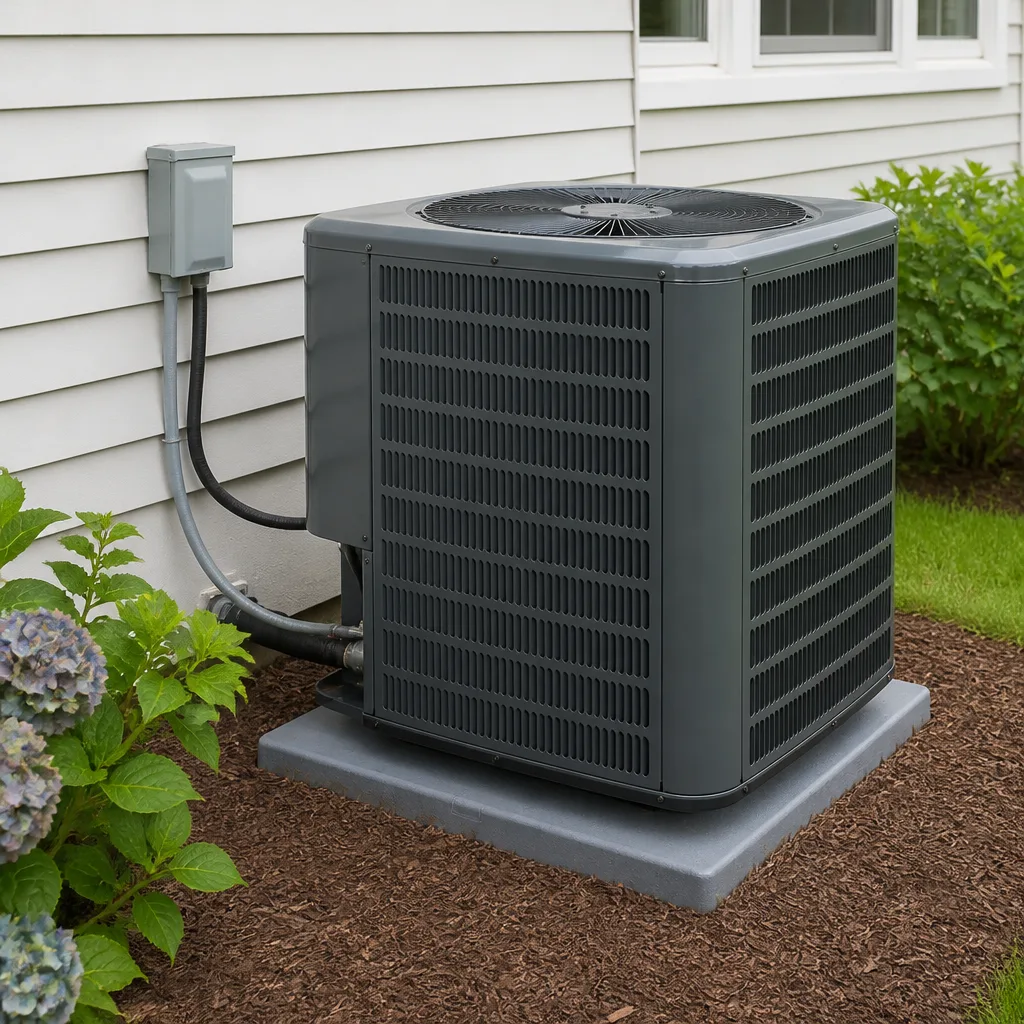 Goodman
Seasonal tune-up and full diagnostic on your Carrier, Trane, or Goodman system - readings shown to you before any repair is proposed
Diagnosis first, numbers second - you approve the repair price before a single part goes in.
Get your free estimateHow to Hire a HVAC Contractor in Tampa: A Step-by-Step Guide
After every major hurricane season, the Florida Department of Business and Professional Regulation sees a measurable spike in HVAC contractor complaints. Not from obvious scammers working out of pickup trucks, but from real-looking companies that pulled no permits, installed equipment incorrectly, and left Tampa homeowners holding warranty-voided systems and county code violations. This guide is a vetting system, not a generic tips list. You’ll learn how to verify a contractor’s Florida license in under 90 seconds, how to check Hillsborough County permits before work starts, and the three questions that expose accountability gaps most companies hope you never ask. If you’re hiring an HVAC contractor in Tampa, this is the process that protects your home, your equipment warranty, and your money.
Quick Answer
To hire an HVAC contractor in Tampa, verify their Florida CAC license on the DBPR public portal, confirm they pull Hillsborough County permits before any work begins, and require a written price proposal that lists equipment model numbers, warranty terms, and cleanup expectations. Skip any contractor who gives only verbal bids, suggests skipping the permit to “save money,” or quotes a price before measuring your home. Then ask three accountability questions: who handles callbacks if the system underperforms, whether the company is the installer of record on the permit, and what the written callback policy says.
Styles & brands we work with
Table of Contents
- Step 1: Verify the Florida CAC License on DBPR (Under 90 Seconds)
- Step 2: Check Hillsborough County Permits Before Work Starts
- Step 3: Demand a Written Price Proposal That Meets Florida Law
- Step 4: Spot Tampa-Specific Red Flags
- Step 5: Ask Three Accountability Questions Before Signing
- Step 6: Protect Your Home During and After the Job
- Step 7: Understand What Your Warranty Actually Covers in Tampa’s Climate
Step 1: Verify the Florida CAC License on DBPR (Under 90 Seconds)
Florida HVAC work is regulated by the Department of Business and Professional Regulation, and anyone performing mechanical work in Tampa needs a Certified Air Conditioning Contractor license, known as a CAC license. The good news: the state makes verification simple. Go to the DBPR’s “Verify a License” portal, select the contractor category, and enter either the license number or the company’s legal name. You’ll see the license status, expiration date, and whether any complaints or disciplinary actions are on file. The whole check takes under 90 seconds, and it’s the single most effective screen against unlicensed operators who flood the Tampa market after storm seasons.
Here’s what each license class allows, because this is where homeowners get misled. A Class A CAC license authorizes the holder to work on systems of any size, including large commercial equipment. A Class B CAC license covers systems up to 25 tons of cooling and 500,000 BTU of heating, which is more than enough for any home in Tampa. Both classes are legally qualified for residential work. What matters more than the class is the status: active, current, and free of serious disciplinary actions. A license that shows “delinquent” or “null and void” means the contractor cannot legally pull permits for your job.
One more thing to check on the same screen: the license holder’s name. The person who signs your contract should be the person whose name appears on that DBPR record, or an officer of the company listed. If a subcontractor or someone else shows up to do the work, ask to see their license number and run the same check. In our experience at Meadowsweet Heating and Air Tampa, legitimate companies have no problem sharing their license number before their first visit. Hesitation on this question is the fastest way to remove a name from your list.
You can also check whether the contractor is qualified to service your specific equipment brand. Not all companies carry factory training for all brands, and brand-specific knowledge matters when diagnosing problems on newer, high-efficiency systems. Meadowsweet Heating and Air Tampa services equipment from nine major manufacturers, including Goodman, Rheem, York, and Daikin, so you know the technician who arrives has seen your type of system before.
Step 2: Check Hillsborough County Permits Before Work Starts
Here’s a gap most hiring guides miss: verifying a license is necessary, but it doesn’t tell you whether a contractor actually pulls permits on the jobs they perform. In Hillsborough County, any installation or replacement of an HVAC system requires a mechanical permit, and that permit must be pulled before the physical work begins. You can verify this yourself. The Hillsborough County Development Services website hosts the county’s online permit search tool. Search by your address, or ask the contractor for the permit number once it’s issued, then run it through the portal to confirm it’s active and tied to your property.
Why does this matter so much in Tampa specifically? Florida’s storm recovery cycles create a recurring pattern. After hurricanes, county permitting offices get backed up, and out-of-state crews arrive to help with the workload. Some of those crews are legitimate and properly licensed. Others are not, and they’ll tell homeowners that pulling a permit “takes too long” or “isn’t necessary for a swap-out.” That’s false. Unpermitted work can void your equipment manufacturer warranty, create issues when you sell your home, and lead to county code enforcement action against you, the homeowner, not the contractor who skipped the permit.
When you’re comparing bids, ask each contractor directly: “Will you pull a Hillsborough County mechanical permit for this job, and can I see the permit number before work starts?” The answer should be an immediate yes. At AC Installation in Tampa done by Meadowsweet, we pull the permit ourselves and handle the county inspection scheduling. You should never be asked to go to the county office on your own for a job you’re paying a contractor to manage.
Step 3: Demand a Written Price Proposal That Meets Florida Law
Florida law requires that any written proposal for HVAC work over a certain dollar threshold include specific items. But the law sets a floor, not a ceiling. A trustworthy contractor voluntarily includes details the law doesn’t strictly require, because they know those details protect the homeowner and prevent disputes. Here’s what your written proposal should include before you sign anything:
- Equipment model numbers – not just the brand name and a vague “SEER rating,” but the exact model number of the condenser, air handler, and coil, so you can verify the warranty and compare apples-to-apples across bids.
- Warranty transfer language – most Tampa homeowners don’t realize that some extended warranties are void if the original homeowner sells the house. If you may sell within the warranty period, ask for a written statement about whether the warranty transfers.
- Job-site cleanup terms – specifically what happens to the old equipment, packaging, and any construction debris. Verbal promises are worthless; written terms you can enforce.
- Scope of work – what’s being replaced, what’s being retained, and what modifications (electrical, ductwork, pad, lineset) are included versus extra.
- Total price with tax and fees – no “plus permitting” surprises later. The permit cost belongs in the proposal, not a line item that appears after the fact.
- Payment schedule – what’s due at signing, what’s due at completion, and any deposit terms in writing.
The written price before any work starts is a non-negotiable standard at Meadowsweet Heating and Air Tampa. It’s the foundation of the Cedarwell Care Promise, which is how we’ve operated since 2004. Every visit includes a written price, every time. No exceptions. If a contractor won’t put a price in writing before beginning work, walk away before they touch your system.
One more detail worth adding: your proposal should state who is the installer of record on the permit. That’s the company whose name goes on the county documentation, and that name is who the county holds responsible if the installation fails inspection. Some companies farm out the actual installation to subcontractors while keeping their own name on the contract. Ask for this in writing.
Step 4: Spot Tampa-Specific Red Flags
Every market has its share of bad actors, but Tampa has a specific pattern that repeats every year. Here are the red flags that are particularly common in our area, based on what we’ve seen the Cedarwell family of companies encounter since 2004:
Verbal-only bids
If a technician gives you a price by mouth but won’t put it in writing, that’s a hard no. It doesn’t matter how friendly they are or how good the price sounds. The verbal quote is a classic technique for inflating the final bill, because there’s no document to hold them to. In Tampa’s fast-moving storm recovery market, verbal-only bidding is especially common when demand spikes and some operators know homeowners are desperate.
“Skip the permit” suggestions
We covered this above, but it bears repeating with emphasis: any contractor who suggests you can “save money” by skipping the Hillsborough County permit is actively working against your interests. The permit fee is a small percentage of the total job, and the protection it buys you is enormous. Unpermitted HVAC work in Tampa is a code violation, a warranty risk, and a future real estate liability.
Quotes before measurements
An HVAC installation price depends on your home’s square footage, insulation levels, window orientation, and existing ductwork condition. A contractor who quotes a full system replacement price without walking your home, measuring your rooms, or inspecting your ductwork is guessing. Guesses that arrive as exact dollar figures are a red flag. Proper sizing requires a load calculation, known in the industry as a Manual J, and any legitimate installation company in Tampa does one before quoting a final price. For what those prices typically include, see our HVAC Cost Breakdown: The Tampa Homeowner’s Reference for 2026.
Pressure tactics tied to weather
Tampa’s summers are brutal, and a failed AC system in August is a genuinely urgent problem. But urgency is not an excuse for pressure. A contractor who says “sign today or lose this price” or “if you don’t act now, I can’t fit you in” is using manufactured urgency to override your judgment. The right response is to take the written proposal, thank them for their time, and make your decision on the facts. A live person answering the phone at a reputable company will still be there tomorrow.
No local address or unmarked vehicles
Ask for the company’s physical address in Tampa or the surrounding area. A company with no local office, no local phone number, and no local presence is harder to hold accountable. Unmarked vehicles are another warning sign, especially after storms when out-of-state crews move through the market. Look for a marked van, a uniformed technician, and a company that’s clearly part of the Tampa community.
Step 5: Ask Three Accountability Questions Before Signing
Most hiring guides tell you to check licenses and get multiple quotes. Those things matter. But the questions below are the ones that separate companies with real accountability systems from companies that disappear after the check clears. Ask all three before you sign a contract.
Question 1: “Who do I call if the system underperforms after installation?”
This is the question that exposes the biggest hole in most HVAC relationships. Some companies have a clear answer: call us, we’ll send someone back, and we stand behind our work. Others give a vague answer, or worse, tell you to call the equipment manufacturer. You deserve a named person or a named process, not a shrug. At Meadowsweet, the answer is the 365-Day Done Right Promise: if it’s not done right, we make it right. No runarounds, no fine print.
Question 2: “Is your company the installer of record on the permit?”
We touched on this in Step 3, but it deserves its own question. The installer of record is the company whose name appears on the Hillsborough County permit as having performed the work. If the company you hired is not the installer of record, you need to know who is, and you need that information in writing. It’s the difference between dealing directly with the accountable party and getting caught between a middleman and a subcontractor.
Question 3: “What’s your callback policy in writing?”
Not a verbal promise. Not “we always take care of our customers.” A written policy that says something like: if you call within X days of the installation and something isn’t working correctly, we’ll return within Y hours and we’ll fix it under the original agreement. Specific numbers, specific commitments. If the company can’t produce a written callback policy, that’s a red flag wrapped in a handshake.
These three questions apply whether you’re hiring for a repair or a full installation. For repairs, also ask about the warranty on the parts they’re installing and the labor to install them. A AC Repair in Tampa job done well should include a clear answer on both.
Step 6: Protect Your Home During and After the Job
An HVAC technician working inside your home moves through hallways, stairs, closets, and utility spaces. That means shoes on your floors, tools near your walls, and equipment around your kids’ play areas. The question to ask is simple: what does this company do to protect the house while they work? The answer tells you a lot about how they treat customers.
At Meadowsweet Heating and Air Tampa, the C.A.R.E. values code governs how every technician conducts themselves inside a home. It’s a system, not a personality. Clean up like it’s their own home. Ask before moving anything, even a chair or a rug. Respect the family’s time and quiet hours, including nap schedules for young kids and early bedtimes. Explain the price before the work begins, in plain English, with no jargon. Every Meadowsweet visit includes shoe covers and drop cloths on every job, and a photo of the clean-up before the crew leaves. Both are included, never an upsell.
Here’s a practical checklist you can use with any contractor, not just us:
- Ask whether technicians wear shoe covers inside the home, and confirm it before they step through the door.
- Ask what floor protection they use under work areas, especially in carpeted hallways and finished attics.
- If you have pets or young children, ask how the crew manages noise, and whether they’re comfortable working around a dog or a sleeping toddler.
- Ask what happens to the old system and packaging materials. Who removes them, and where do they go?
- Ask for a walkthrough after the work is done, before the crew leaves, so you can see the final condition of the work area.
These details sound small until a crew tracks attic insulation through your living room or leaves a pile of old condenser packaging by your front door. Then they’re not small at all.
Step 7: Understand What Your Warranty Actually Covers in Tampa’s Climate
Tampa’s climate is hard on HVAC equipment. The cooling season runs long, humidity levels stay high, and salt air near the bay accelerates corrosion on outdoor units. That reality has a direct impact on warranties, and most homeowners don’t realize the fine print until they need it. Here’s what actually matters:
Manufacturer warranties typically cover parts, not labor. A compressor failure under warranty means the part is free, but the labor to install it can still run several hundred dollars. Ask about registered versus unregistered warranties. Many manufacturers require you to register the equipment within a specific window, often 60 or 90 days after installation, to receive the full coverage. An unregistered warranty often drops from 10 years of coverage to 5. A good installer files this registration for you and confirms it’s done.
Labor warranties are what the contractor offers, and they’re entirely separate from the manufacturer’s parts coverage. Ask how long the labor warranty runs and whether it covers diagnostic fees, refrigerant, and other consumables. Not all labor warranties are equal.
Corrosion and coastal matters do come up in Tampa. Standard warranties may exclude damage from salt air or coastal corrosion unless you purchase an extended corrosion warranty. If you live in South Tampa, Davis Islands, or anywhere within a few miles of the bay, this is a question worth asking.
The best warranty conversation happens before installation, with everything in writing. If you’re weighing repair versus replacement on an aging system, a Furnace Repair in Tampa technician can help you understand whether remaining warranty coverage tilts the math in one direction.
Common Mistakes to Avoid
- Hiring on price alone. The lowest bid in Tampa often comes from an unlicensed operator or a contractor cutting corners on permits and labor. A written price comparison is smart, but only among contractors who’ve passed the license and permit checks.
- Skipping the DBPR check because the company “looks legitimate.” The whole point is that some bad operators look very convincing. Run the check every time, even for word-of-mouth referrals.
- Signing a contract without reading the warranty transfer language. If you sell your Tampa home within the warranty period and the coverage doesn’t transfer, you’ve left real money on the table.
- Letting a contractor install equipment without pulling a Hillsborough County permit. This is the single most common cause of voided warranties and code enforcement headaches in our area. It’s never worth the “savings.”
- Buying a system based on a verbal quote. That verbal quote won’t hold up when the final bill arrives. Written price, every time, before any work starts.
- Assuming all labor warranties are the same. Some cover only the first year. Others cover five. Ask about duration and what’s excluded.
- Choosing a contractor who can’t service your brand. If a company primarily works on one brand and you have another, the diagnosis and repair may suffer. Ask outright whether they service your system’s manufacturer, whether that’s Goodman, Rheem, Trane, or another brand entirely.
See the difference
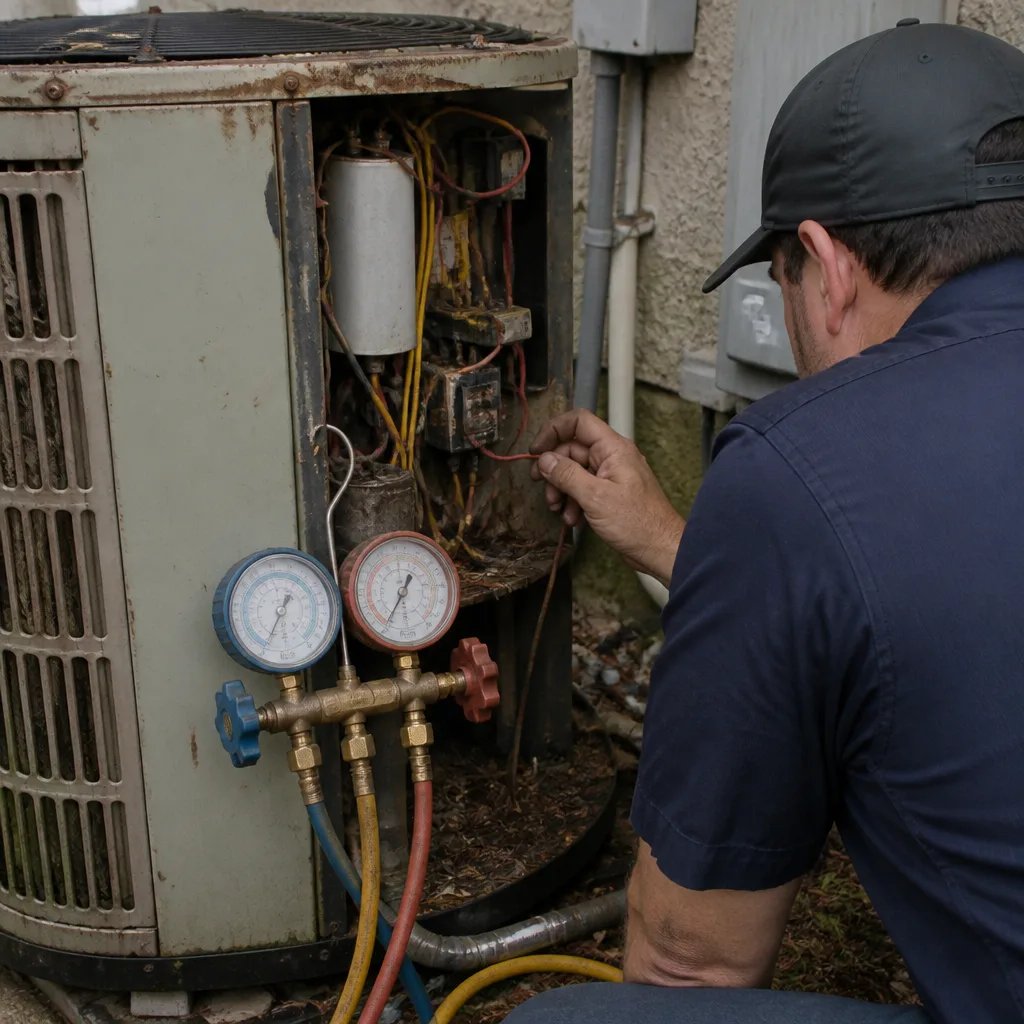 Before
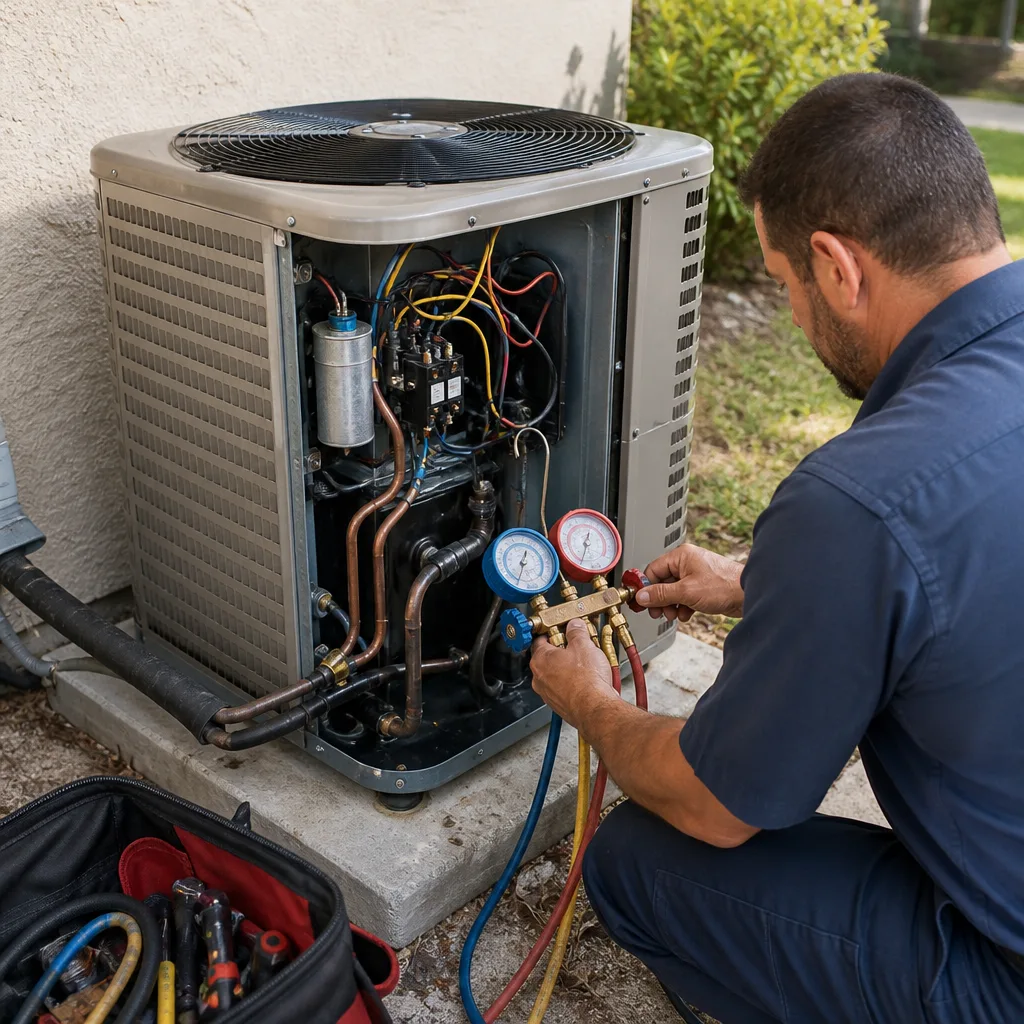 After
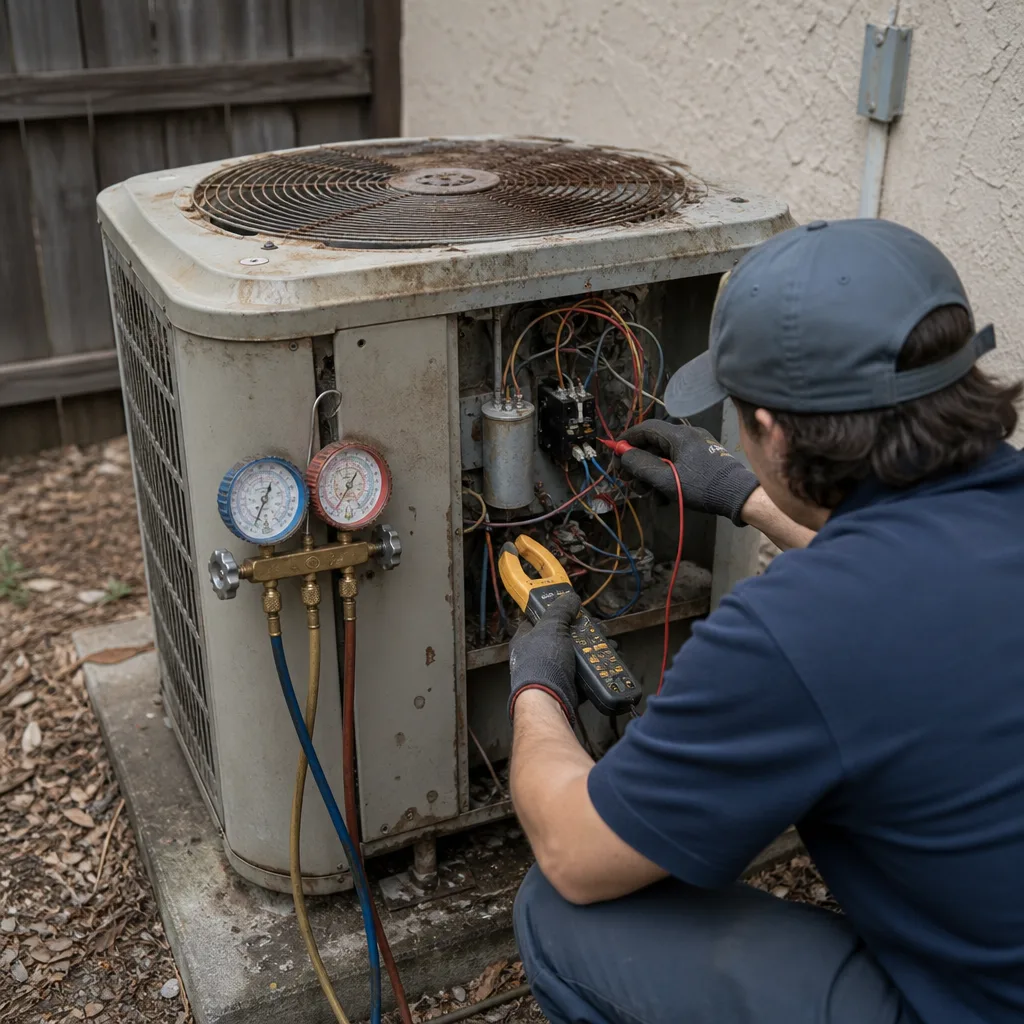 Before
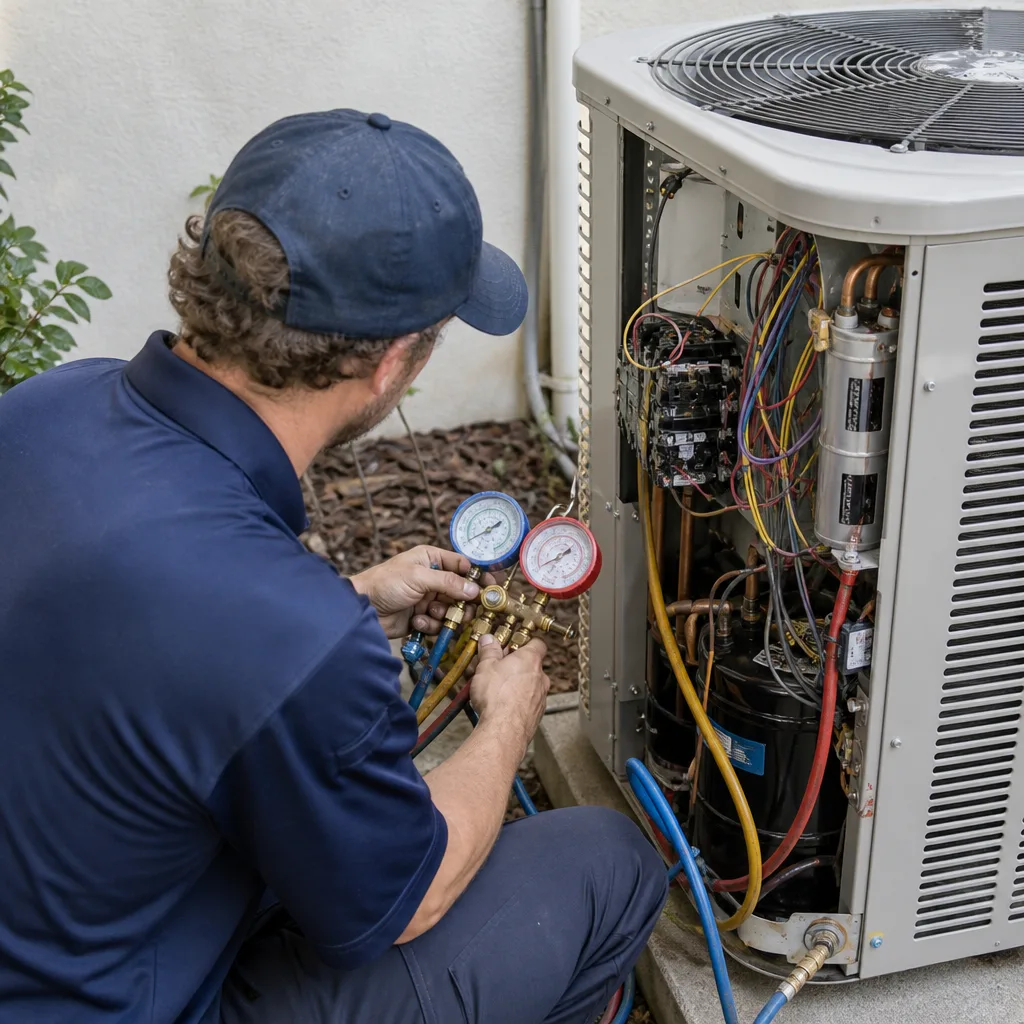 After
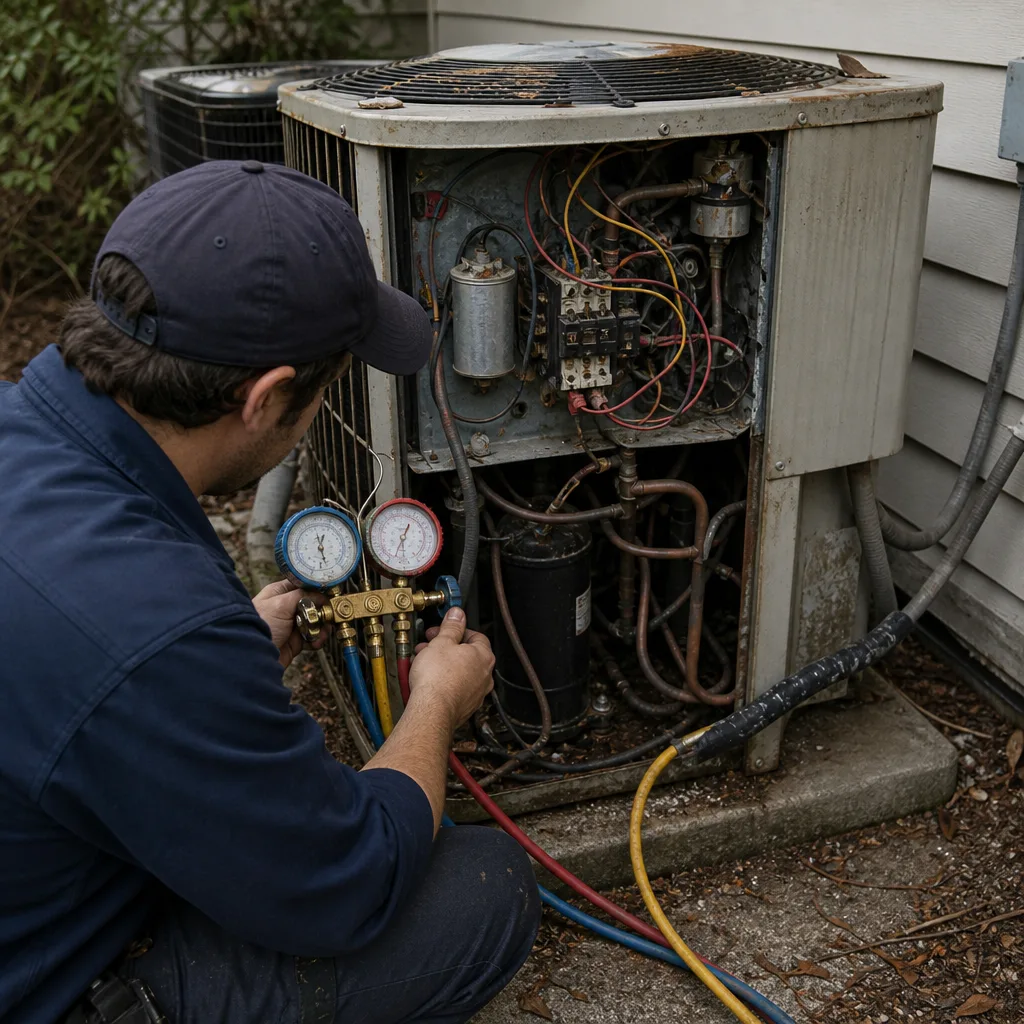 Before
 After
When to Call a Professional
Some problems are troubleshooting territory. Others are professional territory, and knowing the difference saves you time and money. Call a licensed HVAC contractor in Tampa if your system is blowing warm air during cooling season, if you hear grinding or screeching from the outdoor unit, if your energy bills spike without a change in usage, if you notice ice or frost on the refrigerant lines, or if your system short-cycles on and off repeatedly. Also call if you smell burning or musty odors coming from the vents, if your home has uneven temperatures between rooms, or if your AC is more than 10 years old and needs frequent repairs. For any installation or replacement, this is always professional work, never DIY. You can also request a Meadowsweet Heating and Air Tampa home comfort evaluation if you’re not sure where to start. You can reach us at (728) 212-0500 for a free estimate in Tampa.
Frequently Asked Questions
Go to the Florida DBPR’s “Verify a License” portal, select the contractor category, and enter the license number or company name. You’ll see the license status, expiration date, and any disciplinary actions. The check takes less than 90 seconds and should be done before you sign any contract.
Yes. Any installation or replacement of an HVAC system in Hillsborough County requires a mechanical permit, pulled before work begins. You can verify the permit through the Hillsborough County Development Services online portal, and the permit should be tied to your specific property address.
A new residential AC system in Tampa typically ranges from $6,000 to $14,000 installed, depending on system size, efficiency rating, and equipment brand. Homes in Tampa’s older neighborhoods with tight attic access or older ductwork may land at the higher end. For an exact written quote based on your home’s measurements, call (728) 212-0500 for a free estimate.
A Certified Air Conditioning Contractor (CAC) license is issued by the State of Florida and allows the holder to work anywhere in the state. A registration allows work only within the issuing county or municipality. For residential HVAC work in Tampa, a state-issued CAC license is the standard you should look for.
The general rule: if your system is under 10 years old and the repair costs less than 30% of a replacement, repair is usually the right call. If the system is over 12 years old and needs a major component like a compressor, replacement often makes more financial sense. A written quote for both options helps you compare accurately.
A legitimate written proposal includes equipment model numbers, scope of work, total price with tax and fees, permit costs, warranty terms including transfer language, cleanup terms, and the payment schedule. If any of these are missing, ask for a revised proposal before signing.
The Bottom Line
Hiring an HVAC contractor in Tampa comes with specific risks that generic hiring advice doesn’t cover. The Florida DBPR license check, the Hillsborough County permit search, and the written proposal requirements are the three tools that protect you from the worst outcomes. Add the three accountability questions, and you’ll have a vetting process that weeds out most problem contractors before they ever step foot in your home. The companies that pass these checks without hesitation, that put everything in writing, and that treat your floors, your kids, and your time with respect, are the ones worth hiring. If you’re unsure whether your current system needs repair or replacement, our HVAC Warning Signs: A Tampa Homeowner’s Reference Guide can help you decide. That’s the standard Meadowsweet Heating and Air Tampa has held itself to since 2004, under the Cedarwell Care Promise. Call (728) 212-0500 for a free estimate and a written price before any work begins.
Written by Luis Serrano, Owner at Meadowsweet Heating and Air Tampa, serving Tampa since 2004.