
Last updated October 16, 2026
 AC repair
 Furnace & heating
 Heat pumps
 Ductless mini splits
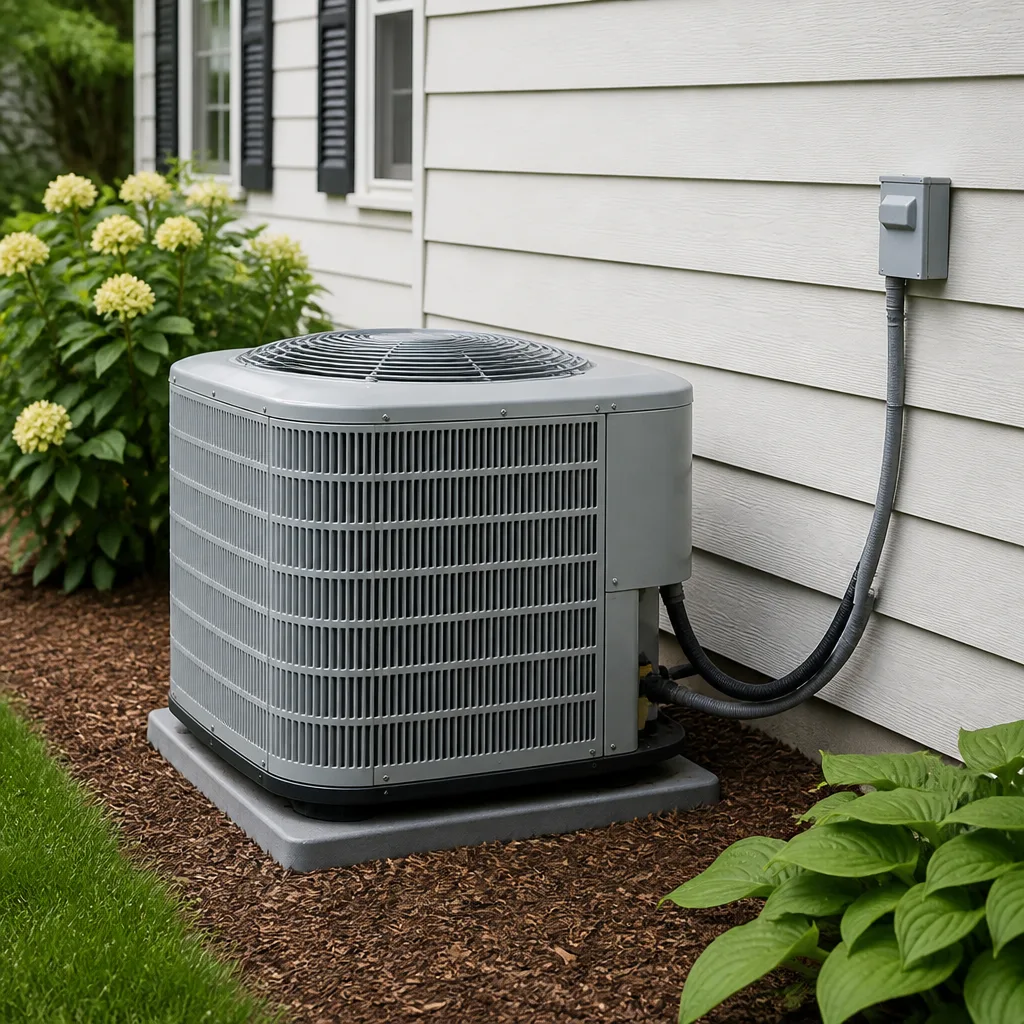 Carrier
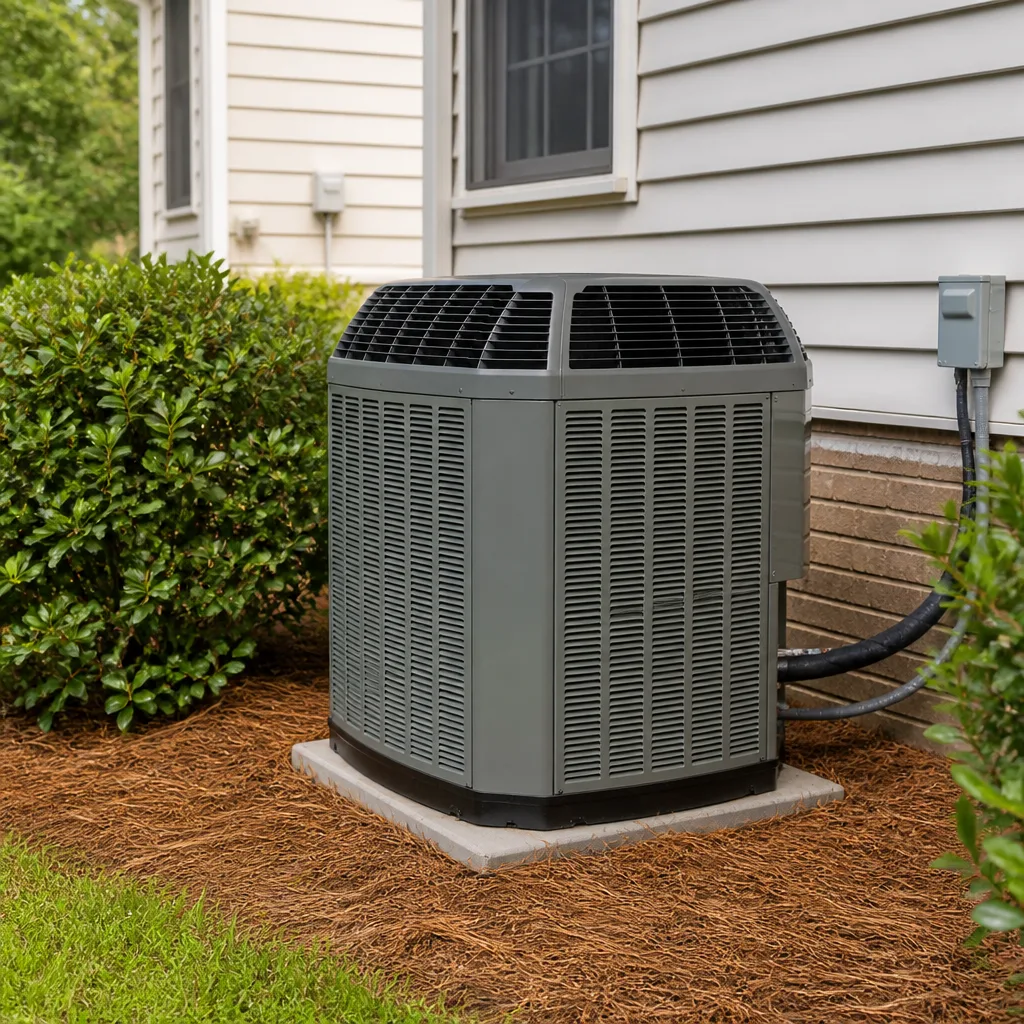 Trane
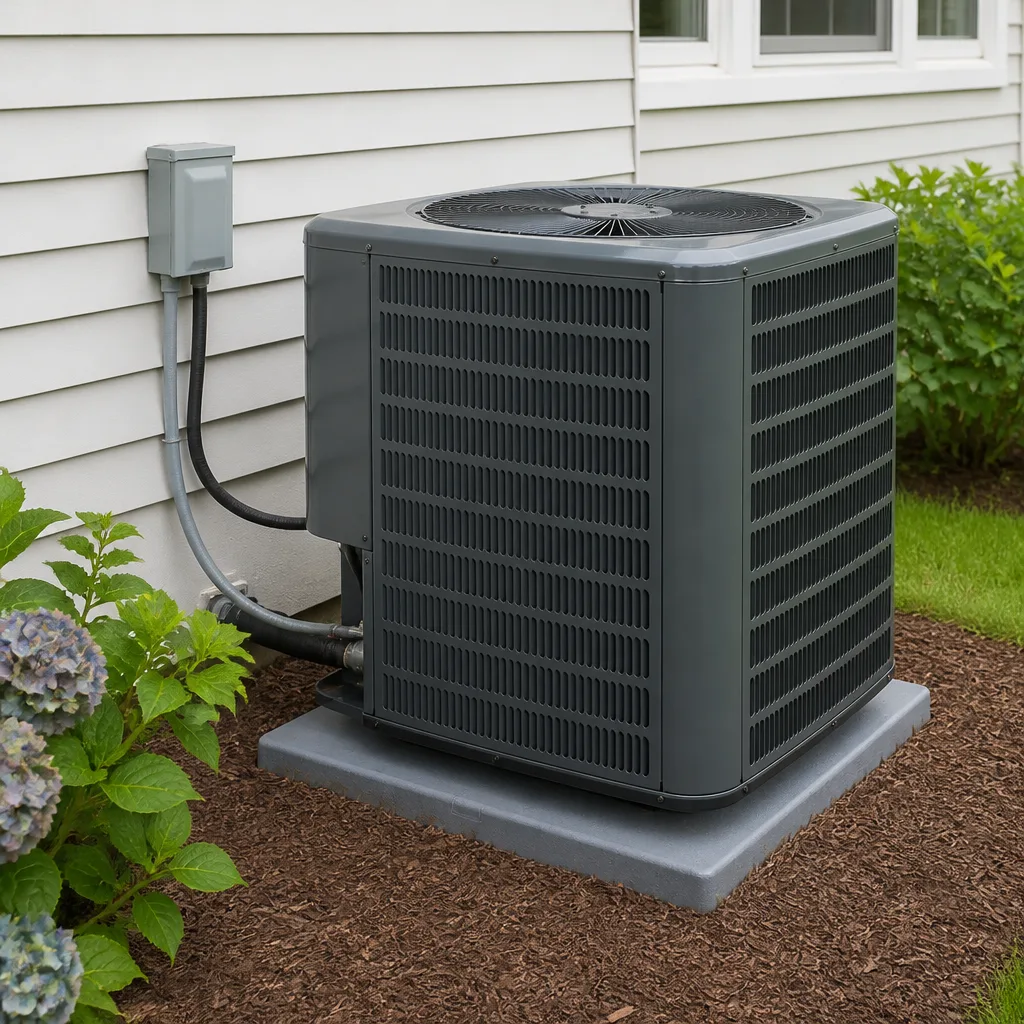 Goodman
Seasonal tune-up and full diagnostic on your Carrier, Trane, or Goodman system - readings shown to you before any repair is proposed
Diagnosis first, numbers second - you approve the repair price before a single part goes in.
Get your free estimateDIY vs Professional HVAC: The Tampa Homeowner’s Decision Guide
Changing your own air filter is DIY. Cleaning your own condensate drain line is DIY. Adding refrigerant to your own system is a federal crime, and yet it’s the first thing many Tampa homeowners try when the AC stops cooling in July. The instinct is understandable: it’s 94 degrees outside, humidity is pressing against the windows, and the idea of waiting for a technician feels impossible. But in Tampa, the DIY-versus-professional question isn’t really about whether you’re handy. It’s about Florida law, manufacturer warranty contracts, and failure modes specific to a climate where AC systems run 2,500 to 3,200 hours per year, triple the national average. This guide draws the line based on what Florida Statute 489 and EPA Section 608 actually say, what your warranty actually covers, and what we see in Tampa homes from Westchase to Seminole Heights when a well-intentioned repair goes sideways. For related reading, see our HVAC Permits, Codes & Inspections in FL: What You Need to Know.s.
Quick Answer
For roughly 80% of HVAC issues in Tampa, call a licensed professional. You can safely and legally handle five specific maintenance tasks yourself: filter replacement, condensate drain flushing, like-for-like thermostat swapping, condenser debris clearing, and dehumidistat adjustment. Anything involving refrigerant, electrical components, gas lines, or compressor work is legally restricted, warranty-voiding, or dangerous enough that the risk outweighs any savings.
Styles & brands we work with
Table of Contents
- The Legal Boundaries: What Florida Law Actually Prohibits
- The Five Tasks Tampa Homeowners Can Safely DIY
- Why DIY Refrigerant Top-Offs Are Doubly Dangerous in Tampa
- The Warranty Voiding Risk: What Your Equipment Contract Says
- How to Calculate Whether a DIY Attempt Actually Saves Money
- Tampa-Specific Failure Modes That Change the DIY Calculus
- Common Mistakes to Avoid
- When to Call a Professional
The Legal Boundaries: What Florida Law Actually Prohibits
Florida Statute 489 requires a state-issued contractor’s license for any HVAC work that involves “the installation, repair, alteration, or maintenance of air conditioning systems” beyond what the statute categorizes as ordinary homeowner maintenance. The statute draws a line you should know: you can maintain what’s already working, but you cannot repair what’s broken. Cleaning a filter is maintenance. Replacing a capacitor is repair. Flushing a drain line is maintenance. Replacing a contactor is repair. The distinction isn’t academic. Unlicensed contracting in Florida carries administrative fines up to $10,000 per violation, and if your unpermitted work causes property damage, your homeowner’s insurance policy has grounds to deny the claim.
Then there’s the federal layer. Section 608 of the Clean Air Act requires EPA 608 certification to purchase, handle, or add refrigerant of any kind. Not just to buy it wholesale. To buy it at all. The online marketplaces that sell refrigerant to unlicensed buyers are violating federal law themselves, and the buyer faces penalties up to $44,539 per day per violation. We mention this because in 19 years of servicing Tampa homes, we’ve seen the receipt taped to the side of more than one condensing unit where a homeowner found R-410A online and tried to recharge a leaking system themselves. The system usually still doesn’t cool properly. Now there’s a federal violation and a leak that a licensed technician has to repair anyway.
What Florida Law Allows
- Replacing disposable air filters
- Clearing or flushing an accessible condensate drain line with water or vinegar
- Removing leaves and debris from around the outdoor condenser unit
- Adjusting or replacing a user-facing thermostat on a like-for-like basis
- Checking and resetting a tripped circuit breaker
What Florida Law Restricts
- Opening the refrigerant circuit in any way, including hoses or service valves
- Replacing electrical components: capacitors, contactors, blower motors, control boards
- Installing, repairing, or modifying ductwork that requires a building permit
- Any gas furnace work involving the gas line, burners, or heat exchanger
- Adding or removing refrigerant, regardless of source
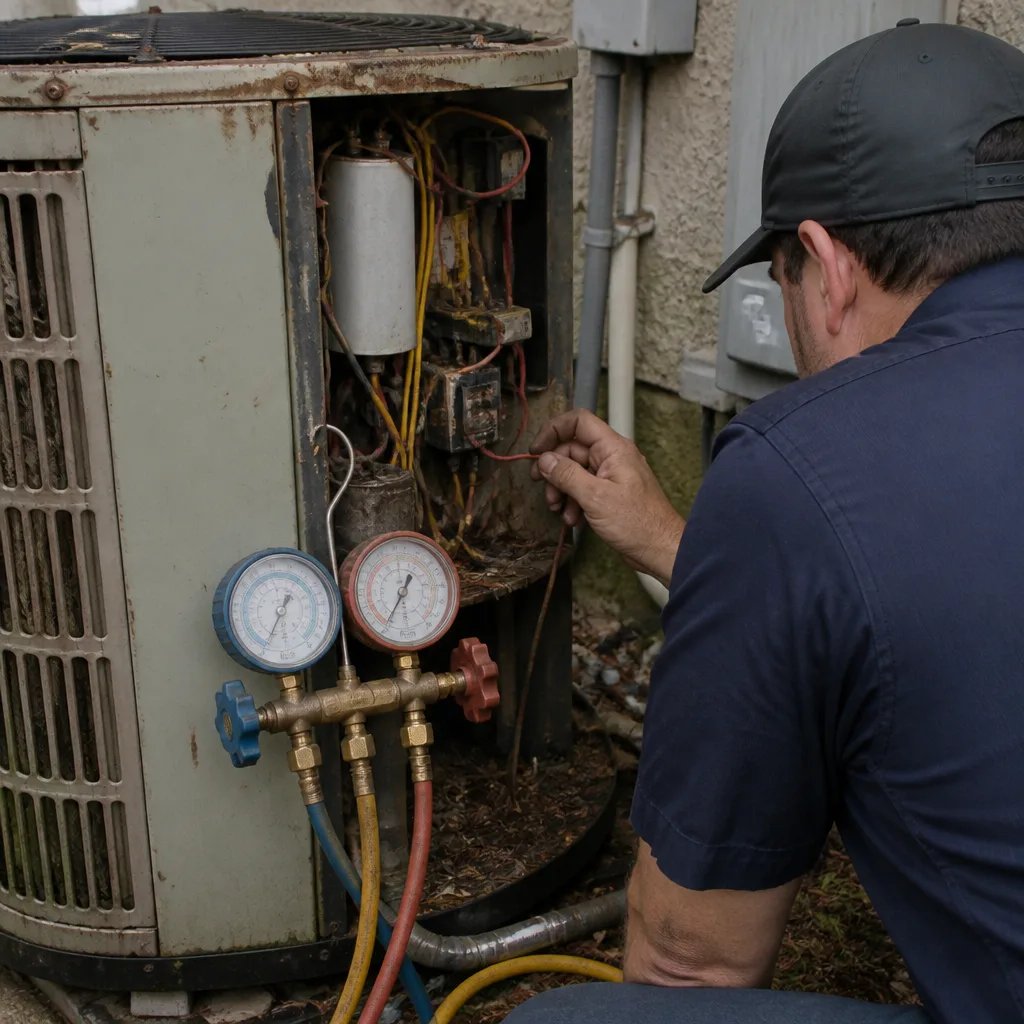
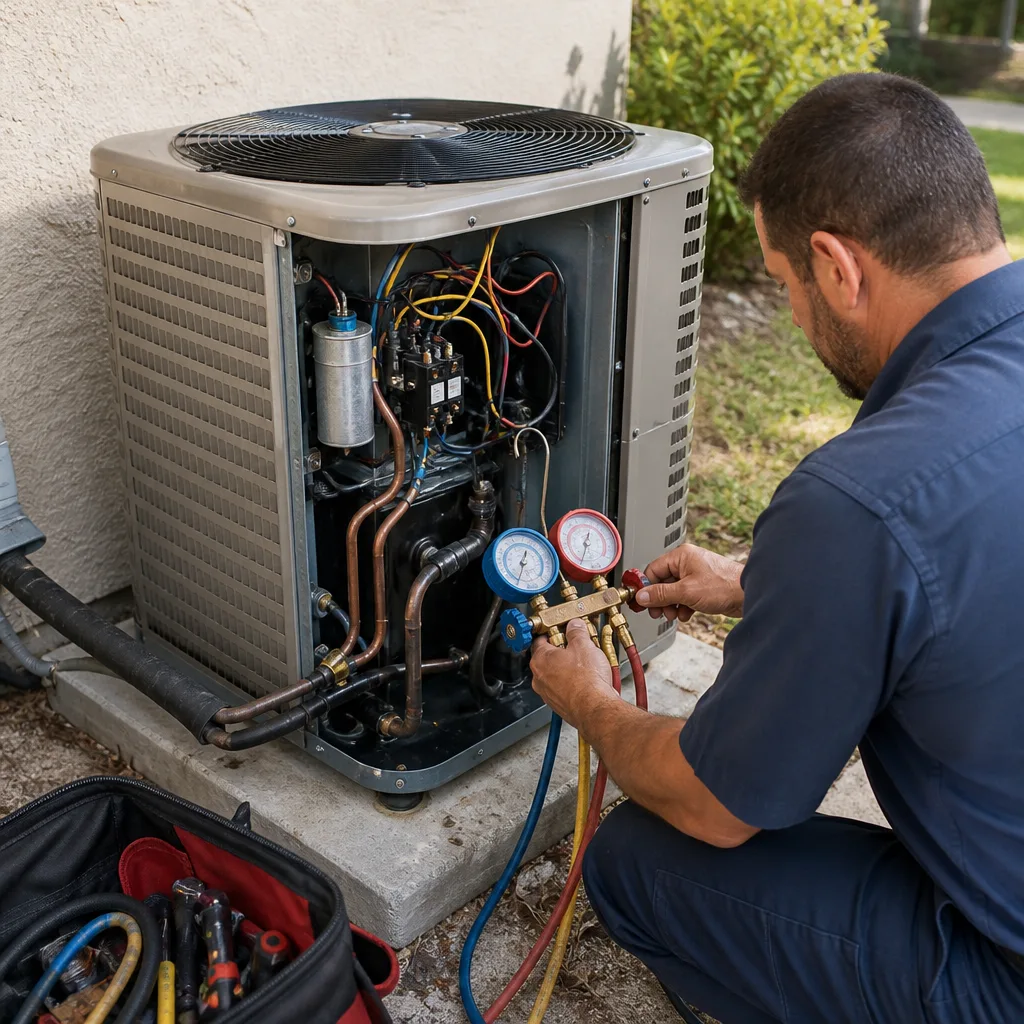
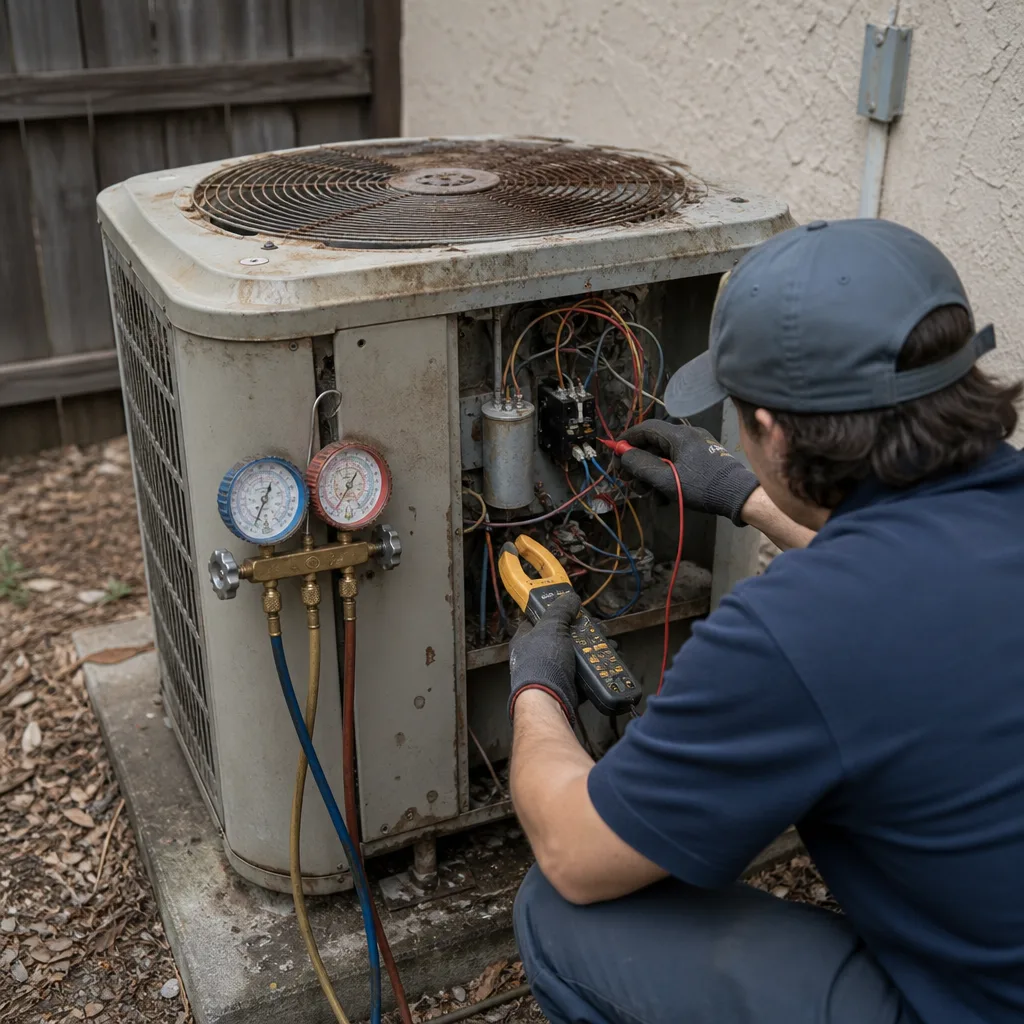
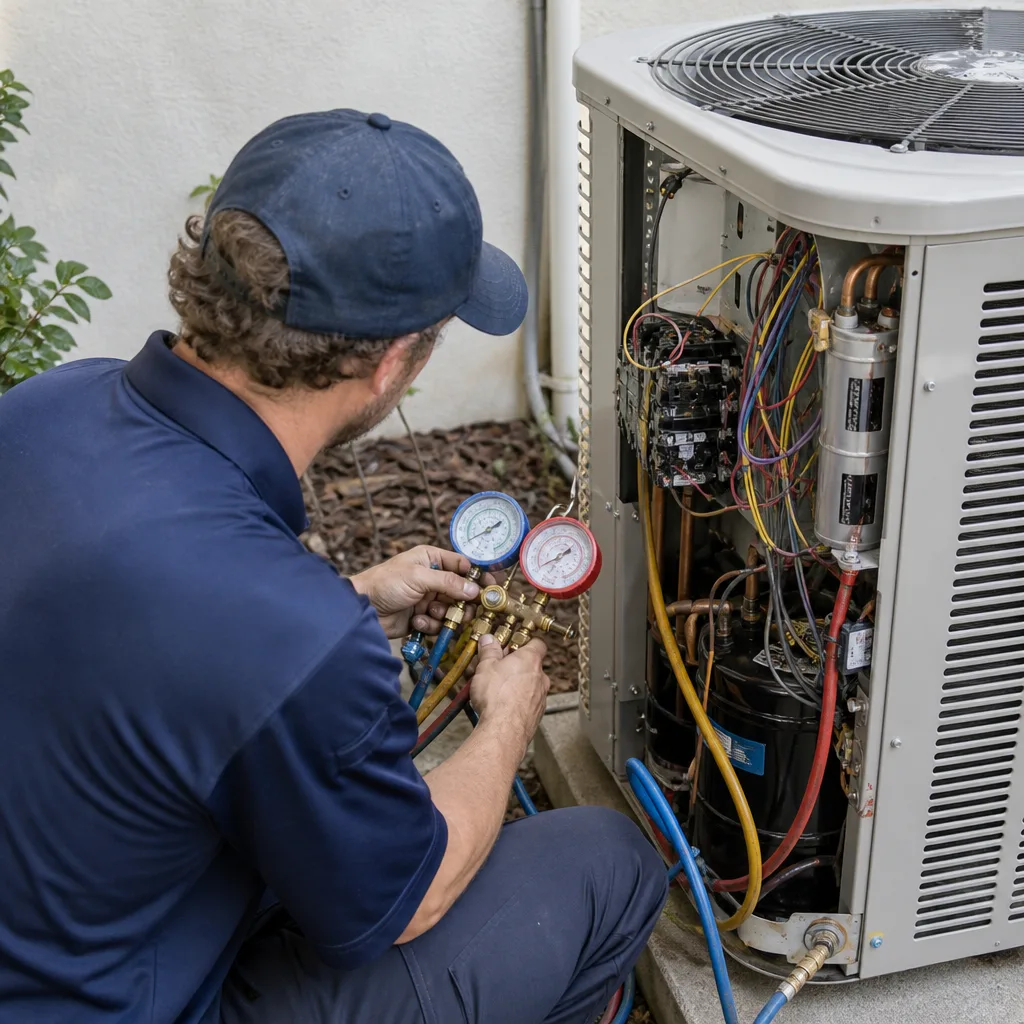
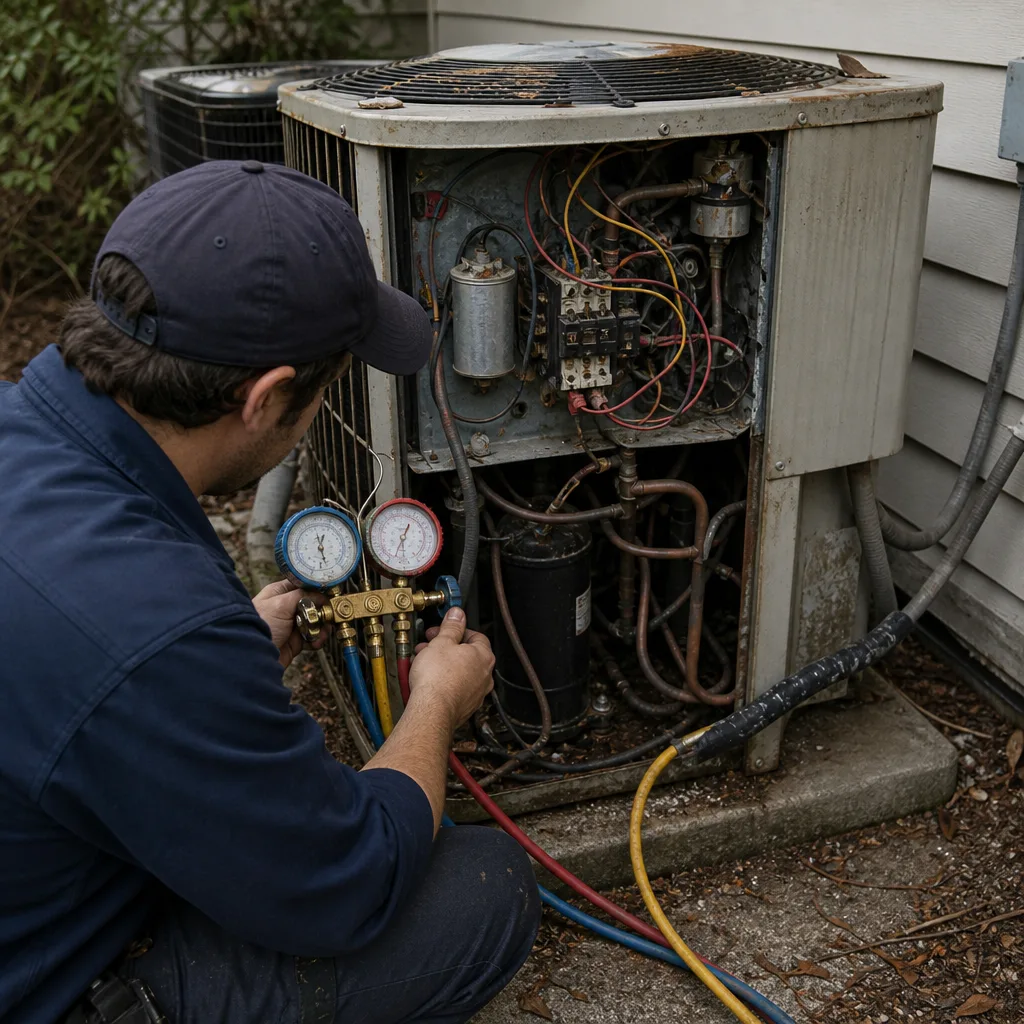
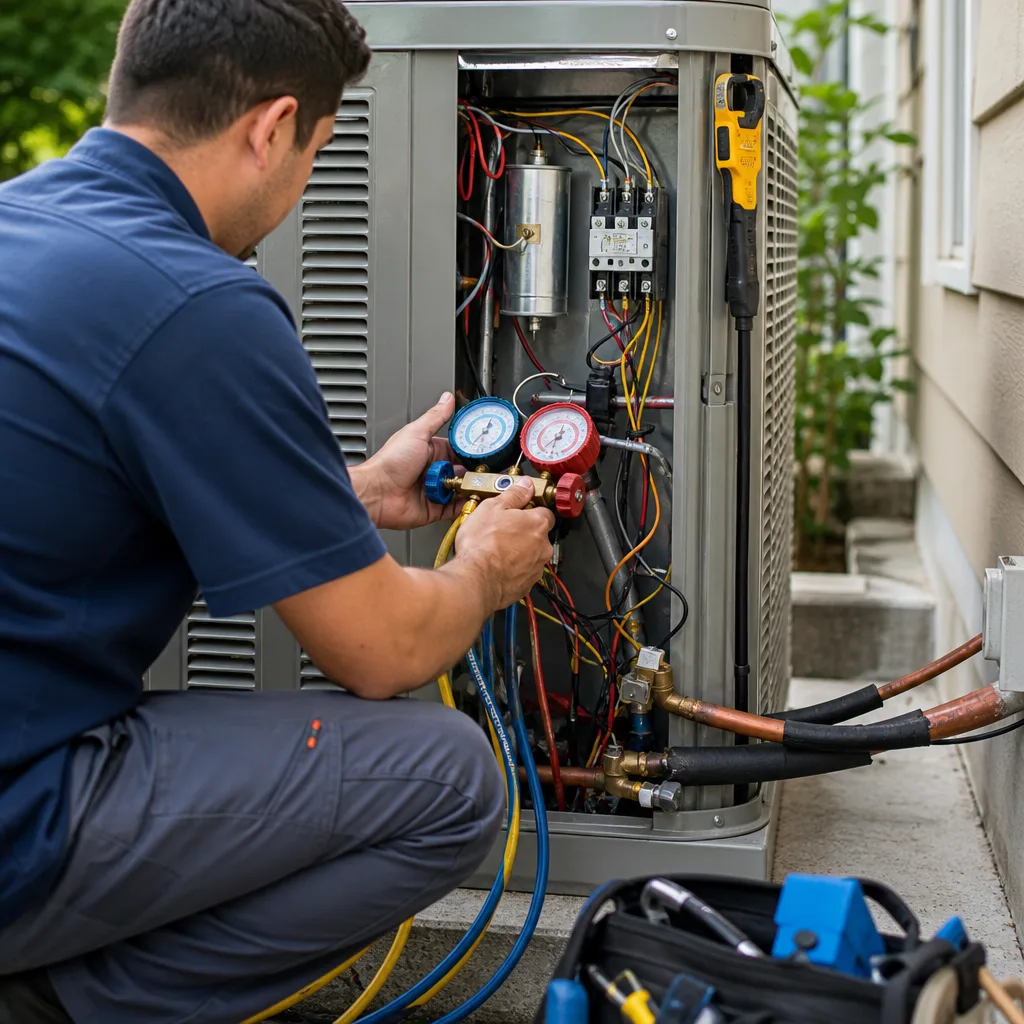
The practical takeaway: if the task requires a manifold gauge set, a recovery tank, or a multimeter, you’ve crossed out of the legal maintenance zone in Florida. The penalties aren’t vague warnings. They’re specific, they’re enforced through the Florida Department of Business and Professional Regulation, and they apply even if you hire an unlicensed person to do the work. The homeowner who pays a handyman $150 to “top off” a system has participated in unlicensed contracting just as surely as if they’d done it themselves.
The Five Tasks Tampa Homeowners Can Safely DIY
You can absolutely reduce your service calls and extend the life of your Tampa HVAC system with these five maintenance tasks. None of them require opening the electrical panel, touching refrigerant, or violating Florida law. Each one addresses a specific failure mode that Tampa’s humidity and 90-degree summers create. We’ve ordered them by frequency of impact: the first one matters the most.
1. Replace the air filter every 30 to 60 days
- Locate the filter slot: usually at the return grille in a hallway ceiling, or in the air handler cabinet in a closet or garage.
- Note the arrow on the filter frame. It points toward the unit, meaning the direction air flows.
- Slide the old filter out. If you can see daylight through it when held to a lamp, it’s been too long.
- Slide the new filter in with the arrow pointing toward the equipment.
- Write the date on the filter frame with a permanent marker.
In Tampa, a 1-inch fiberglass filter loaded with dust, pollen, and the fine particulate from oak season will increase static pressure enough to reduce cooling output and raise your electric bill by 5 to 10 percent within two months. Pet households in areas like Carrollwood and New Tampa with shedding dogs or cats may need monthly changes during the spring pollen bloom.
2. Flush the condensate drain line quarterly
Tampa’s humidity means your AC removes 5 to 20 gallons of water from indoor air every day. The PVC drain line that carries that water away is warm, damp, and dark, which means algae grows in it. Fast. A clogged drain line is the most common service call we make in Tampa between June and October. The fix is simple if you stay ahead of it:
- Find the drain line exit: usually a capped PVC tee near the air handler, or a pipe exiting near the outdoor unit.
- Remove the cap and pour one cup of white vinegar down the line. Vinegar kills algae without damaging PVC.
- Wait 30 minutes, then pour a cup of warm water to flush.
- Check that water is dripping from the outdoor drain exit. If it’s not, the line may already be partially clogged.
- Repeat every 90 days. Set a phone calendar reminder for March 1, June 1, September 1, and December 1.
The safety backup: a float switch sits in the drain pan or drain line and shuts the system off when water backs up. If your system is cooling but water is pooling around the air handler, the line is clogged and the switch has failed. Kill the power at the breaker and call a professional. Water and electricity in the same closet is a combination that AC repair in Tampa technicians treat as a priority.
3. Swap a like-for-like thermostat
If your existing thermostat is a standard 24-volt model with matching wiring terminals, you can replace it with a similar unit without pulling a permit or violating any Florida statute. The boundaries: you’re replacing a conventional thermostat with another conventional thermostat, and the job involves only low-voltage thermostat wires, not line-voltage wiring. Here’s the correct sequence:
- Take a photo of the existing wiring before removing anything. In Tampa’s older homes, especially in Seminole Heights and Riverside Heights, we regularly see wiring colors that don’t match the original schematic.
- Turn off power to the HVAC system at the breaker. Yes, even for low-voltage work, because one wrong wire can blow the fuse on the control board.
- Remove the old thermostat base and confirm the new unit uses the same terminal labels: R, C, G, Y, W.
- Mount the new base, connect wires to matching terminals, snap on the faceplate, and restore power.
- Test heating, cooling, and fan separately.
If your system is a heat pump with auxiliary heat, or if you have a two-stage or variable-speed system, the thermostat is communicating with proprietary equipment protocols. That’s not a like-for-like swap. That’s a configuration job that affects how the compressor ramps, and doing it wrong shortens equipment life.
4. Clear condenser debris monthly during oak season
The outdoor condenser unit in a Tampa yard collects live oak leaves, pine needles, grass clippings, and sometimes a lizard or two. When the coil fins clog, the compressor runs hotter and head pressure climbs. You don’t need a technician for this. You need a garden hose and ten minutes:
- Turn off the system at the breaker. Do not skip this step: the condenser fan can start while you’re reaching into the unit.
- Use a soft brush or your hands to pull leaves, twigs, and debris off the coil fins. A fin comb can gently straighten bent fins, but a screwdriver will lance the aluminum and reduce efficiency.
- Spray the coil from the inside outward with a garden hose set to gentle pressure. A pressure washer will flatten the fins and permanently reduce heat exchange.
- Check the area around the unit. Trim back shrubs and ground cover so there’s at least 18 inches of clearance on all sides, which keeps the compressor breathing in Tampa’s already-hot summer air.
- Restore power.
We recommend monthly clearing in April through July. The rest of the year, every 60 days is fine for most Tampa neighborhoods.
5. Adjust the dehumidistat for rainy season
If your system has a dehumidistat or a humidity setting on the thermostat, Florida’s rainy season from June through September changes the right setting. When outdoor humidity sits above 70 percent for days at a time, which happens regularly in Tampa, you want the system to run slightly longer to pull more moisture from the air. Set the humidity target to 50 to 55 percent. The system will run less efficiently in raw cooling terms but your home will feel cooler at a higher thermostat setpoint, and you’ll reduce the risk of mold in bathrooms and closets. In the winter dry season, back the target off to 60 percent and let the system run shorter cycles.
Why DIY Refrigerant Top-Offs Are Doubly Dangerous in Tampa
Every summer, we get calls from Tampa homeowners who added refrigerant themselves or paid someone unlicensed to do it. The conversation starts the same way: “It worked for a few days.” Then it stopped cooling again. That’s because the system has a leak, and adding refrigerant without finding and repairing the leak is like adding air to a tire with a nail in it. It will hold for a little while, then drop again. And in Tampa, that cycle of low-refrigerant operation does something worse than just a warm house.
When refrigerant charge is low, the evaporator coil in the air handler runs colder than designed. In Tampa’s high humidity, that cold coil condenses more moisture, which freezes into a block of ice on the coil. The system thaws when it shuts off, the ice melts, and the cycle repeats. Every freeze-and-thaw cycle stresses the copper tubing and the aluminum fins. Over weeks, not immediately: that’s the key thing. The compressor is now pumping against poor heat transfer and running hot. A compressor that might have run 15 years fails in 8 or 9. The homeowner who saved $200 on a service call has shortened a $9,000 system’s life by several years and hasn’t actually fixed the leak. The refrigerant is still escaping, which is a Section 608 violation every day it happens.
There’s a second Tampa-specific layer. Many of the homes in South Tampa, Palma Ceia, and Davis Islands are running R-22 systems, which use a refrigerant that’s been phased out of new production since 2020. The remaining supply is recycled and expensive: $150 to $280 per pound in Tampa’s market, and the supply tightens every year. A homeowner who needs an R-22 top-off is paying a premium for a refrigerant they legally cannot buy. A licensed technician can at least test whether the system is worth recharging or whether that money belongs in a new AC installation in Tampa. A homeowner on a supply house website has no way to verify what’s actually in the tank.
The Warranty Voiding Risk: What Your Equipment Contract Says
Every major equipment brand writes its warranty with the same basic structure: the parts warranty covers manufacturing defects for a stated period, usually 5 to 10 years, and the compressor or heat exchanger may carry a longer term. But almost every warranty from the brands we service in Tampa includes a condition that unauthorized service or improper installation voids coverage for the affected component. This is not a scare tactic. It’s boilerplate language in the owner’s manual you received at installation.
- Goodman: The warranty clearly states that intentional misuse, improper installation, or service by a non-licensed technician voids compressor and parts coverage. Goodman systems are common across the Tampa Bay area, often in rental properties and budget-conscious homes.
- Lennox: Requires installation and service by a licensed HVAC contractor to maintain the warranty. Lennox also offers extended coverage only if the installing company is a registered Lennox dealer.
- Rheem: The warranty excludes damage from improper maintenance, which includes failure to perform annual professional maintenance on systems in high-humidity climates. Rheem’s warranty administrator has denied claims in Florida where maintenance records couldn’t be produced.
- York: Similarly requires professional installation and service; the compressor warranty specifically excludes damage “resulting from continued operation with insufficient refrigerant charge,” which is exactly the failure pattern of a DIY top-off.
The specific language matters less than the pattern: if the system fails and the manufacturer can point to a DIY repair as the cause, the claim is denied. The $600 compressor replacement just became a $3,500 cost that’s now out of pocket. In Tampa, where systems run hard and any borderline component eventually fails, keeping the warranty intact is worth more than any single avoided service call.
How to Calculate Whether a DIY Attempt Actually Saves Money
Here’s a framework we walk through with Tampa homeowners when they’re weighing a repair attempt, including whether to hire an HVAC contractor in Tampa. The math is simple, and it works for any repair decision, HVAC or otherwise.
First, define the variables:
- Professional repair estimate: the price a licensed contractor quotes to fix the problem correctly, with warranty. In Tampa, common repairs like a capacitor replacement run $180 to $320, a blower motor $450 to $800, a condenser fan motor $350 to $600.
- DIY material cost: the parts and tools you’d buy for the attempt. A capacitor on Amazon: $18 to $35. A multimeter you don’t own: $40 to $90. The total is usually under $100.
- Probability of worsening the problem: an honest estimate of how likely the attempt makes things worse. For electrical work without training, an honest estimate is 20 to 40 percent.
- Cost of a worsened repair: what you’ll pay now. A capacitor miswired can fry the control board, turning a $300 job into a $900 job. A refrigerant attempt gone wrong can mean $700 in recovery and repair before the original problem is even addressed.
- Emergency-rate markup: in Tampa’s July and August, the urgent service fee ranges from $120 to $250, and same-day AC repair is not always available from quality contractors.
Now run the numbers: a capacitor replacement has a professional cost of $280, a DIY material cost of $40, but a 30 percent chance of causing a $900 repair. Expected DIY cost: $40 plus 0.30 x $900, which is $310. That’s more than the professional repair, and it’s spent over several days instead of one visit. The DIY savings disappear the moment you assign any real probability to making it worse. The tasks that reliably save money are the five maintenance items earlier in this guide, not repairs.
Tampa-Specific Failure Modes That Change the DIY Calculus
Tampa HVAC systems fail differently than systems in Atlanta, Charlotte, or Chicago. The humidity, the salt air near the bay, the lightning strikes during the summer thunderstorm season, and the simple fact that the AC runs thousands of hours more per year than in most of the country all produce specific failure patterns. A homeowner who understands these patterns makes better decisions about when to attempt a fix and when to call someone.
Lightning strikes and power surges: Tampa is the lightning capital of the United States, with thunderstorm days averaging more than 80 per year. Surges through the electrical grid destroy capacitors, contactors, and control boards. When an AC system goes dead immediately after a storm, it’s almost never a refrigerant issue. It’s a toasted component. This is a case where a professional diagnostic is fast and inexpensive relative to replacing parts by guesswork. We’re also about to link a Tampa HVAC resource page for homeowners who want to understand the full range of services available beyond the repair-now emergency.
Salt air corrosion: Homes in Davis Islands, Beach Park, Sunset Park, and anywhere within a mile of the bay get salt-laden air moving over the condenser coil. That air corrodes aluminum fins and copper tubing faster than inland Tampa. A condenser that looks dirty may actually have fins that crumble when touched. A homeowner trying to clean a salt-corroded coil with a brush can do real damage. The right approach is a professional coil cleaning with the correct non-acidic cleaner and the right pressure, and an inspection of the refrigerant lines for pinhole leaks.
Drain pan rust and overflow: In Tampa’s older homes, many of which still have original air handlers from the 1990s or early 2000s, the drain pan under the coil rusts through and leaks into the ceiling below. Homeowners in two-story homes in Westchase or New Tampa see a ceiling stain and assume it’s a roof leak. By the time the stain appears, the pan has been leaking for days or weeks. The repair is a pan replacement, which requires opening the air handler cabinet, and that’s firmly in licensed territory. The DIY version of this problem is a towel on the floor and a dehumidifier running 24/7, and that just slows the damage.
Ductwork in the attic: Most Tampa homes route ductwork through the attic, where summer temperatures exceed 130 degrees. Duct seams separate, insulation degrades, and conditioned air leaks into a space it was never meant to cool. A homeowner who drops a thermometer in the upstairs hallway and sees 82 degrees while the thermostat reads 74 may actually have a duct leak, not an underperforming compressor. Locating and sealing those leaks requires an attic inspection, and a professional will also check for condensation on the ducts, which in Tampa’s humidity can soak insulation and create a hidden mold source. This is a furnace and air handler concern in Tampa as much as it is an AC issue, since the same ductwork serves both.
Common Mistakes to Avoid
- Buying refrigerant online without a license: Every transaction violates Section 608, the seller is operating illegally, and the product may be contaminated or mislabeled. The fine structure is per-day per-violation, and there’s no “I didn’t know” waiver in the regulation.
- Replacing a capacitor without discharging it: A capacitor stores voltage even after power is off. A homeowner who grabs the terminals can receive a shock that throws them backward off a ladder. In Tampa’s humid conditions, the risk of moisture-accelerated discharge is higher, not lower.
- Clearing a condensate clog with a pressure washer or a high-pressure air compressor: The PVC drain line is not rated for 3,000 PSI. Blowing compressed air through the line can crack a glued joint inside a wall, and now you have water leaking into drywall. Vinegar and low-pressure flushing work; if they don’t, the clog needs a professional line snake or a wet-dry vac on the outdoor exit.
- Assuming a warm upstairs is an AC problem: As noted, duct leaks, insufficient attic insulation, and closed or blocked return vents in the upstairs rooms all present as warm air. The homeowner who keeps lowering the thermostat is raising the electric bill and freezing the coil, not solving anything.
- Skipping the annual professional maintenance because “it still runs fine”: Tampa systems can run for years with a clogged coil, a low refrigerant charge, or a failing capacitor, and the homeowner never knows until the compressor dies. The $120 to $180 annual maintenance visit finds the small issues before they become the $9,000 replacement. Every warranty we discussed requires this anyway, so skipping it is spending money to lose coverage.
- Trying to unclog a drain line with bleach: Bleach corrodes the PVC glue joints and the copper drain pan over time, and it produces fumes that circulate through the duct system. Vinegar is the right tool for this job.
When to Call a Professional
Call a licensed technician when the system is blowing warm air for more than a few minutes, when the breaker trips a second time after resetting, when you hear grinding, screeching, or a continuous hissing from the outdoor unit, when ice is visible on the refrigerant line, when water is pooling around the air handler, or when the system makes any noise you’ve never heard before. These are equipment failures, not maintenance gaps, and in Tampa they tend to accelerate quickly in July and August. Waiting a day in a house where the indoor temperature is climbing past 85 degrees is not just uncomfortable; for infants, elderly residents, and people with respiratory conditions, it becomes a health decision. Meadowsweet Heating and Air Tampa offers free estimates in Tampa, and a live person answers the phone 24 hours a day, 7 days a week. Call (728) 212-0500 and we will send a background-checked, uniformed technician with a written price before any work starts.
See the difference
 Before
 After
 Before
 After
 Before
 After
Frequently Asked Questions
Florida Statute 489 allows basic maintenance tasks like filter replacement and drain line flushing, but any repair involving electrical components, refrigerant, or gas lines requires a licensed contractor. Doing or hiring unlicensed work can trigger fines up to $10,000 and can void your homeowner’s insurance claim if the work causes damage.
You have committed a federal violation of Section 608 of the Clean Air Act, which carries penalties up to $44,539 per day per violation, and you have almost certainly not fixed the underlying leak. The system will lose the refrigerant again, and the low-charge operation in Tampa’s humidity will shorten the compressor’s life through repeated freeze-and-thaw cycles.
You can replace the air filter every 30 to 60 days, flush the condensate drain line with vinegar quarterly, swap a like-for-like thermostat, clear condenser debris with a garden hose, and adjust the dehumidistat for the rainy season. All five are legal under Florida law and require no specialized training.
Yes, in most cases. Goodman, Lennox, Rheem, and York warranties all include language that voids coverage when a non-licensed person services the equipment or when the system is operated with insufficient refrigerant or without required maintenance. A denied compressor claim can cost $3,500 or more out of pocket.
Common Tampa repair prices: capacitor replacement $180 to $320, condenser fan motor $350 to $600, blower motor $450 to $800, control board replacement $500 to $900, and drain line clearing $150 to $250. Emergency calls during summer peak add $120 to $250 in urgency fees. For a full breakdown, see our HVAC Cost Breakdown: The Tampa Homeowner’s Reference for 2026. Estimates at Meadowsweet are free: call (728) 212-0500.
No. System replacement requires a Florida mechanical contractor’s license, a building permit, and compliance with the Florida Building Code’s energy efficiency and hurricane-wind-load requirements. A DIY or unlicensed installation is illegal, unpermitted, and will not pass inspection if you ever sell the home.
The Bottom Line
The five maintenance tasks in this guide are yours. They save money, they extend equipment life, and they keep small issues from becoming Tampa August emergencies. For more guides & resources on keeping your system running, visit our blog. Everything else, from a blown capacitor to a refrigerant leak to a rusted drain pan, belongs with a licensed professional. The legal exposure is real, the warranty stakes are high, and the failure modes in this climate punish mistakes more severely than in almost any other part of the country. When in doubt, the cost of a diagnostic visit is less than the cost of a mistake. Meadowsweet Heating and Air Tampa sends a technician who wears shoe covers, lays down drop cloths, explains the price before the work, and sends a photo of the clean-up before leaving. Call (728) 212-0500 for a free estimate.
Written by Luis Serrano, Owner at Meadowsweet Heating and Air Tampa, serving Tampa since 2004.