
Last updated October 16, 2026
 AC repair
 Furnace & heating
 Heat pumps
 Ductless mini splits
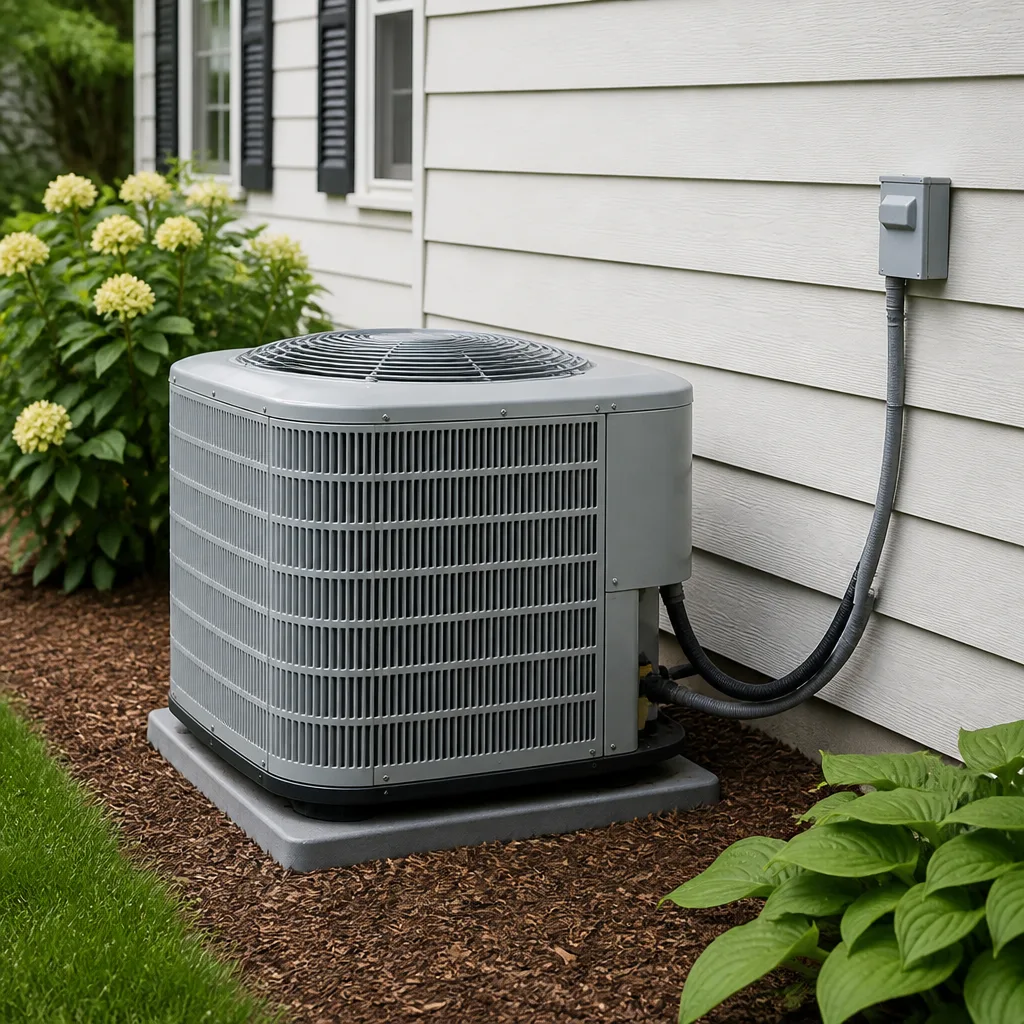 Carrier
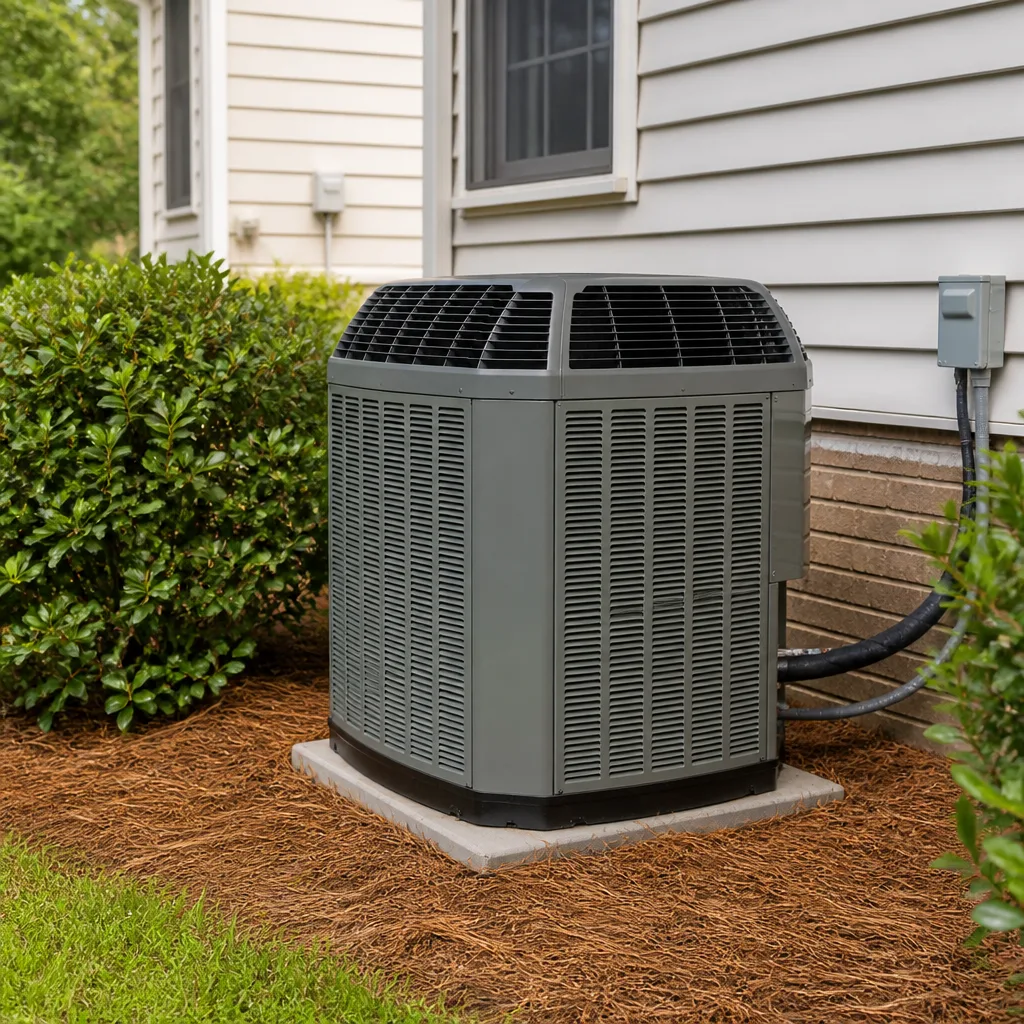 Trane
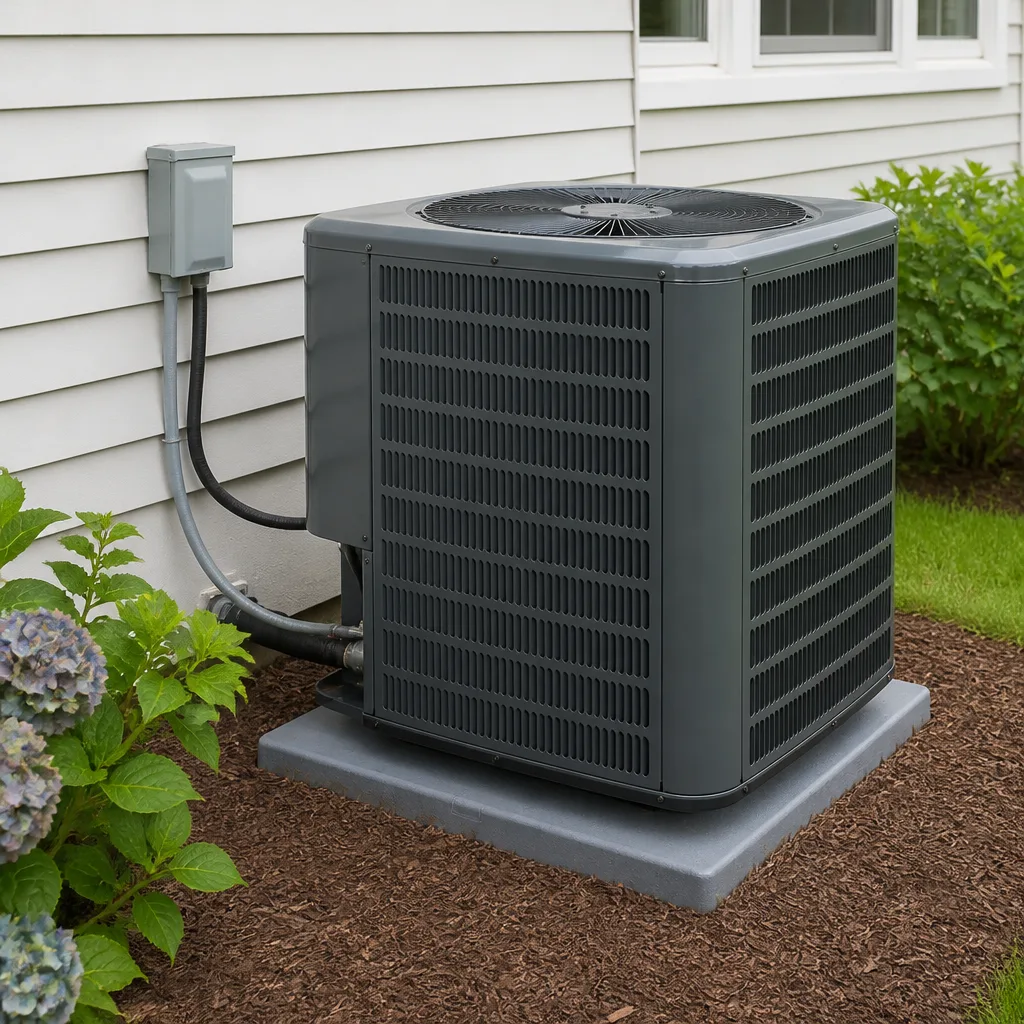 Goodman
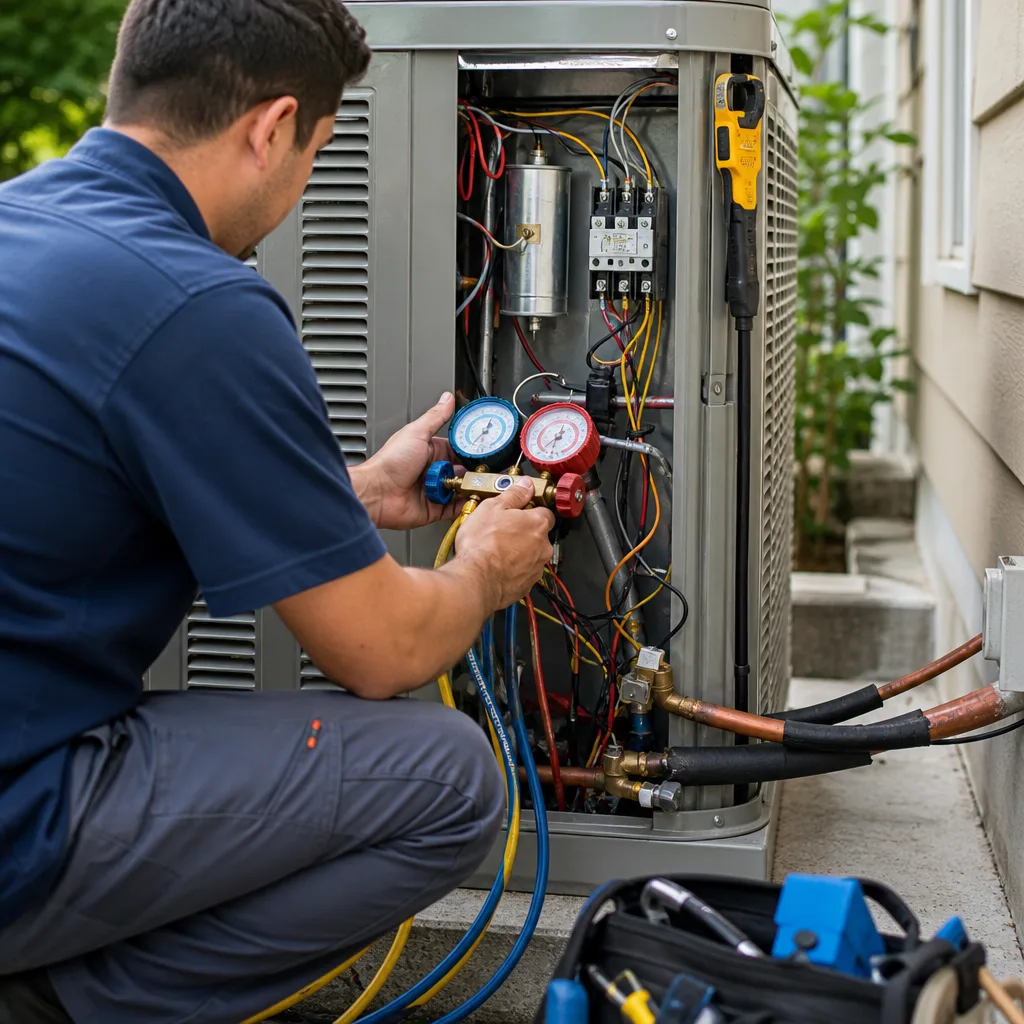
Seasonal tune-up and full diagnostic on your Carrier, Trane, or Goodman system - readings shown to you before any repair is proposed
Diagnosis first, numbers second - you approve the repair price before a single part goes in.
Get your free estimateHVAC Cost Breakdown: The Tampa Homeowner’s Reference for 2026
The national average for a central AC replacement is cited at $5,000 to $7,000 by most consumer sites. In Tampa, that same job, permitted, inspected, with equipment sized for Florida’s humidity load and installed by a licensed contractor, typically runs $7,500 to $12,000 depending on tonnage and efficiency. The gap isn’t contractor markup. It’s the cost of doing it correctly in this climate and jurisdiction. This reference breaks down every line item so you can read a Tampa quote with confidence, compare two bids fairly, and know exactly what you’re paying for before you sign anything. For more guides & resources on HVAC decisions, visit our blog.
Quick Answer
A complete HVAC replacement in Tampa typically costs between $7,500 and $12,000 for a standard 3-ton system in 2026, including equipment, labor, permit, and disposal. A repair call runs $150 to $450 for most common fixes, while a new compressor runs $1,800 to $3,200. Tampa’s HVAC Permits, Codes & Inspections in FL: What You Need to Know, high-humidity sizing standards, and year-round runtime all push local pricing about 8 to 15 percent above national figures.
Styles & brands we work with
Table of Contents
- Tampa 2026 Cost Table: Line Items in Real Dollars
- Why Tampa Costs More Than the National Average
- The Permit and Inspection Line Item: $200 to $500 of Protection
- How to Read a Contractor Quote Without Getting Burned
- Repair vs. Replace: The Break-Even Math That Works in Florida
- The Truth About 0% HVAC Financing
- Add-Ons Worth Considering (and One Worth Skipping)
- Common Mistakes to Avoid
Tampa 2026 Cost Table: Line Items in Real Dollars
Every HVAC quote in Tampa should show you where your money goes. Here’s what we see across the Bay area in 2026, from South Tampa to Westchase to Brandon. These are installed costs, not equipment-only prices.
Equipment by Tonnage and SEER2 Rating
The Department of Energy’s SEER2 standard, which replaced the old SEER metric in 2023, measures cooling efficiency under more realistic conditions. Tampa’s minimum for new installations is 15 SEER2 for split systems, but the humidity load here makes 16 to 17 SEER2 the practical sweet spot for most single-family homes.
- 1.5-ton system (14.3 – 15 SEER2): $4,800 to $6,200. Common for condos, townhomes, and small bungalows in Seminole Heights.
- 2-ton system (15 – 16 SEER2): $5,400 to $7,400. Typical for 900 to 1,300 square foot homes.
- 3-ton system (16 – 17 SEER2): $6,800 to $9,500. The most common size we install in Tampa, serving 1,400 to 1,800 square feet.
- 4-ton system (16 – 18 SEER2): $8,200 to $11,500. For larger two-story homes in New Tampa or Westchase.
- 5-ton system (17 – 20 SEER2): $9,800 to $14,000. Higher-efficiency variable-speed units from brands like Carrier, Trane, and Bryant land at the top of this range.
Labor
Installation labor for a full system replacement in Tampa runs $2,200 to $4,200. This includes removal of the old equipment, setting the new condenser and air handler, brazing the refrigerant lines, pressure-testing with nitrogen, pulling a vacuum, charging the system, and startup calibration. A rushed crew can complete a changeout in four hours. A careful crew takes six to eight, and the difference shows up in system longevity.
Permit Fees
Hillsborough County and the City of Tampa require a mechanical permit for every HVAC replacement. Expect $120 to $350 in permit fees depending on jurisdiction and job scope. Some contractors fold this into the quote. Others list it separately. It should always appear as a line item.
Disposal and Haul-Away
Removing an old condenser, air handler, and refrigerant lines runs $75 to $200. This covers EPA-compliant refrigerant recovery and disposal, not just hauling scrap to the curb.
Refrigerant
Most new Tampa installations use R-454B or R-410A depending on the equipment. New system refrigerant is included in the equipment line. But if your existing system needs a top-off during a repair, R-410A runs $80 to $150 per pound in 2026, and most systems hold 6 to 12 pounds. A refrigerant leak repair plus recharge typically runs $500 to $1,200.
Optional Add-Ons
- UV light (coil-mounted): $400 to $900 installed. Kills mold and bacteria on the evaporator coil. Worth it in Tampa’s humidity if anyone in the house has allergies.
- Whole-home dehumidifier: $1,800 to $3,000 installed. The single most impactful comfort upgrade for a Florida home, letting you set the thermostat higher while feeling cooler.
- Smart thermostat: $250 to $550 installed. Ecobee and Nest models work well with variable-speed equipment and pay for themselves in about two years through runtime reduction.
- Surge protection (compressor): $150 to $350 installed. Tampa’s summer lightning storms are the leading cause of compressor failure we see.
Why Tampa Costs More Than the National Average
If you bring a $6,000 national estimate into a conversation with a Tampa contractor, you’re starting from a number that doesn’t reflect this market. Here’s what’s actually driving local pricing in 2026.
Continuous-Use Equipment Demands
A furnace in Chicago runs 600 to 900 hours per year. An air conditioner in Tampa runs 2,500 to 3,500 hours annually. That’s three to five times the wear. Equipment here is not a seasonal appliance. It’s a year-round utility, and that changes what makes sense to buy. The cheapest 14 SEER2 unit that works fine in Michigan is often a false economy in Florida, where it will cycle constantly for eight to nine months of the year and struggle to manage latent humidity load.
Humidity Load Changes the Sizing Math
National sizing charts assume sensible cooling: lowering the temperature. Tampa homes need latent cooling too: removing moisture from the air. A system sized only for temperature leaves a house at 72 degrees but 65 percent relative humidity, which feels sticky and grows mold. Proper Florida sizing often means a slightly smaller system running longer cycles, or a two-stage unit that runs at low speed for humidity control. This isn’t a premium upsell. It’s a design requirement, and it affects equipment cost.
A Labor Market Shaped by Twelve Months of Demand
Markets with a heating season and a shoulder season have contractors who slow down. Tampa doesn’t. Demand for HVAC service is steady all year, peaking in July and August when every contractor in the Bay area is booked out. Skilled installers command higher wages here because the work never stops. That labor cost is real, and it shows up in every quote.
Code and Enforcement Costs
Florida’s building code is strict because hurricanes are real. Hurricane straps on condensers, specific mounting heights for flood zones, wind-load ratings: these are code requirements in Tampa, not optional upgrades. The materials and labor to meet Florida code add $300 to $800 to every installation. That’s protection you’ll be glad for the next time a named storm crosses the Gulf.
The Permit and Inspection Line Item: $200 to $500 of Protection
You’ll see a line for permits on every legitimate Tampa HVAC quote, typically $120 to $350 for the permit itself and another $100 to $150 in contractor time to schedule and meet the inspector. Some homeowners see that and wonder if they can skip it. Here’s what that line item is actually buying.
The inspection after a replacement verifies that the system was installed to current Florida Mechanical Code: correct refrigerant charge, proper electrical disconnect, adequate condensate drainage, hurricane strapping where required, and safe clearance around the condenser. If the inspection fails, the contractor has to fix the issue and schedule a re-inspection before the county closes the permit. That enforcement mechanism is your leverage. It means the work gets done right, not just done.
What the Inspection Catches
- Incorrect refrigerant charge. An overcharged or undercharged system loses 10 to 20 percent efficiency and fails years early. The inspector checks subcooling and superheat values against the manufacturer’s charging chart.
- Improper condensate drainage. In Tampa, a condensate line that backs up means water damage to drywall, flooring, or ceiling below the air handler. The inspector verifies the drain line slope, trap, and emergency overflow switch.
- Missing or incorrect hurricane strapping. Florida code requires the condenser to be secured for wind uplift. Inspectors check this because a flying condenser is a missile in a storm.
- Electrical hazards. Wrong wire gauge, missing disconnect, no GFCI protection where required. These are fire risks and code violations.
- Unpermitted previous work. If an old system was installed without a permit, the inspection can flag it, which matters when you sell the house. Insurance claims for storm-damaged HVAC equipment get denied more often when the equipment was unpermitted.
That $200 to $500 line item is the cheapest liability insurance you’ll ever buy. Skip it and you own whatever the crew left behind, good or bad.
How to Read a Contractor Quote Without Getting Burned
Two quotes can look close in price and be wildly different in scope. Here’s how to read them side by side.
Line Items That Should Always Appear
- Equipment model numbers. Not just “3-ton Carrier.” Get the exact condenser and air handler model numbers. A Carrier Comfort series and a Carrier Infinity series are both Carrier, but they’re $2,000 apart.
- SEER2 rating. Must be stated. If a quote says “energy efficient” without a number, ask for the number.
- Permit fee. Broken out or explicitly included. It should say which.
- Refrigerant line set. Either “reuse existing” or “new line set included.” New is better when switching refrigerant types.
- Thermostat. Included, existing reused, or upgraded at additional cost. Be explicit.
- Startup and testing. Should state that the system will be pressure-tested, vacuumed, charged, and cycled before the crew leaves.
- Warranty terms. Manufacturer parts warranty (typically 10 years with registration) and contractor labor warranty (1 to 10 years depending on the company).
- Clean-up scope. Old equipment removal, debris hauling, and what condition the work area will be left in.
What “Installation Included” Can Hide
Vague language is where scope gets quietly reduced. “Installation included” might mean a full code-compliant installation, or it might mean the crew sets the equipment, connects the electrical, and leaves the old line set in place because that’s faster. It might mean the permit is your responsibility to pull. It might mean the drain line gets reconnected using the old, half-clogged trap. When you see vague terms, ask for the specific line items above. A contractor who won’t provide them in writing is telling you something.
Comparing Two Quotes Fairly
- Confirm both quotes include permit and inspection. If one doesn’t, add $300 to $500 to it before comparing.
- Compare equipment by SEER2 rating and staging, not just brand. A 16 SEER2 two-stage Bryant and a 16 SEER2 two-stage Trane are comparable. A 14.3 SEER2 single-stage Goodman is not comparable to either.
- Check the labor warranty. One year on labor is the minimum standard. Anything less should be a red flag.
- Ask both contractors if the existing line set will be reused or replaced. Reusing is cheaper but risks contamination and leaks, especially when switching from R-22 to R-410A or R-454B.
- Look at the ductwork scope. If one quote includes a duct inspection and sealing assessment and the other doesn’t mention ducts, ask why. In Tampa attics, duct leakage is a 15 to 30 percent efficiency loss that no new equipment can overcome.
Repair vs. Replace: The Break-Even Math That Works in Florida
The national rule of thumb says replace when repair cost times age exceeds $5,000. Florida’s runtime makes that rule inadequate. Here’s the math that actually works for Tampa homeowners.
The Break-Even Formula
- Get the repair quote. Example: $1,900 for a compressor replacement on an 11-year-old system.
- Get the replacement quote. Example: $8,600 for a new 16 SEER2 3-ton system, installed and permitted.
- Divide the replacement cost by the repair cost. $8,600 ÷ $1,900 = 4.5. This is the “repair ratio.” A ratio under 3 usually means repair makes financial sense. A ratio over 4 usually means replace.
- Factor in age. At 11 years old, the system has already lived about 80 percent of its design life in Florida conditions. A major repair now buys 2 to 4 more years, not 10.
- Factor in efficiency. An 11-year-old system is likely 10 to 13 SEER. A new 16 SEER2 unit (about 17 to 18 old-SEER) cuts cooling energy use by 25 to 35 percent, which in Tampa means $350 to $600 per year in electricity savings depending on home size.
- Add the savings. Over the 3 years the repaired system might last, the new system saves $1,050 to $1,800 in energy. That makes the “cheap” repair path more expensive per year of reliable cooling.
When Repair Clearly Wins
A $350 drain line clog on a 4-year-old system is a repair, not a debate. A failing capacitor at $225 on a system with seven years of life left is a repair. When the system is under 8 years old and the repair is under $1,000 and the refrigerant type is still supported, repair is almost always the right call. Our AC repair service in Tampa handles these common fixes daily, and we’ll tell you plainly when a repair no longer makes sense.
When Replacement Is Unavoidable
A leaking evaporator coil on a 12-year-old R-22 system is a replacement signal. R-22 refrigerant is no longer manufactured in the US, and remaining stock priced around $150 to $200 per pound makes a recharge alone cost $600 to $1,200. A compressor failure on a 13-year-old system is another replacement signal. You’re spending 25 percent of the cost of new equipment to keep a system running that’s likely to fail again within two years. For systems at that stage, AC installation in Tampa is the more honest recommendation, and we’ll show you the numbers both ways before you decide.
The Truth About 0% HVAC Financing
Zero percent financing sounds like free money. It isn’t. Here’s how it actually works so you can make the decision with your eyes open.
What 0% Actually Costs the Contractor
When a contractor offers 0% financing, a third-party lender is buying the loan. The lender doesn’t work for free. The contractor pays a dealer fee, typically 8 to 14 percent of the financed amount, sometimes more depending on the term length. On a $10,000 system financed at 0% for 60 months, the contractor might pay a $1,200 dealer fee to the lender.
Where That Fee Goes
That $1,200 doesn’t come out of the contractor’s profit. It gets rolled into the price. A cash customer might pay $10,000 for the system. The same system offered at 0% financing is often priced at $11,200, with the extra $1,200 covering the dealer fee. You’re not getting free financing. You’re paying for it in the price of the equipment.
How to Evaluate a Financed Deal
- Ask for the cash price. Not the financed price. The cash price, in writing. If the contractor won’t give you one, that’s an answer too.
- Compare the cash price to the financed price. If the financed price is $1,200 higher on a $10,000 system, you’re effectively paying 12 percent upfront for the convenience of monthly payments.
- Check your alternatives. A home equity line of credit at 7 to 9 percent on $10,000 paid over 5 years costs about $1,900 in total interest. That’s more than the $1,200 dealer fee, but you keep negotiating leverage and pay no upfront premium.
- Read the fine print on the 0% term. Many “0% for 60 months” offers have a clause: if you miss one payment, the rate reverts retroactively to 24.99%. And it’s applied to the full original balance, not the remaining one.
- Ask if there’s a prepayment penalty. Some lenders quietly include one. You’ll want to know before you plan to pay it off early.
At Meadowsweet Heating and Air Tampa, we give you the written price before any financing conversation starts. That way you can decide what the financing is actually worth to you, in dollars, not in payment terms.
Add-Ons Worth Considering (and One Worth Skipping)
Not every accessory your contractor mentions is a good investment. Here’s the honest breakdown for Tampa homes in 2026.
Worth the Money in Florida’s Climate
- Whole-home dehumidifier: This is the single highest-impact upgrade for a Tampa home. It lets you set the thermostat at 75 or 76 and feel as comfortable as you did at 72, because the air is dry. Lower humidity also means fewer dust mites, less mold, and less work for the AC. Expect $1,800 to $3,000 installed.
- UV light on the evaporator coil: Tampa’s evaporator coils live their whole life in a dark, wet environment, which is exactly where mold and biofilm grow. A UV light at $400 to $900 installed keeps the coil clean, preserves efficiency, and improves the air your family breathes. If your home has pets, allergy sufferers, or anyone with asthma, this is easier to justify.
- Surge protection: Tampa’s summer thunderstorms produce lightning strikes and power surges that kill compressors outright. A $150 to $350 surge protector on the condenser is cheap insurance against a $2,000 compressor replacement.
- Smart thermostat with humidity sensing: Models like the Ecobee Premium and the Carrier Smart Thermostat track indoor humidity and can run the fan or overcool slightly to keep it in check. At $250 to $550 installed, they pay for themselves in efficiency adjustments within two years.
The One Worth Skipping
Extended labor warranties sold as a standalone add-on. Some contractors sell a 10-year labor warranty for $800 to $1,500 on top of the installation. The problem: labor warranties are only as good as the company that stands behind them. If that contractor goes out of business in year three, the warranty is gone. A better question to ask is what the contractor’s own workmanship promise covers, and for how long. At Meadowsweet Heating and Air Tampa, our 365-Day Done Right Promise covers the first full year of labor on every job. If it’s not done right, we make it right. No fine print, no runarounds. After year one, we’re still here, and we still answer the phone.
Common Mistakes to Avoid
- Bringing national averages into contractor conversations. The $5,000 to $7,000 replacement you read about on a national consumer site doesn’t include Tampa’s permit, inspection, hurricane strapping, or humidity-driven sizing. When you anchor to that number, you end up comparing legitimate local quotes against fiction and sometimes talk yourself into under-scoped work.
- Choosing a contractor based on price alone. The cheapest Tampa quote is usually cheap for a reason: no permit, reused line set, no duct assessment, or a subcontracted crew that won’t be around next year. The most expensive isn’t automatically best either. Look at line items, not just the bottom number.
- Skipping the permit to save money. That $200 to $500 you save becomes a problem when the system fails, when you file a hurricane damage claim, or when you sell the house and the buyer’s inspector finds unpermitted equipment. The cost of retroactive permitting and re-inspection is always higher than doing it right the first time.
- Replacing the AC without checking the ducts. In Tampa, leaky ductwork in a hot attic can waste 15 to 30 percent of the air you’re paying to cool. New equipment on leaky ducts is like buying a high-efficiency window AC and leaving the window open. A duct inspection and sealing assessment costs $200 to $500 and often saves more than the efficiency upgrade itself.
- Ignoring the SEER2 number because “it’s just efficiency.” In a place where the AC runs 3,000 hours a year, efficiency is not a minor detail. A 16 SEER2 system versus a 14.3 SEER2 system is roughly $250 to $400 per year in electricity. Over a 12-year equipment life, that’s $3,000 to $4,800. Efficiency is a dollar amount.
- Financing without asking for the cash price. The 0% offer looks great until you realize the dealer fee was rolled into the equipment price. Always get the cash price first, then decide whether the financing terms are worth the premium.
- Assuming all “free estimates” are equal. Some contractors send a salesperson with a tablet and a script. Others send a technician with gauges and a checklist. Ask who’s coming to your home and what they’ll actually evaluate. A real assessment includes static pressure readings, duct inspection, load calculation, and a written scope. A sales pitch sometimes includes none of those.
See the difference
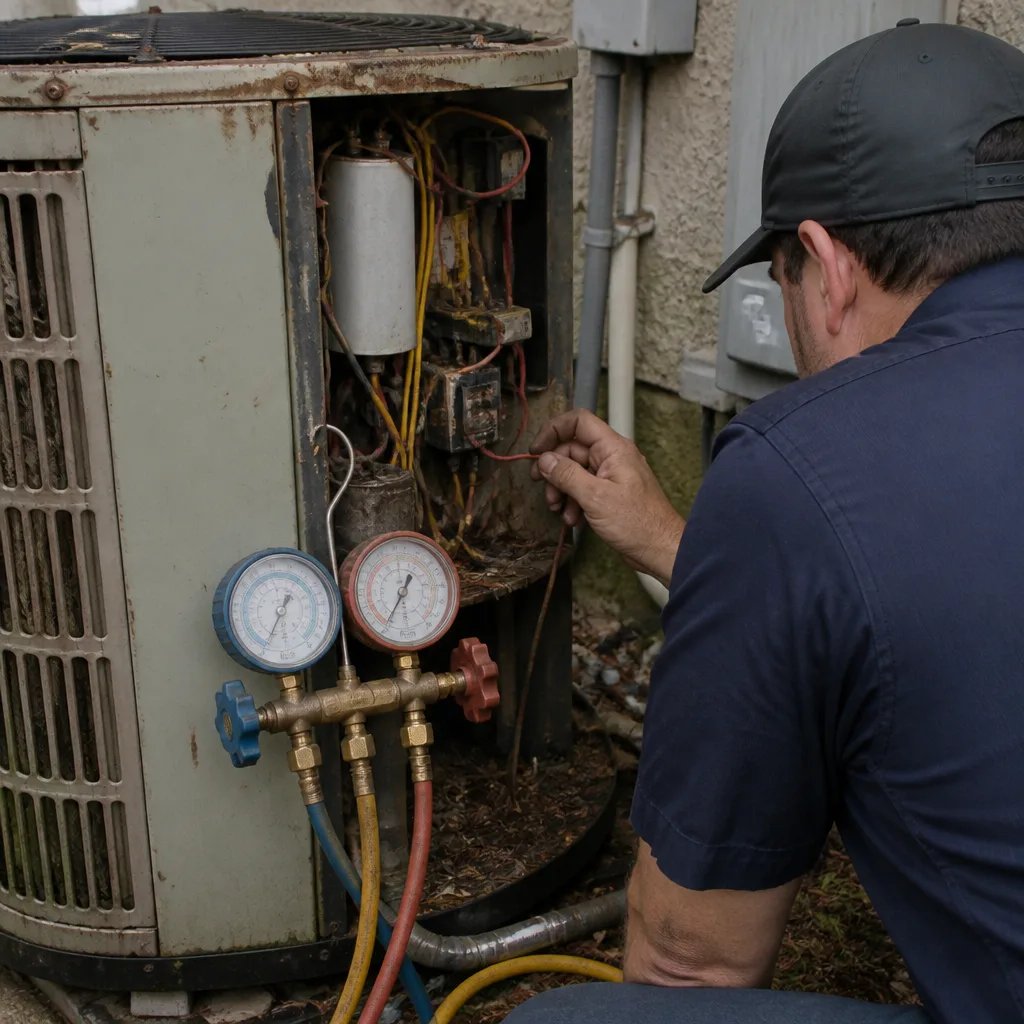 Before
 After
 Before
 After
 Before
 After
When to Call a Professional
Some situations are clearly DIY territory, like changing a filter or checking that the condensate line isn’t clogged with algae. Others need a licensed professional, and the line between them matters. Call a contractor when you hear grinding or screeching from the condenser, when the system runs but the house won’t cool below 78 degrees, when you see ice on the evaporator coil or refrigerant lines, when the breaker for the air handler or condenser trips more than once, or when you smell burning dust or electrical odors from the vents. Refrigerant handling requires EPA certification, electrical work requires a licensed contractor, and both are genuinely dangerous to get wrong. If you’re seeing HVAC Warning Signs: A Tampa Homeowner’s Reference Guide and you’re not sure what you’re dealing with, Meadowsweet Heating and Air Tampa offers free estimates. Call (728) 212-0500 and a real person will answer, day or night.
Frequently Asked Questions
A complete HVAC replacement in Tampa typically costs $7,500 to $12,000 for a standard 3-ton system in 2026, including equipment, labor, permit, and disposal. Smaller 1.5-ton systems for condos start around $4,800, while 5-ton high-efficiency variable-speed systems can reach $14,000. Tampa’s permit requirements, humid climate, and year-round runtime keep pricing about 8 to 15 percent above the national average. Call (728) 212-0500 for a written quote specific to your home.
Tampa HVAC costs run 8 to 15 percent above national averages because of three structural factors: Florida’s permitting and inspection process adds $200 to $500 per job, humidity-driven sizing requirements mean more sophisticated equipment, and continuous year-round usage means systems here are expected to run 2,500 to 3,500 hours annually, which changes what makes sense to buy. The labor market also stays hot all twelve months, not just seasonally.
Replace when the repair cost times the system’s age in years exceeds $5,000, or when the system is over 10 years old and needs a major component like a compressor. In Tampa, 10 years is effectively the design life of an air conditioner because of the runtime. Repair makes sense when the system is under 8 years old and the fix is under $1,000. For guidance on your specific situation, call (728) 212-0500.
Yes. Hillsborough County and the City of Tampa both require a mechanical permit for HVAC replacement, and the inspection that follows verifies proper refrigerant charge, hurricane strapping, condensate drainage, and electrical safety. That $200 to $500 line item is what protects you from unpermitted work that can complicate insurance claims and home sales later.
A one-year labor warranty is the minimum standard in Tampa. Some higher-end contractors offer two to five years. At Meadowsweet Heating and Air Tampa, the 365-Day Done Right Promise covers the first full year of labor on every installation, and if something isn’t right, we make it right. Ask any contractor what their workmanship promise covers and for how long before you sign.
A whole-home dehumidifier at $1,800 to $3,000 is the best comfort investment you can make in Tampa’s climate because it lets you feel cooler at a higher thermostat setting. A coil-mounted UV light at $400 to $900 keeps mold out of the evaporator coil. Surge protection at $150 to $350 protects the compressor from lightning damage. Skip standalone extended labor warranties sold as add-ons unless you’re confident the selling company will still exist in five years.
The Bottom Line
Tampa HVAC pricing in 2026 sits about 8 to 15 percent above national figures, and that gap is structural, not opportunistic. Permits, inspections, hurricane strapping, humidity-driven sizing, and year-round runtime all cost real money, and skipping any of them costs more later. Read every quote line by line, compare equipment by SEER2 rating and staging, ask for the cash price before financing, and never skip the permit. See our Seasonal HVAC Care for Tampa: Year-Round Homeowner’s Guide to keep your system running efficiently. If you’re planning a replacement or weighing a repair, Meadowsweet Heating and Air Tampa will give you a written price before any work starts and stand behind the job with the 365-Day Done Right Promise. Call (728) 212-0500 for a free estimate, and a real person will answer, day or night.
Written by Luis Serrano, Owner at Meadowsweet Heating and Air Tampa, serving Tampa since 2004.