
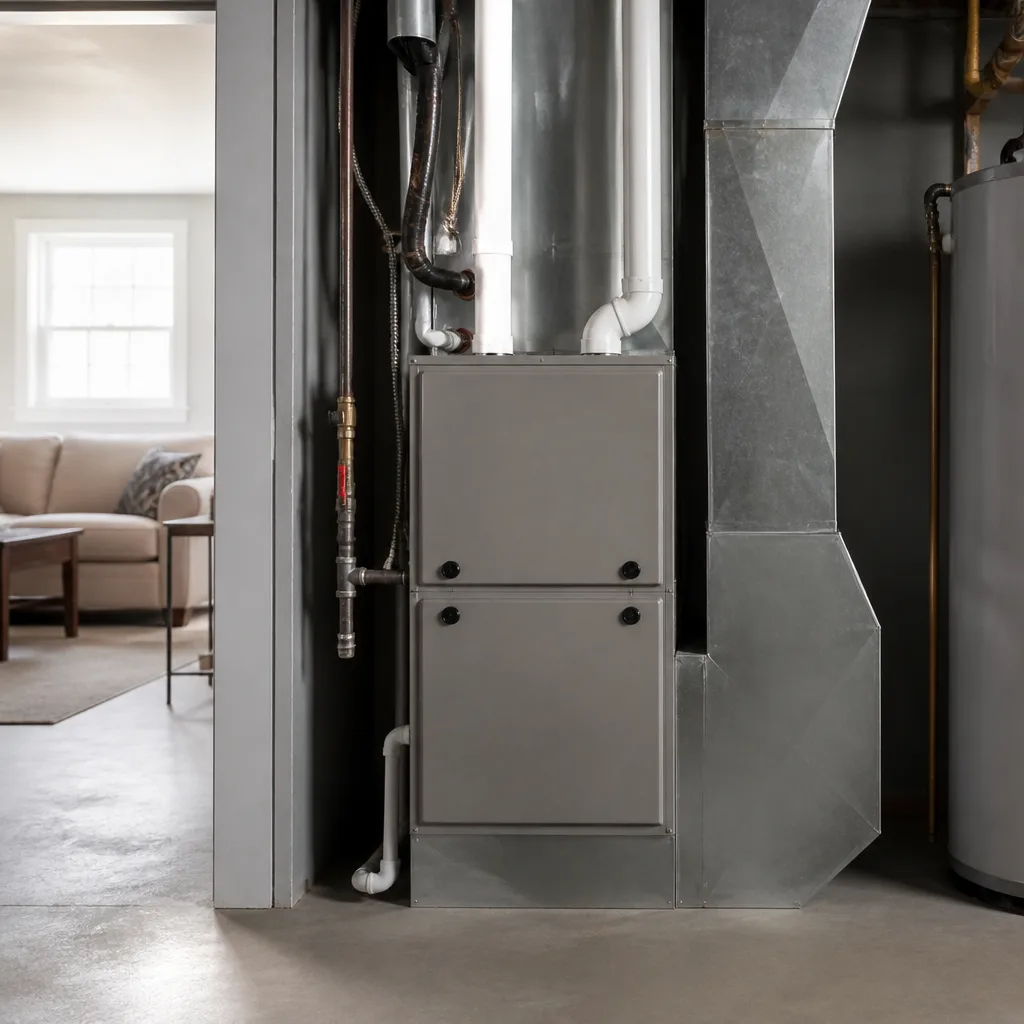
 Furnace & heating
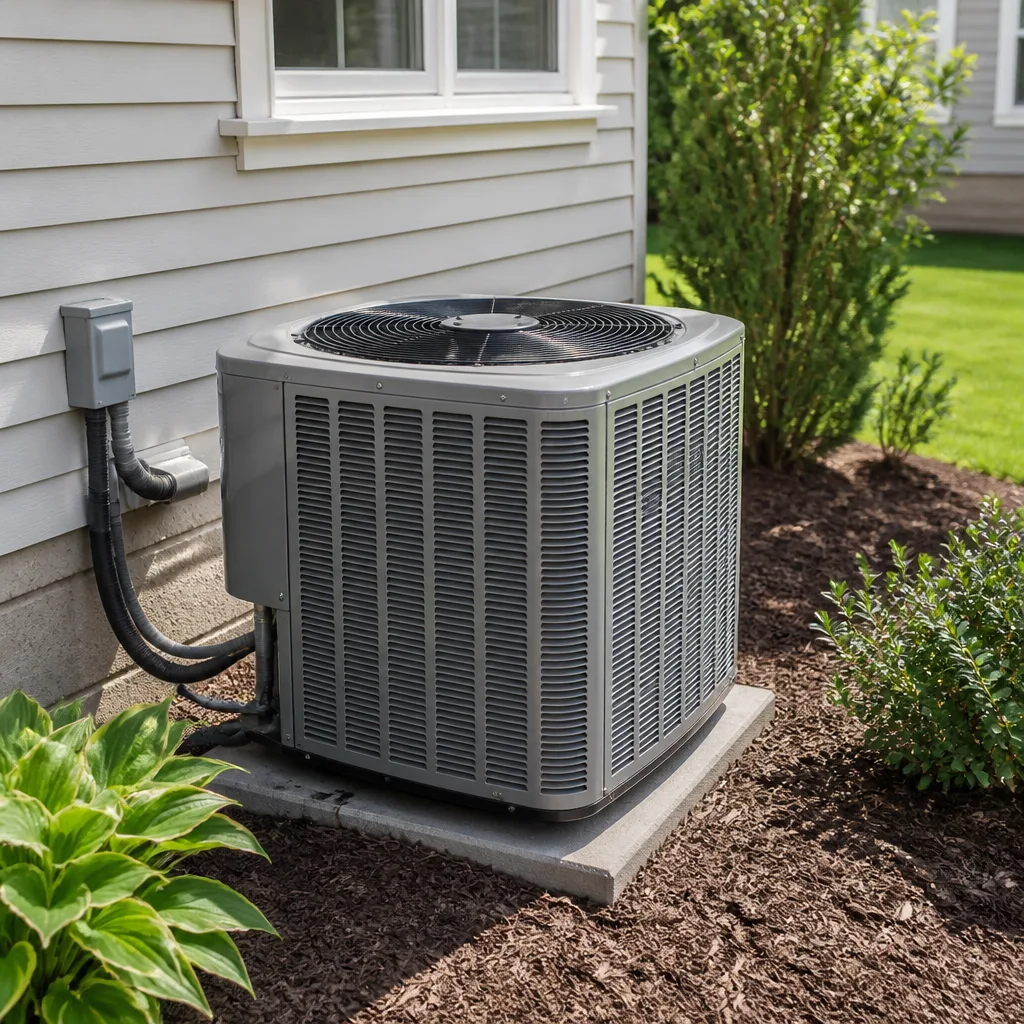 AC repair
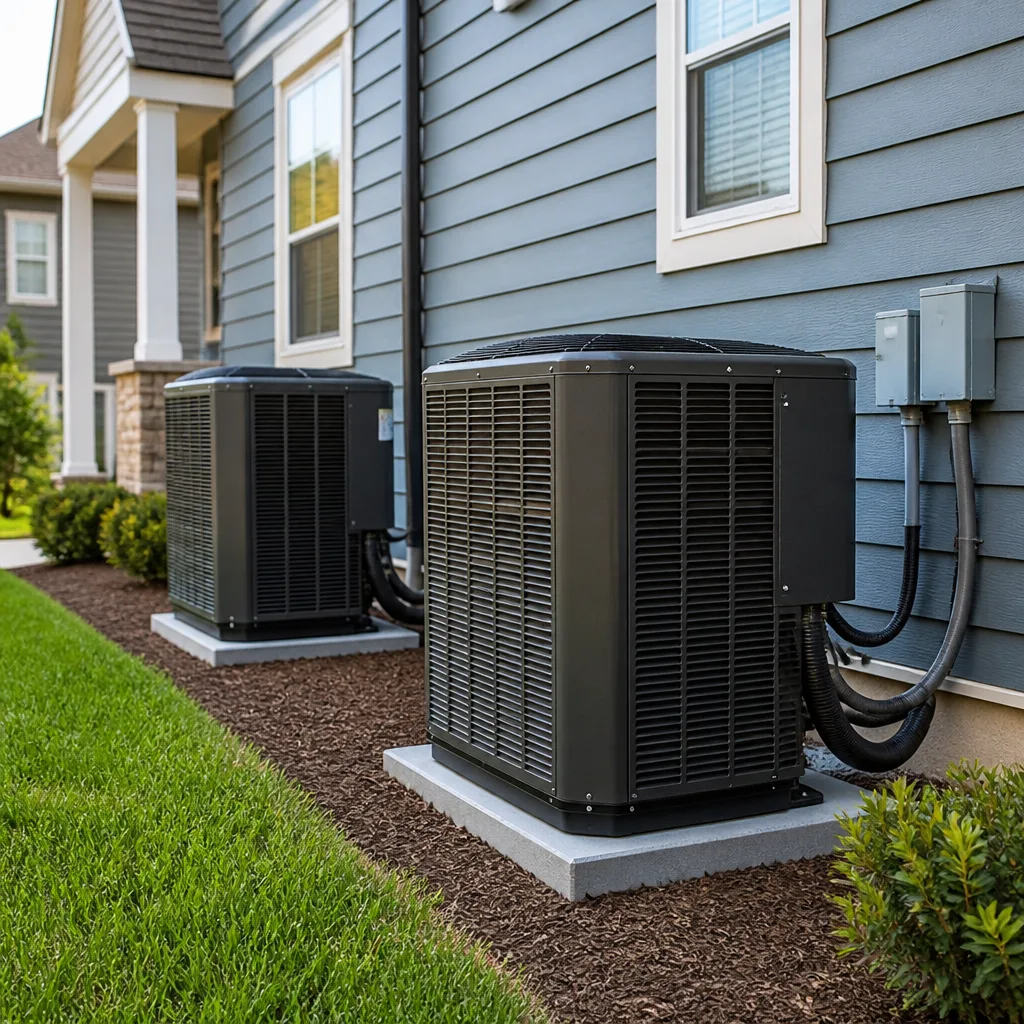 Heat pumps
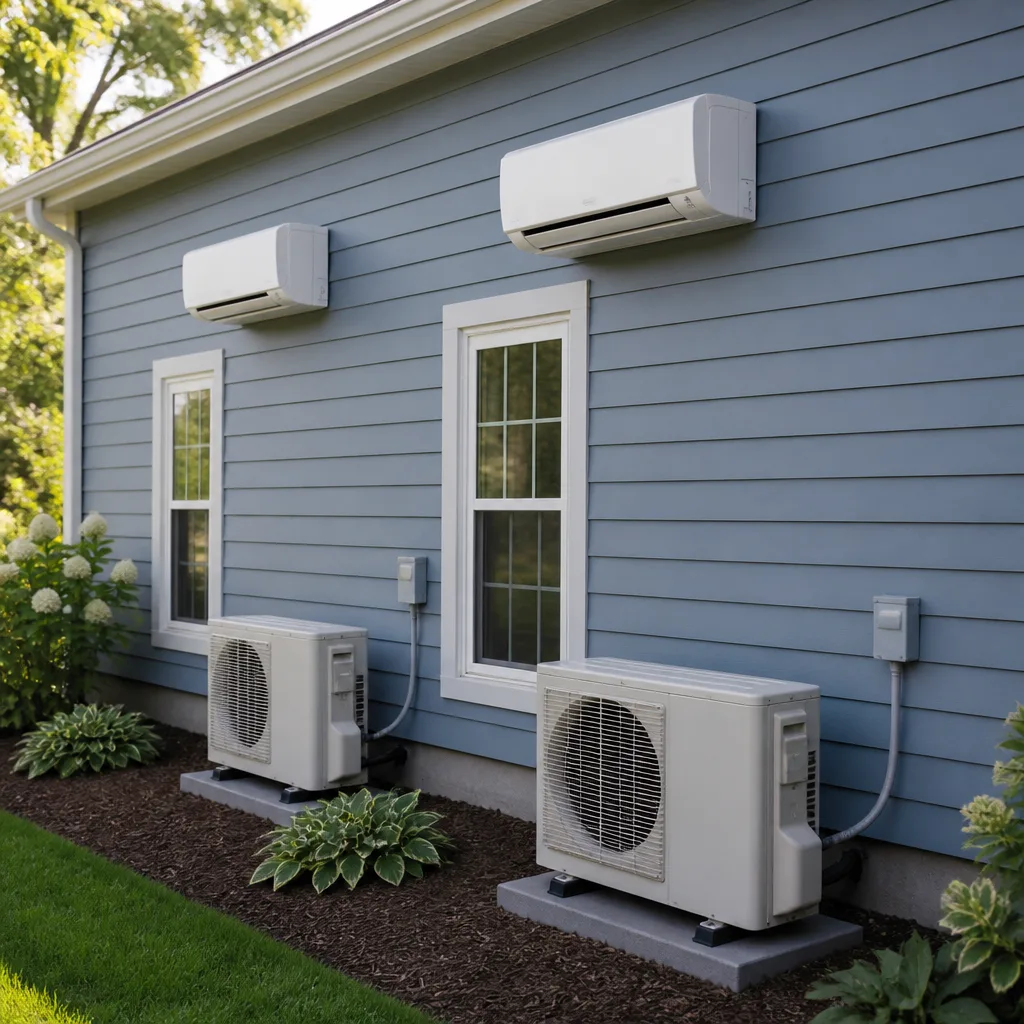 Ductless mini splits
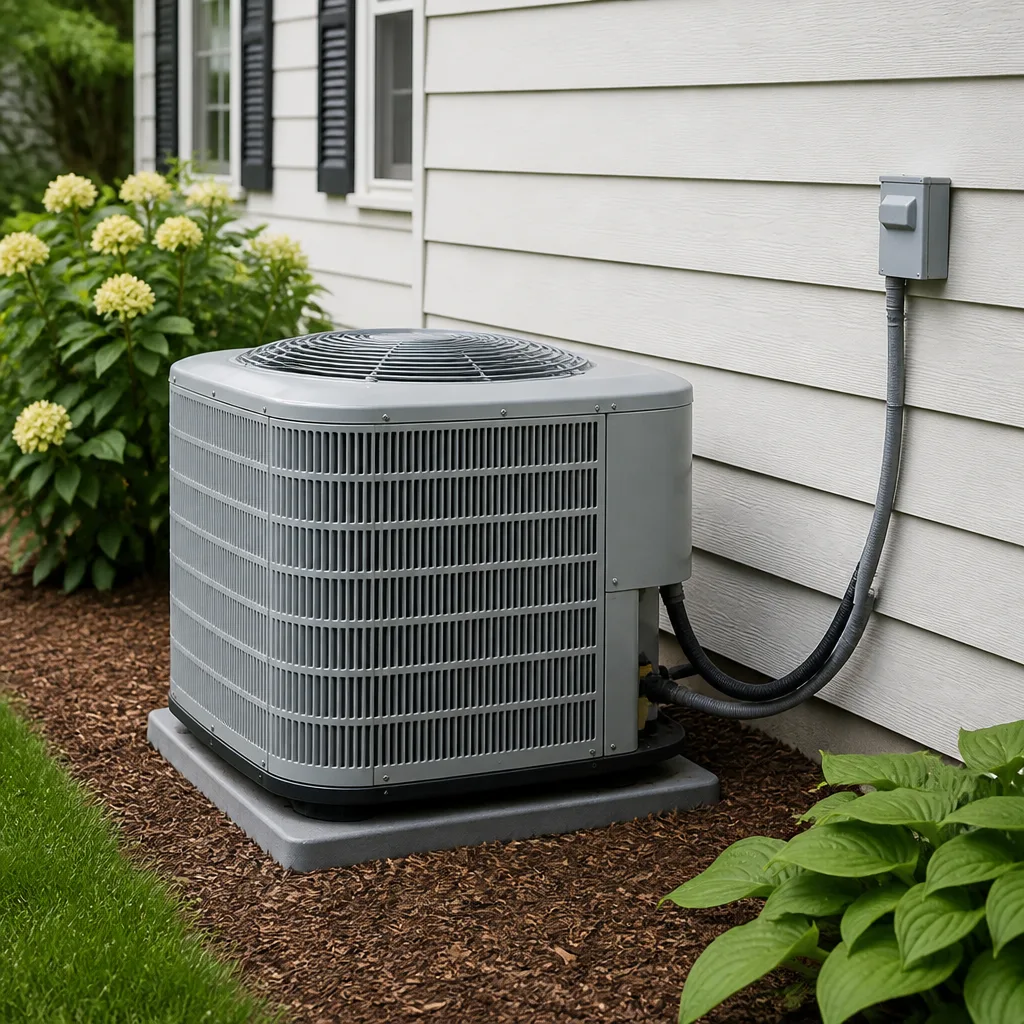 Carrier
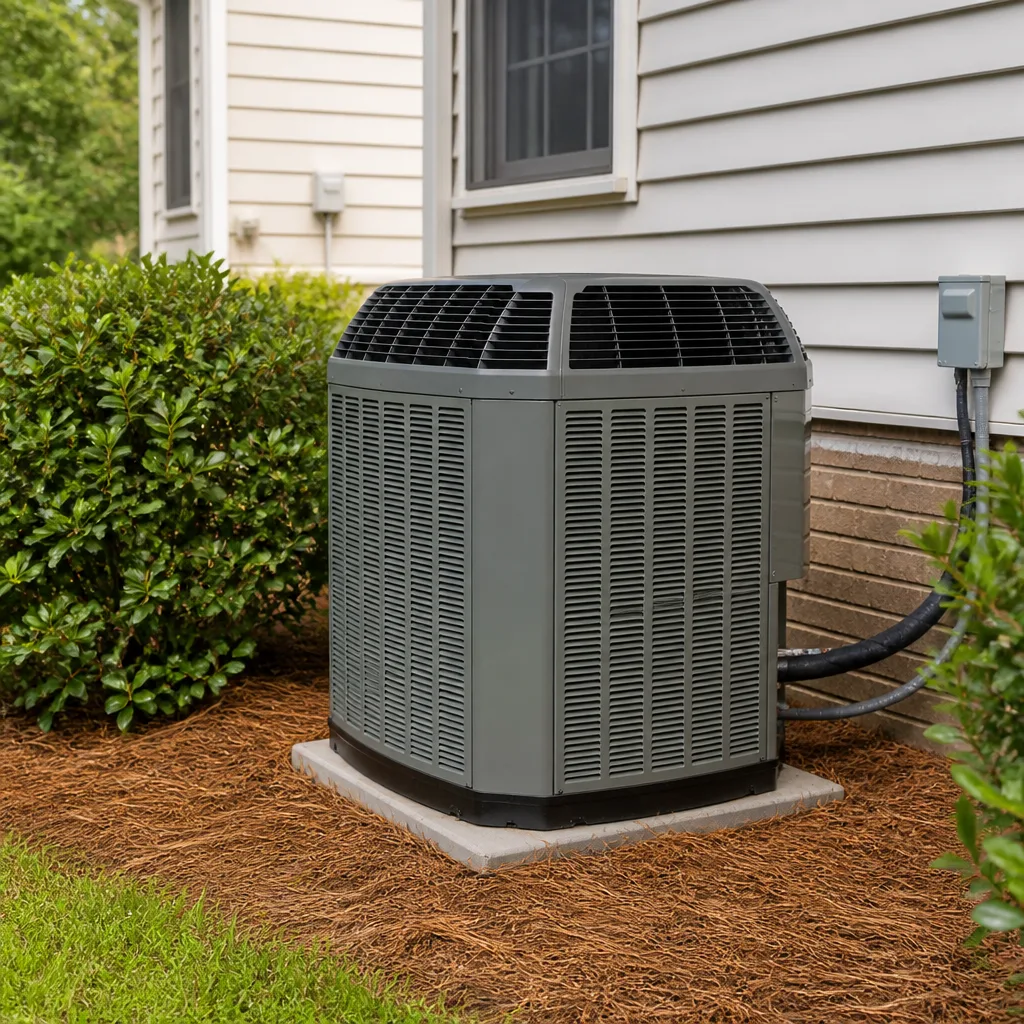 Trane
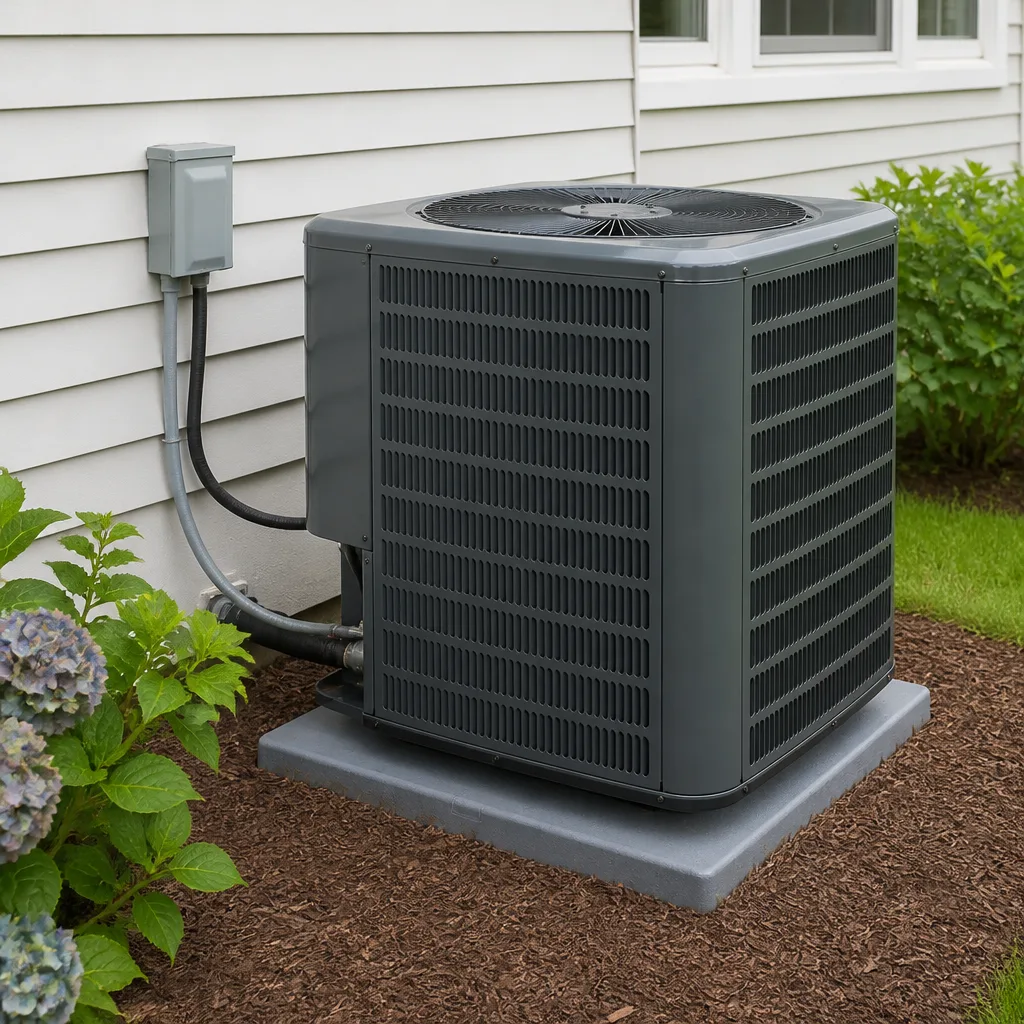 Goodman
Seasonal tune-up and full diagnostic on your Carrier, Trane, or Goodman system - readings shown to you before any repair is proposed
Diagnosis first, numbers second - you approve the repair price before a single part goes in.
Get your free estimateBryant Capacitor Replacement: The Tampa Owner’s Guide
We keep Bryant-compatible dual and run capacitors on our trucks across Tampa, so a diagnosed capacitor failure can usually be handled the same day. A typical Bryant capacitor replacement in Tampa runs $150 – $300 installed, depending on whether your system needs a single run capacitor or a dual capacitor and how accessible the condenser is. Most Tampa homeowners figure out they have a capacitor problem on the hottest afternoon of the month: the outdoor unit hums, the fan doesn’t spin, and the house starts warming up within the hour.
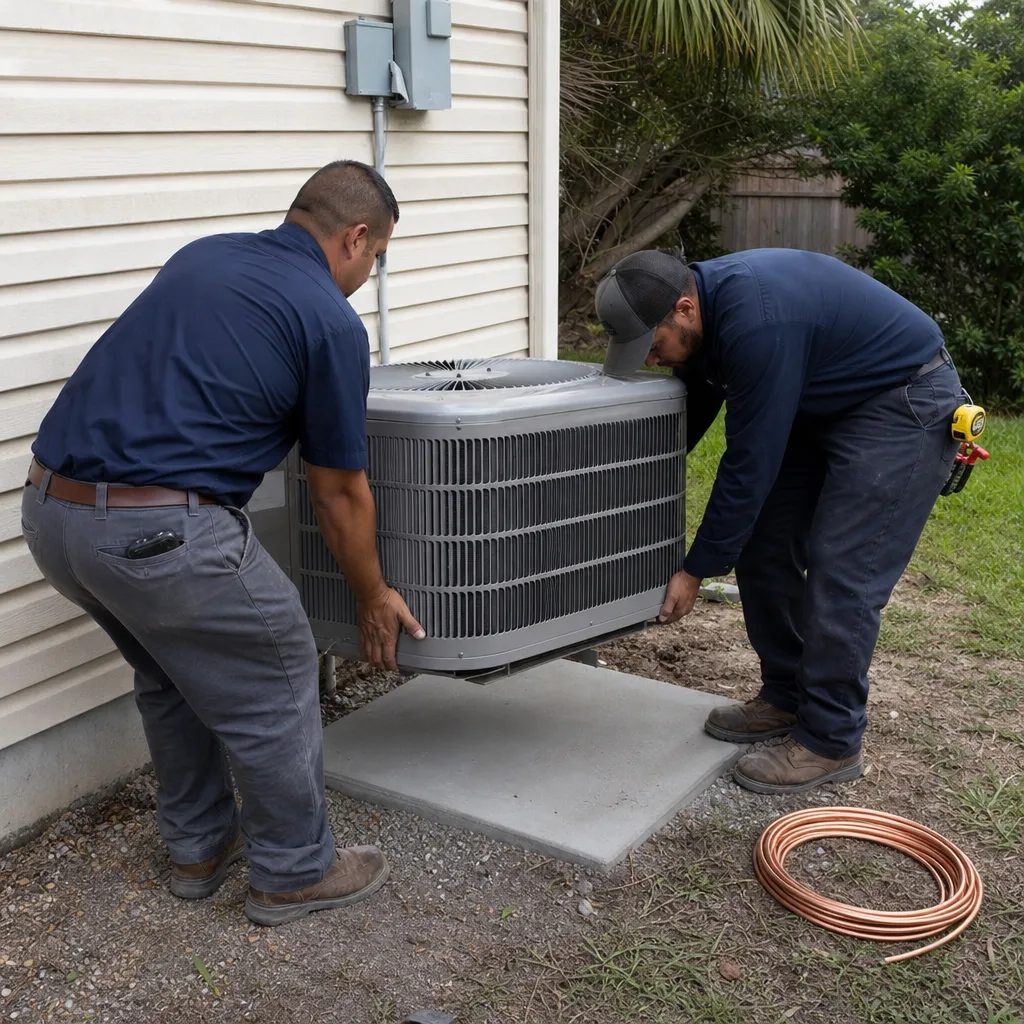
Here’s what that usually looks like. You hear a low electrical hum from the condenser outside. The compressor tries to start, can’t, and shuts off on thermal overload. Inside, the blower is still pushing air, but it’s warm air because the compressor never actually kicked on. Sometimes the fan blades will spin if you give them a push with a stick, sometimes they won’t budge at all. In Tampa’s heat and humidity, a failed capacitor means the difference between a fixable $200 repair and a family sleeping in an 85-degree house by midnight. That’s why we carry the common Bryant specs on the truck instead of making you wait on a parts house run.
Which Bryant Models This Applies To
If you have a Bryant air conditioner, heat pump, or packaged unit made in the last 20 years, it almost certainly uses at least one run capacitor, and most use two or a dual capacitor. The common Bryant lines we replace capacitors on include the Legacy, Preferred, and Evolution series, along with older 10-SEER and 12-SEER units still running in plenty of Tampa neighborhoods. You’ll find the capacitor inside the condenser cabinet, mounted near the contactor, and it looks like a metal cylinder roughly the size of a small soda can or a film canister.
Here’s the compatibility gotcha most people miss: Bryant doesn’t list a single “capacitor part number” for the whole brand. The right capacitor is chosen by microfarad (µF) rating and voltage printed on the side of the old part. A dual capacitor might read 45/5 µF at 440 VAC, while a smaller heat pump fan capacitor could read 5 µF at 370 VAC. You can’t swap in a part with a different µF rating just because it physically fits. The fan will run at the wrong speed, or the compressor will draw too much current and burn out the windings. We match both the microfarad rating and the voltage, and we prefer OEM or spec-matched American-made replacements over cheap generics, because a $15 capacitor that fails again in six months isn’t a bargain when it costs you a second service call in a Tampa summer.
We stock the common Bryant replacement specs on the truck: 35/5, 40/5, 45/5, and 50/5 dual capacitors at 440 VAC, plus the small single-run capacitors (5/7.5/10 µF) used on condenser fan motors. If your unit takes an unusual spec, we can usually have it from a local Tampa supply house the same morning.
Styles & brands we work with
Signs Your Bryant Capacitor Replacement Is Failing
- The condenser hums but the fan doesn’t spin. The capacitor’s job is to provide the extra voltage jolt that gets the fan motor and compressor started. When it’s weak, the motor just sits there and hums until the thermal overload shuts it down.
- You can start the fan manually with a stick. If you push the fan blades and they start spinning, that’s the classic weak-capacitor tell. The motor is fine, the starting jolt isn’t there. Don’t keep doing this; the capacitor can heat up and burst.
- The AC runs for a short time, then shuts off and restarts. This short-cycling is often a compressor struggling against a dying capacitor. It drives up your FPL bill fast and stresses the compressor.
- You see a swollen, bulging, or leaking capacitor. A healthy capacitor is a clean cylinder with a flat top. If the top is domed outward, or there’s oily residue around the base, it’s done. Tampa’s heat kills capacitors by drying out the internal dielectric fluid, which is why failures spike from June through September.
- A clicking sound from the outside unit when it tries to start. The contactor pulls in, but the compressor never actually starts. It may try a few times, then lock out entirely.
If you’re seeing any of these, call us before the heat has a full afternoon to work against you. A capacitor failure is one of the fastest, cleanest repairs in HVAC when it’s caught early, and we can often have the house cooling again the same day.
See the difference
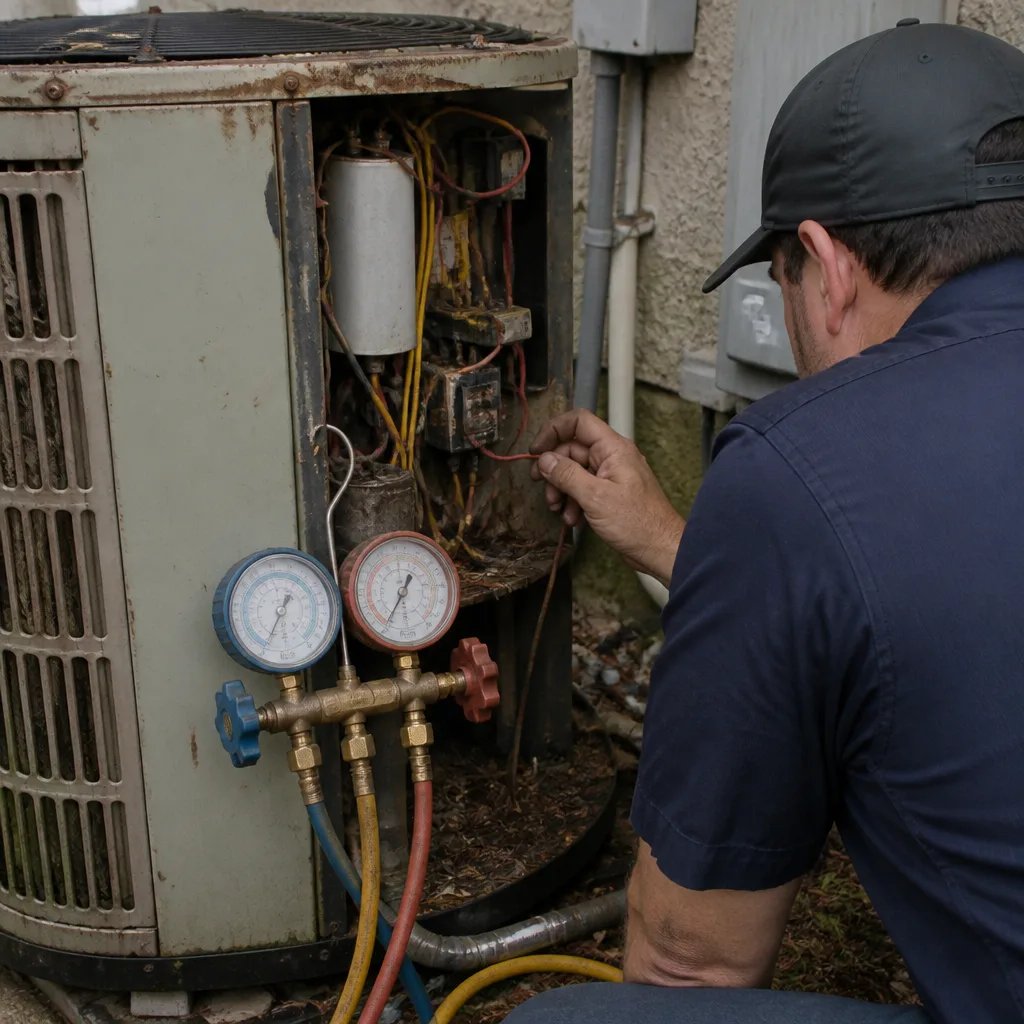 Before
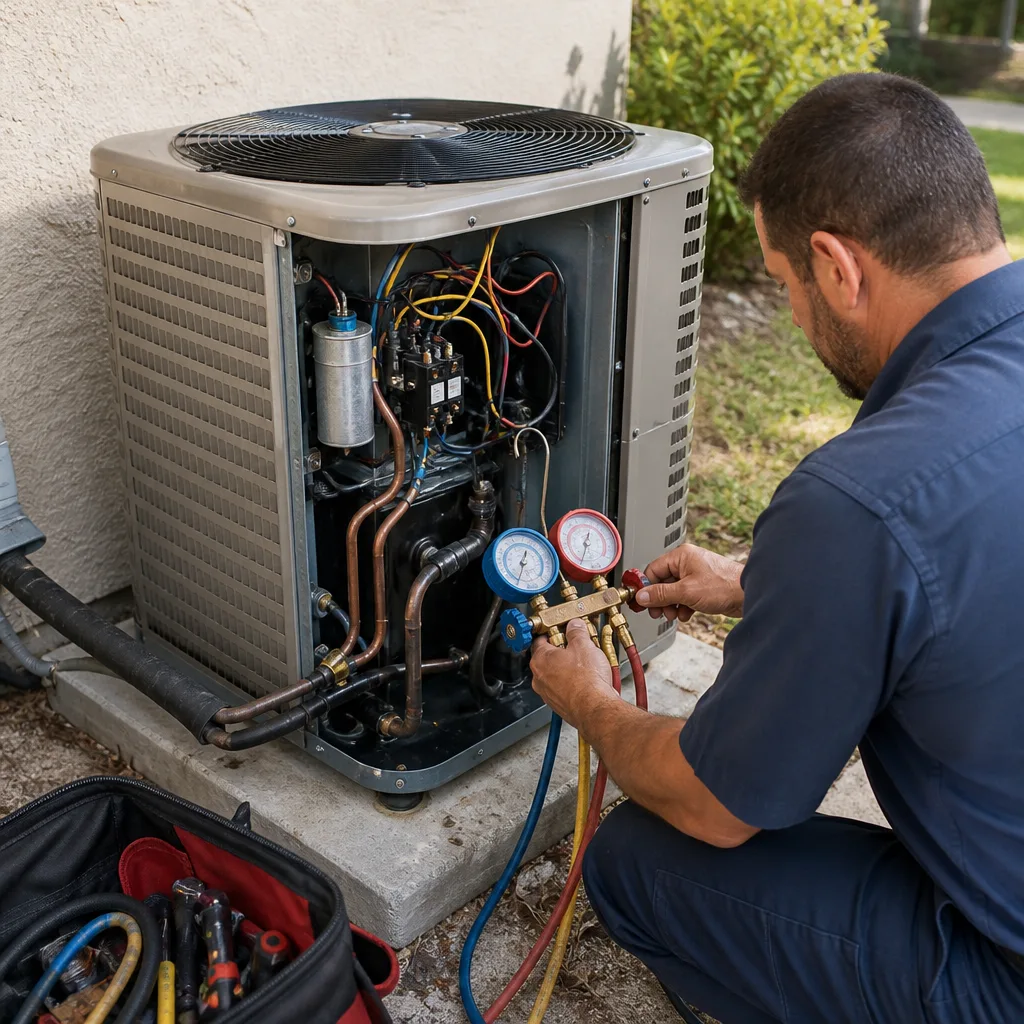 After
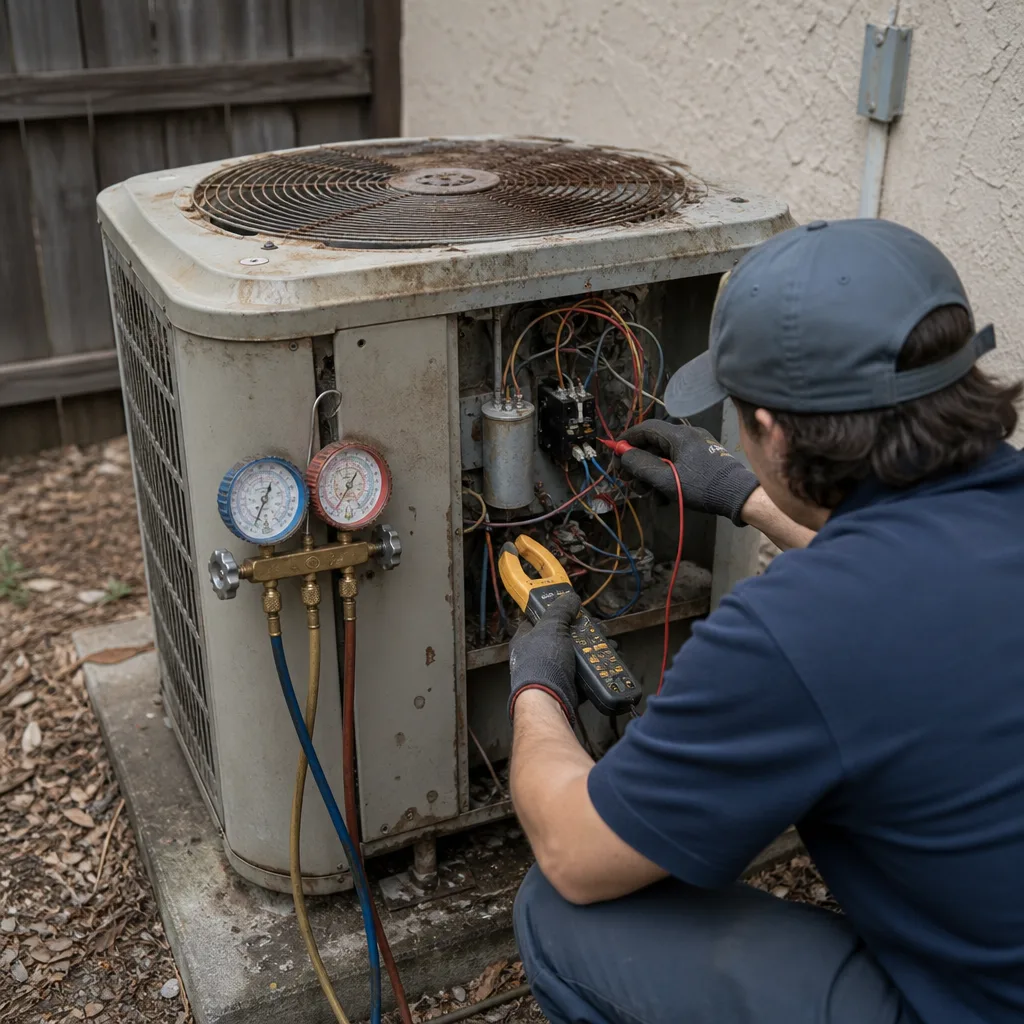 Before
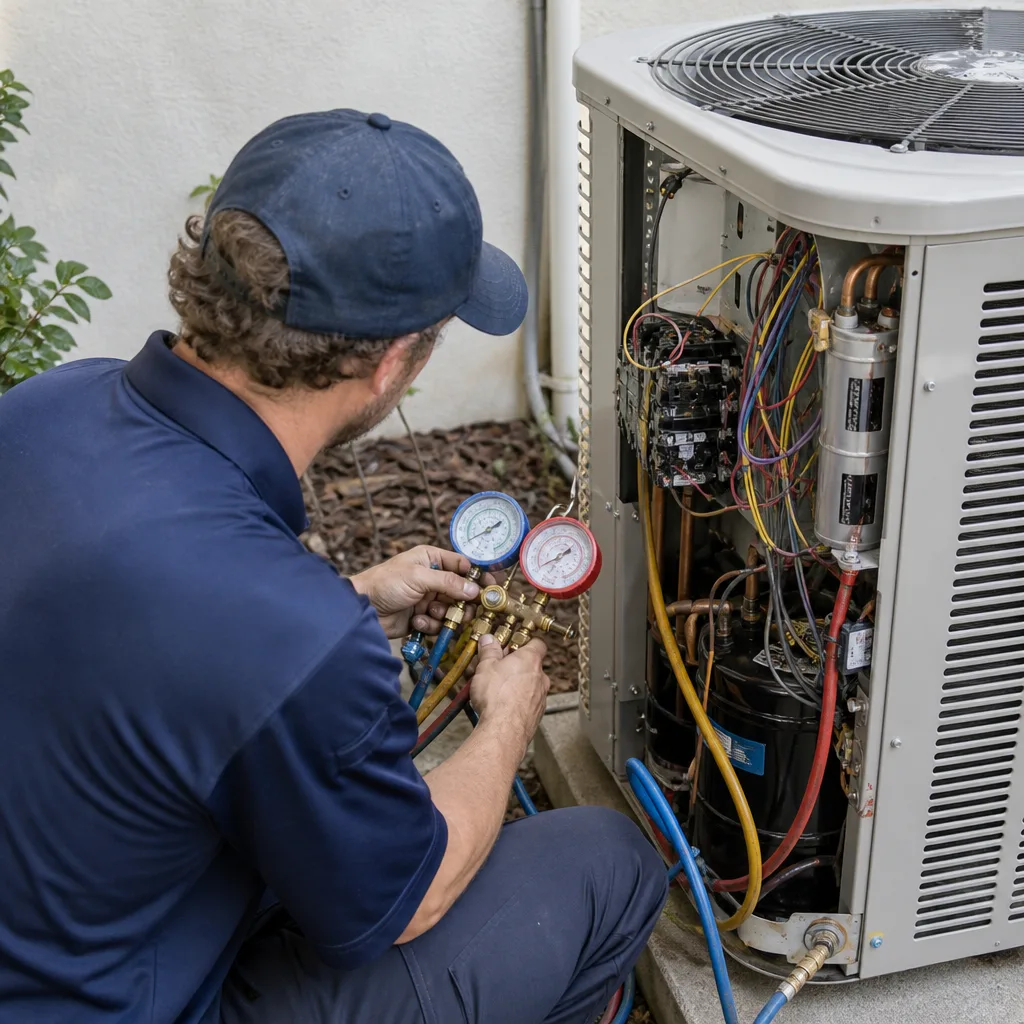 After
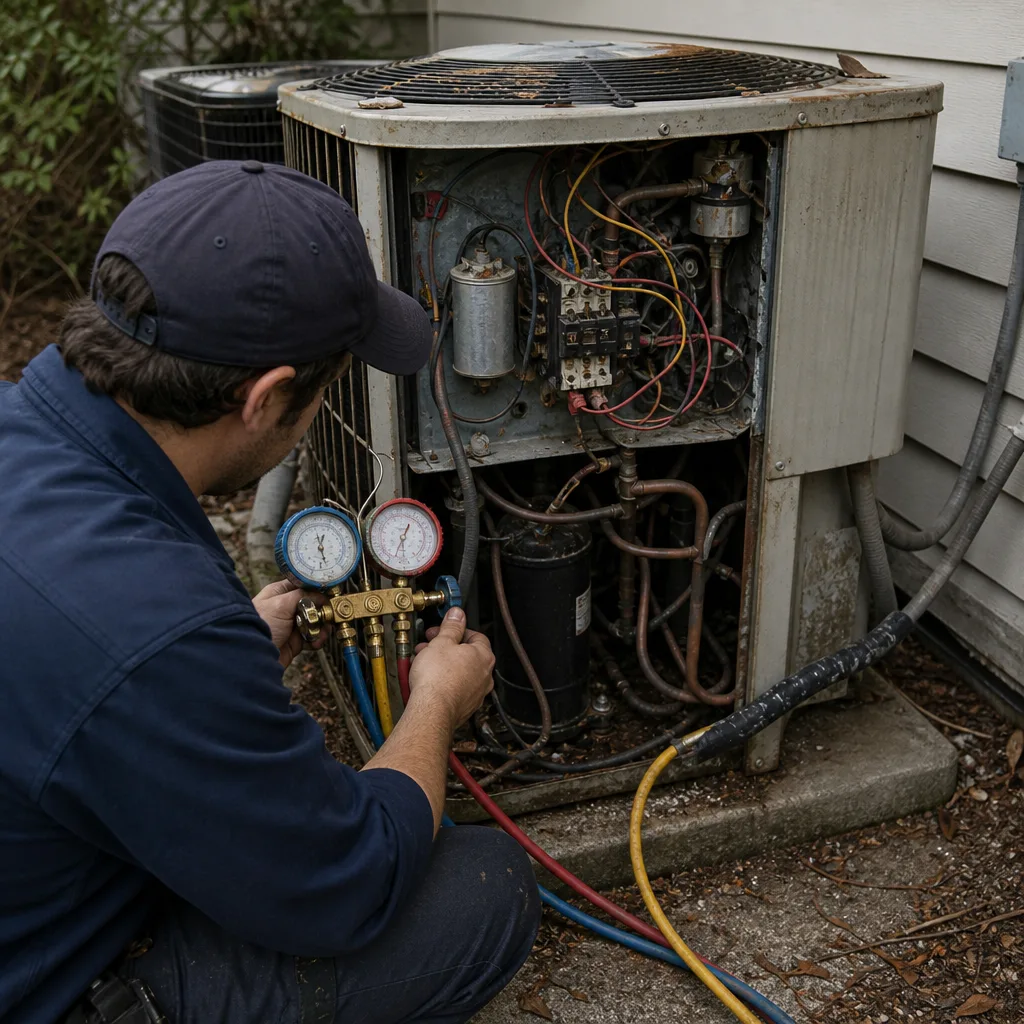 Before
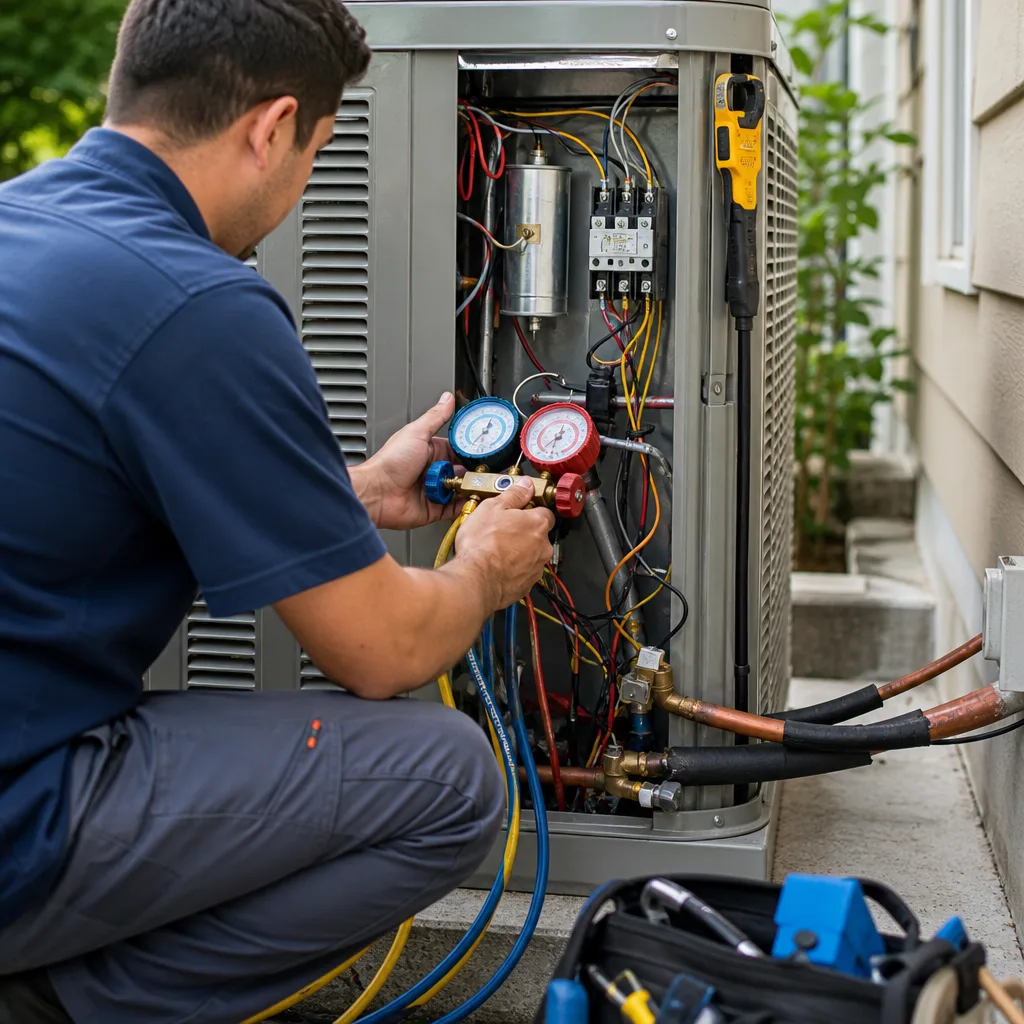 After
Replacement Cost & What’s Included
For Tampa homeowners, a Bryant capacitor replacement typically runs $150 – $300 installed. Here’s the honest math behind that number.
- The part itself: $15 – $25 for a quality dual or run capacitor, whether we’re using a Bryant OEM part or a spec-matched American equivalent.
- Diagnosis time: We don’t guess. We test the old capacitor with a meter that measures actual microfarads against what’s printed on the label, so you know it was actually failing before we replace it.
- Labor and travel: The swap itself is quick, but you’re paying for a trained technician to do it safely, dispose of the old part, and verify the amp draw and running voltage after the swap.
Every capacitor replacement includes the 365-Day Done Right Promise. If that new capacitor fails within a year, we replace it. No runaround, no fine print, no second labor charge. We give you a written price before touching a single wire, and our techs follow the C.A.R.E. code on every visit: Clean up like it’s their own home, Ask before moving anything, Respect your family’s time, and Explain the price before the work starts. Shoe covers and drop cloths are automatic, and you get a photo of the clean-up before the crew leaves.
DIY or Call Us?
Here’s the honest split. There are safe checks you can do yourself: replace the air filter, verify the thermostat is set to cool, and check that the breaker for the AC hasn’t tripped. You can look through the top of the condenser and see if the capacitor is visibly swollen or leaking. That’s useful information to have when you call.
But this is not a part to replace yourself. A capacitor stores voltage even after the power is off, and it can discharge through you hard enough to cause serious injury. The contacts inside the condenser cabinet carry 240 volts, and one wrong move can ruin the compressor. Tell me what you’re hearing, and I’ll tell you what it means. We’ll send a background-checked tech who tests before replacing, charges a written price, and does the job right the first time. If you’re near Hyde Park or anywhere in Tampa, call (728) 212-0500.
FAQs
A Bryant capacitor in Tampa’s climate typically lasts 5 – 10 years, but the heat, humidity, and daily summer cycling shorten that lifespan compared to cooler climates. We see plenty of 7-year-old units on their second capacitor by the time a Tampa August rolls around.
No. Capacitors are sealed components, and there’s no safe or reliable way to rebuild one. Replacement is the only correct repair, and it’s one of the least expensive parts on your entire Bryant system.
The swap itself takes about 30 – 45 minutes, including testing the old part, installing the new one, and checking amp draw and voltage afterward. Most Tampa jobs are done in a single visit, same day.
We stock the common Bryant dual-capacitor specs (35/5, 40/5, 45/5, 50/5 at 440 VAC) plus smaller fan-run capacitors on our trucks serving Tampa. If your unit needs an uncommon spec, we can usually source it from a local supply house the same morning.
Written by Luis Serrano, Owner, Meadowsweet Heating and Air Tampa at Meadowsweet Heating and Air Tampa, serving Tampa and nearby areas.