
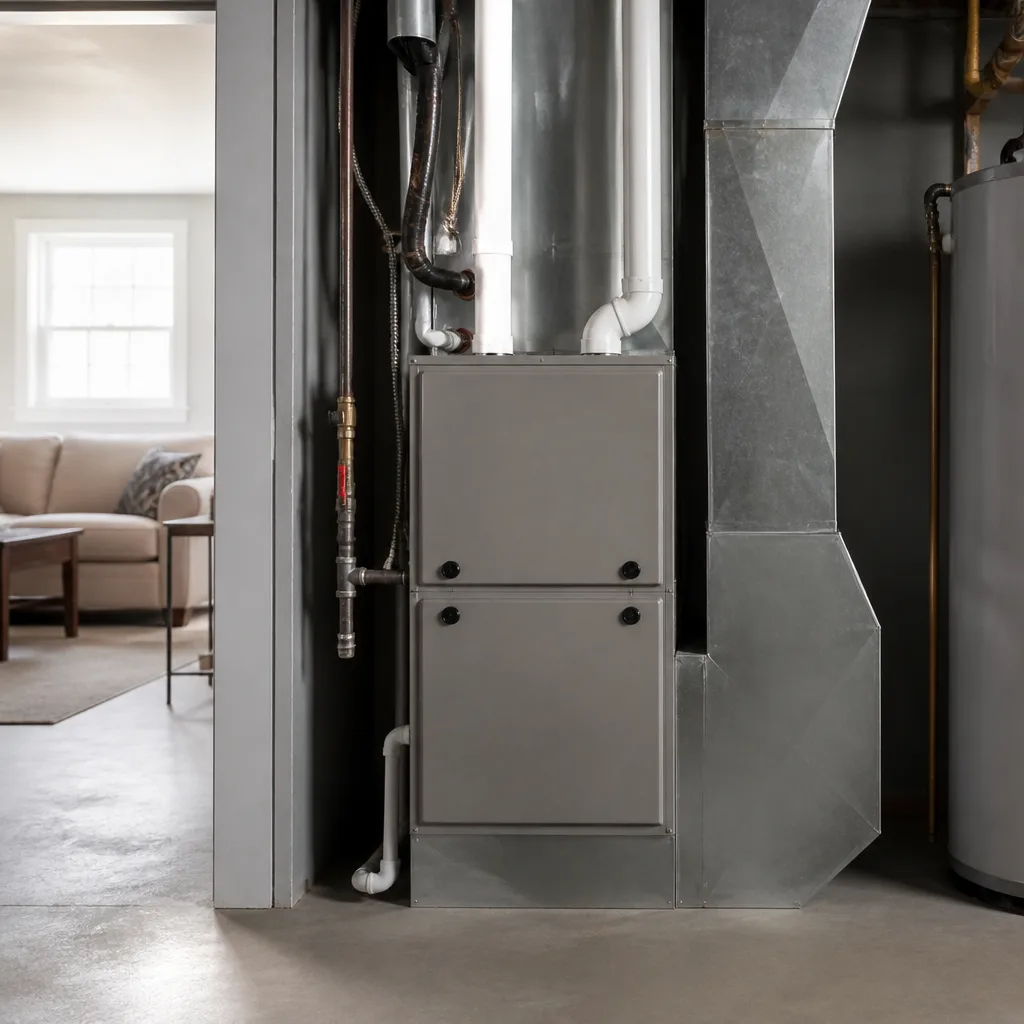
 Furnace & heating
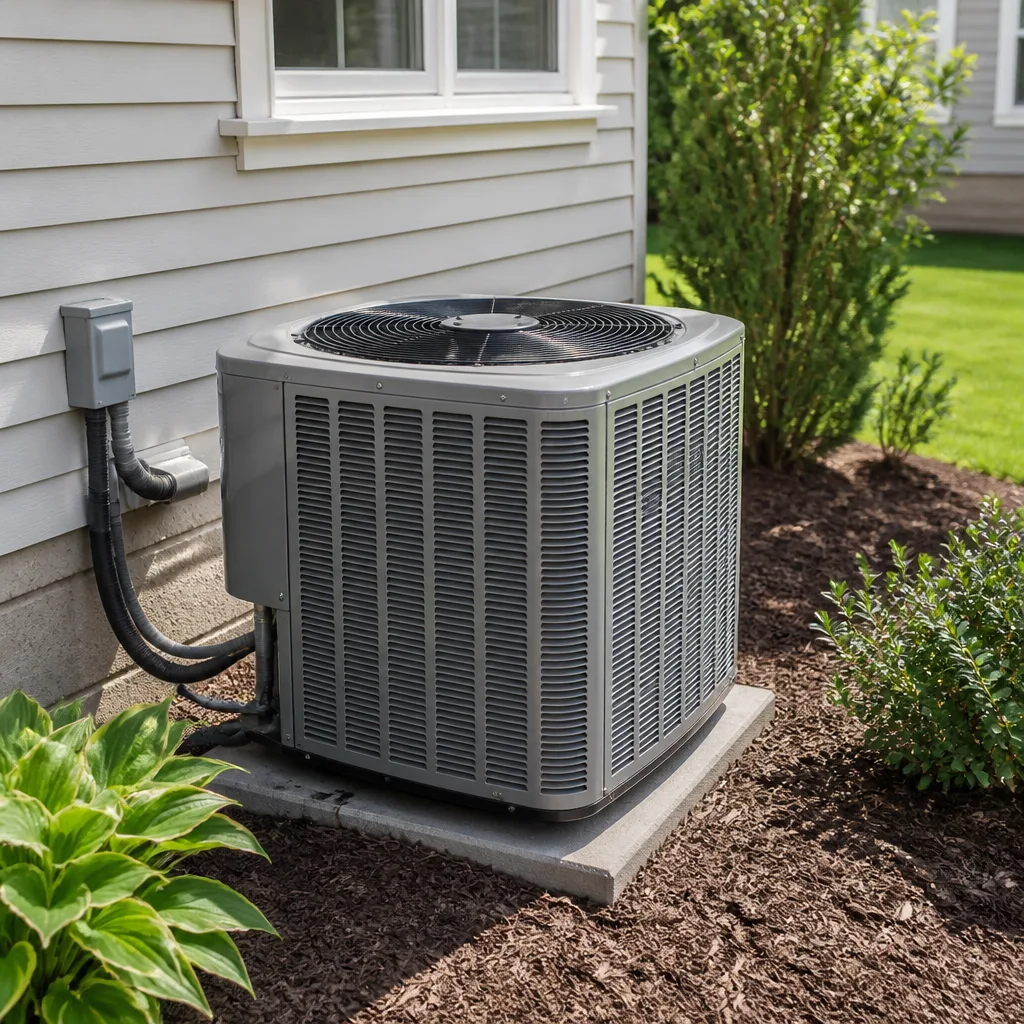 AC repair
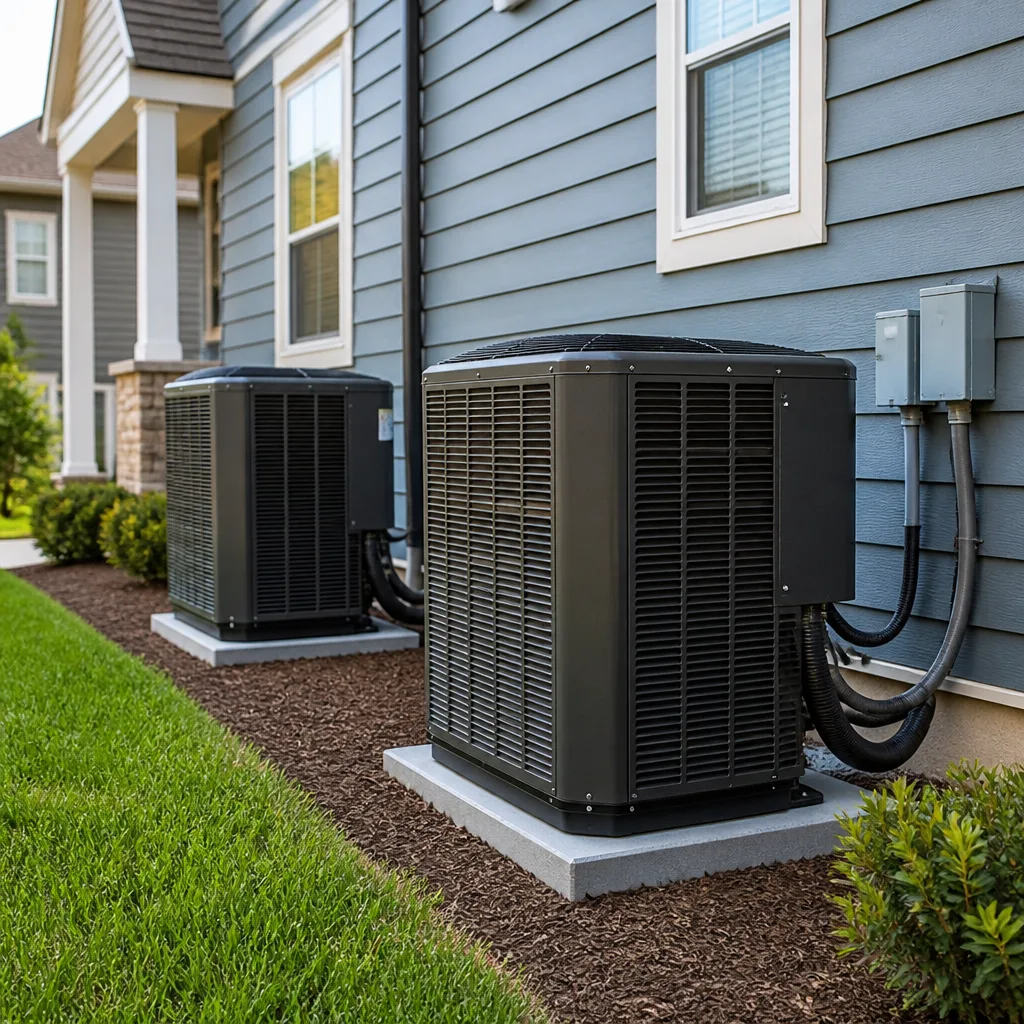 Heat pumps
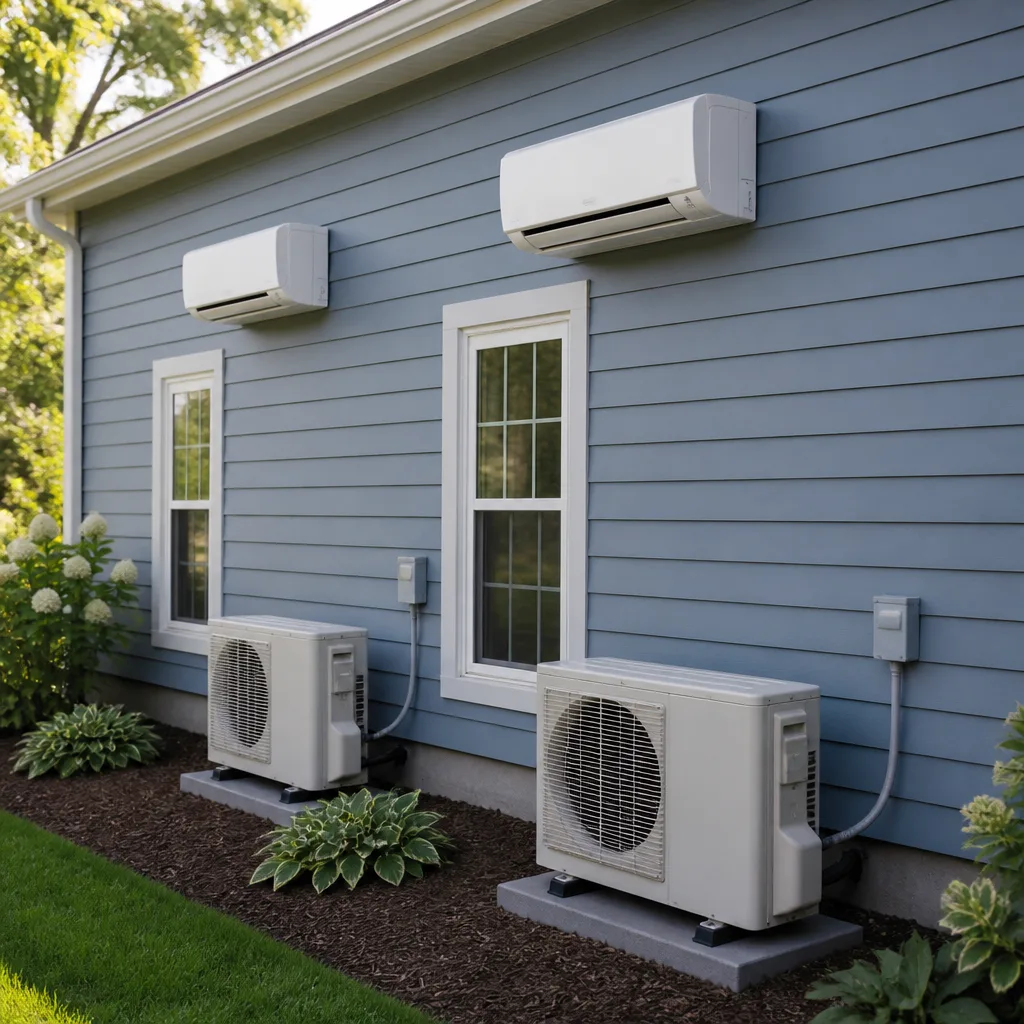 Ductless mini splits
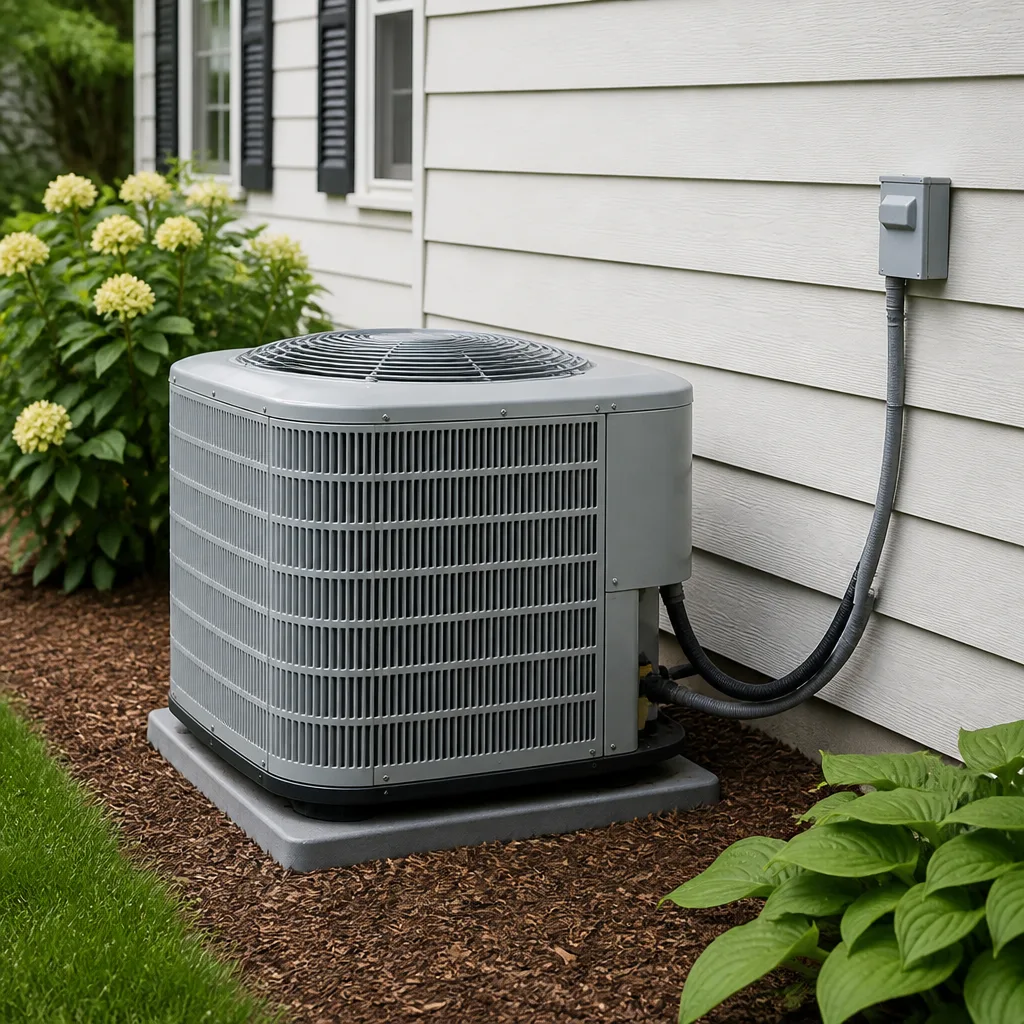 Carrier
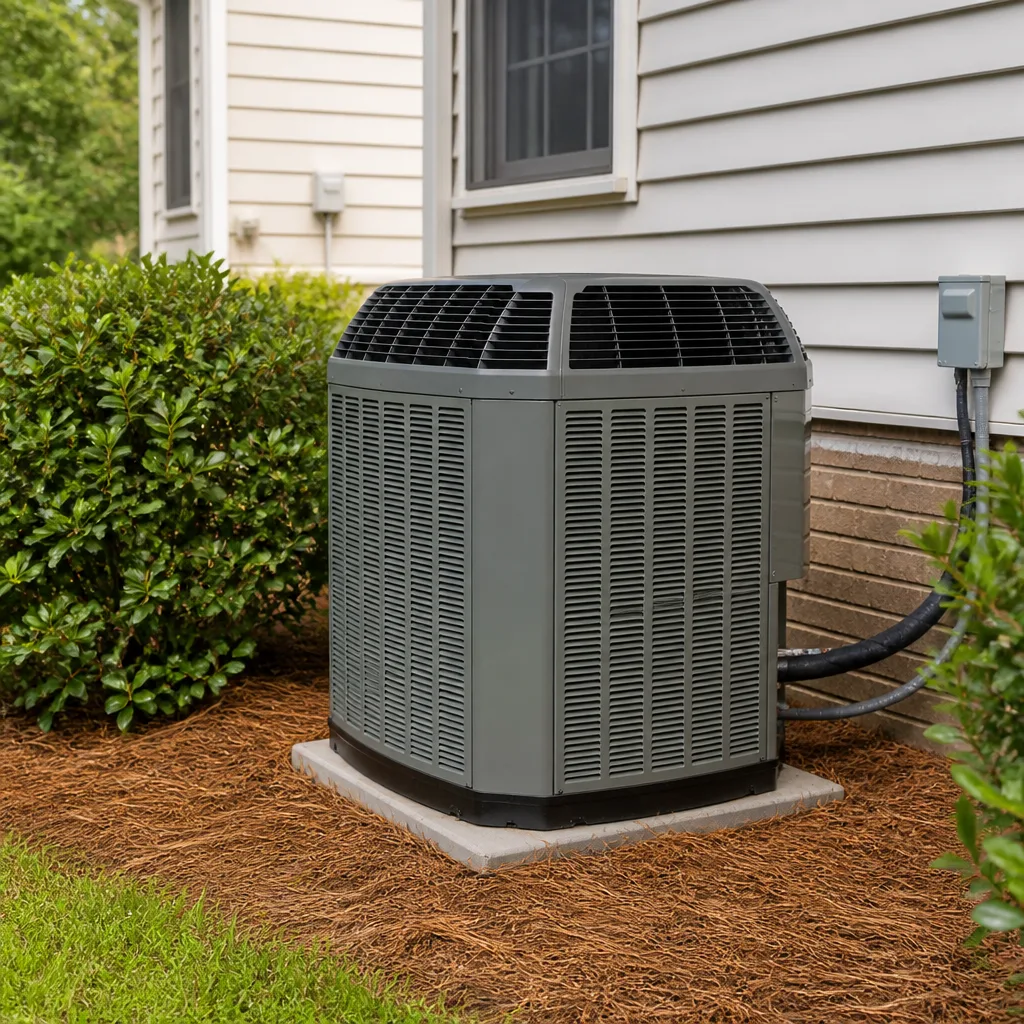 Trane
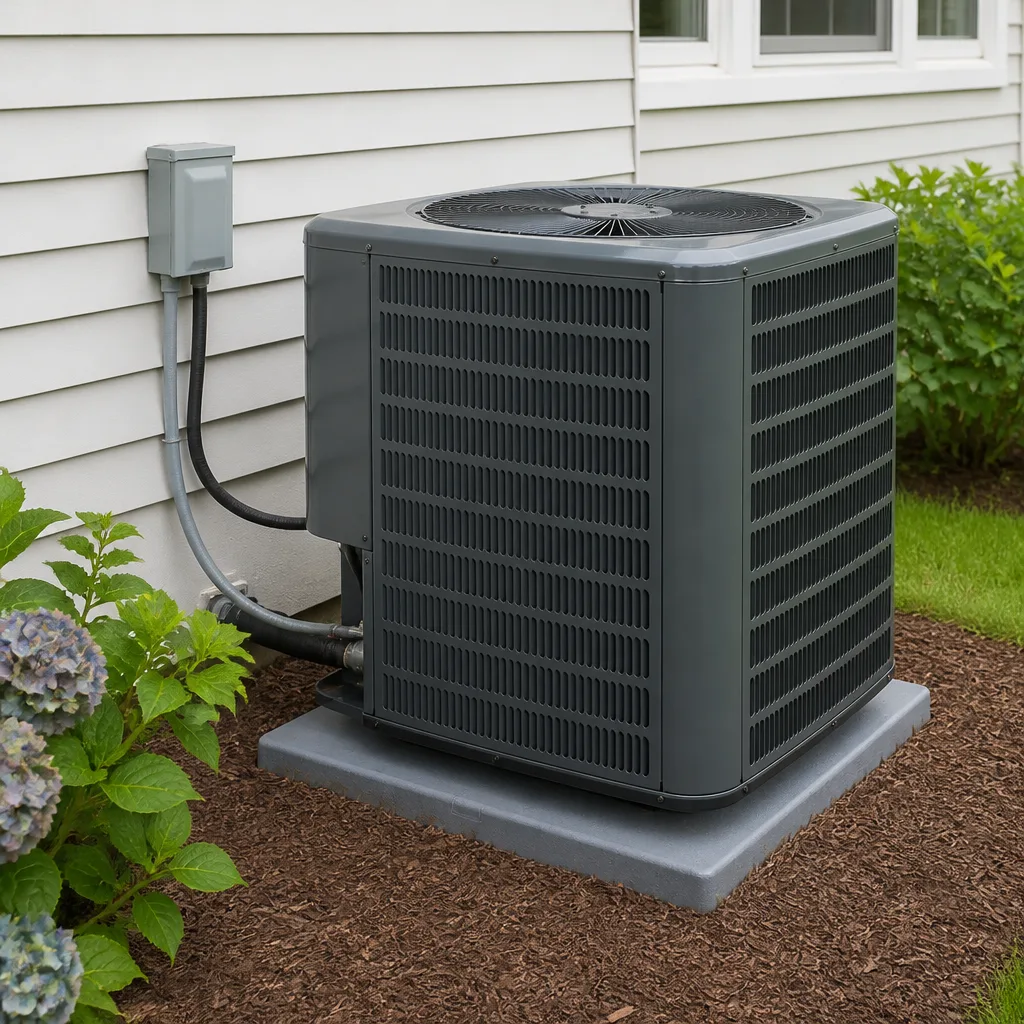 Goodman
Seasonal tune-up and full diagnostic on your Carrier, Trane, or Goodman system - readings shown to you before any repair is proposed
Diagnosis first, numbers second - you approve the repair price before a single part goes in.
Get your free estimateGoodman Capacitor Replacement: The Tampa Owner’s Guide
We stock Goodman-compatible capacitors on our trucks and replace them same-day in most Tampa neighborhoods, with installed prices typically running $180 – $340 depending on the capacitor type and your unit’s access. Most homeowners discover the problem the hard way: the outdoor unit hums but the fan won’t spin, or the compressor clicks and gives up. In Tampa’s heat, that’s not a small annoyance. A capacitor that’s failing usually gives you a few warning signs first, and catching it early means you’re back to cool air before the house ever gets uncomfortable.
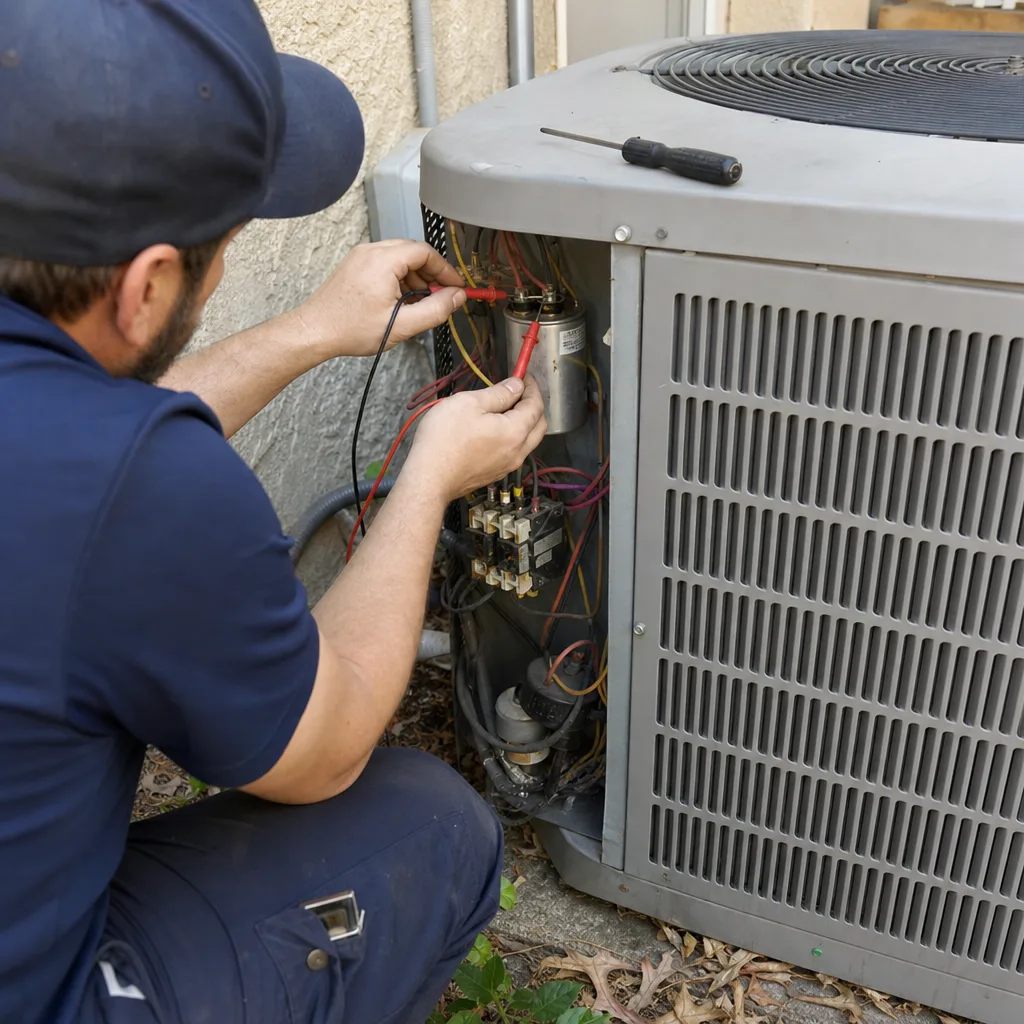
Here’s the honest picture of what a Goodman capacitor does, what it costs to replace here in Tampa, and how to know if that’s actually what’s wrong with your system.
Which Goodman Models This Applies To
Goodman uses capacitors across nearly every residential condenser and air handler line they’ve built in the last two decades: the GSX, GSZ, GPG, GPH, and ComfortNet series all rely on run capacitors to keep motors turning, and dual-run capacitors (one can, two jobs) are standard on most Goodman condensing units from 2-ton up to 5-ton. If you’re in a Tampa home with a Goodman GSX16 or older GSX14, you’re almost certainly dealing with a dual-run capacitor that serves both the compressor and the condenser fan motor.
The compatibility gotcha most people hit: Goodman has switched capacitor brands and specifications across model years, so the part number printed on your old capacitor is the only reliable way to match it. Read the label. You’re looking for a microfarad (µF or MFD) rating and a voltage rating. Typical Goodman dual-run values are 35/5 µF, 40/5 µF, 45/5 µF, and 50/5 µF, rated for 370 or 440 volts. A 440V-rated capacitor can replace a 370V in the same microfarad value, but not the other way around. We match the microfarad rating exactly and never “close enough.”
On OEM versus aftermarket: Goodman’s factory capacitors are solid, but brands like Titan HD, Mars, and Amrad make replacements that routinely outlast original parts in Florida conditions. We carry both. The difference matters less than matching the spec, and we’ll show you the old part and the new part side by side before installing.
One more thing worth knowing: Meadowsweet Heating and Air Tampa is an independent service provider. We’re not affiliated with Goodman, but we work on their equipment every week and stock parts for Goodman alongside Carrier, Trane, and Lennox.
Styles & brands we work with
Signs Your Goodman Capacitor Replacement Is Failing
- The outdoor unit hums but the fan doesn’t spin. That hum is the compressor trying to start without the stored energy a healthy capacitor provides. You’re hearing a motor that’s locked out, and every failed start attempt stresses the compressor windings.
- The condenser fan spins slowly, or only with a push. A weak capacitor gives the fan motor less starting torque, so it struggles to get moving. If you nudge the blade with a stick and it finally spins, that’s a failing capacitor, not a dead motor.
- Your AC shuts off on hot afternoons, then restarts later. Tampa’s afternoon heat raises refrigerant pressures, which makes the compressor work harder. A weak capacitor can’t deliver enough starting power when pressures peak, so the system trips its overload.
- The top of the capacitor looks swollen or leaking oil. Capacitors are sealed cans, and when the dielectric inside breaks down, gases build up and bulge the top. An oily film at the terminals is another tell. Either one means the part is done.
- You hear a clicking sound from the outdoor unit. That’s the compressor’s start relay clicking on and off as the system tries and fails to start. It’s a repetitive, mechanical click, and it’s a sign the capacitor isn’t supplying the kick the compressor needs.
See the difference
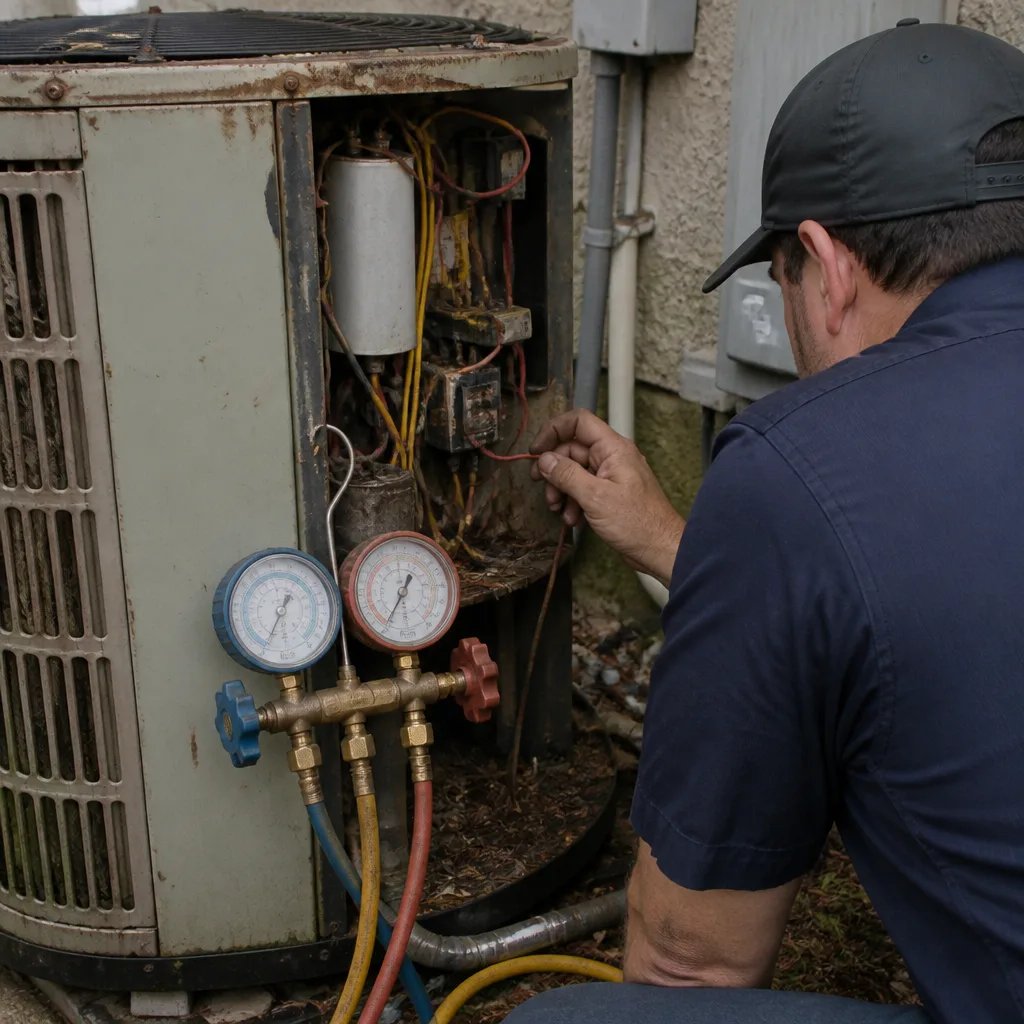 Before
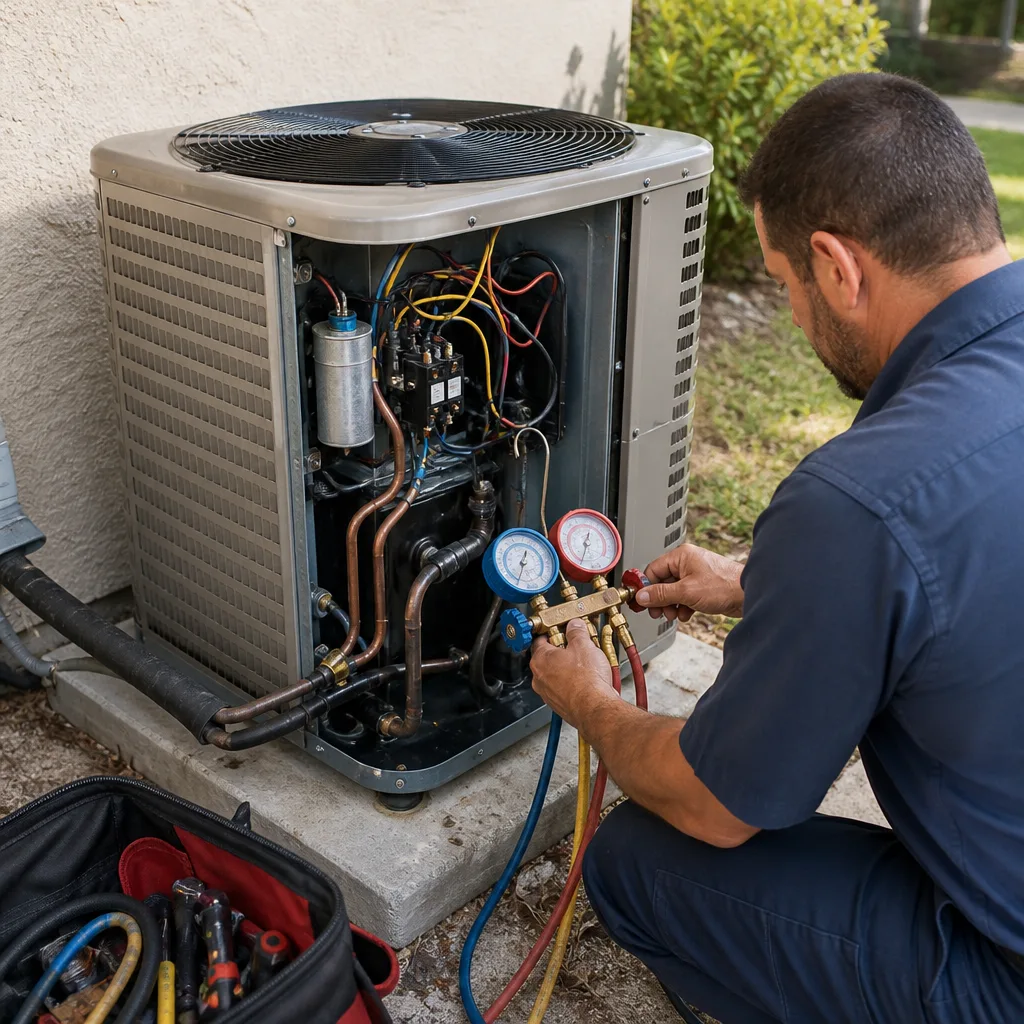 After
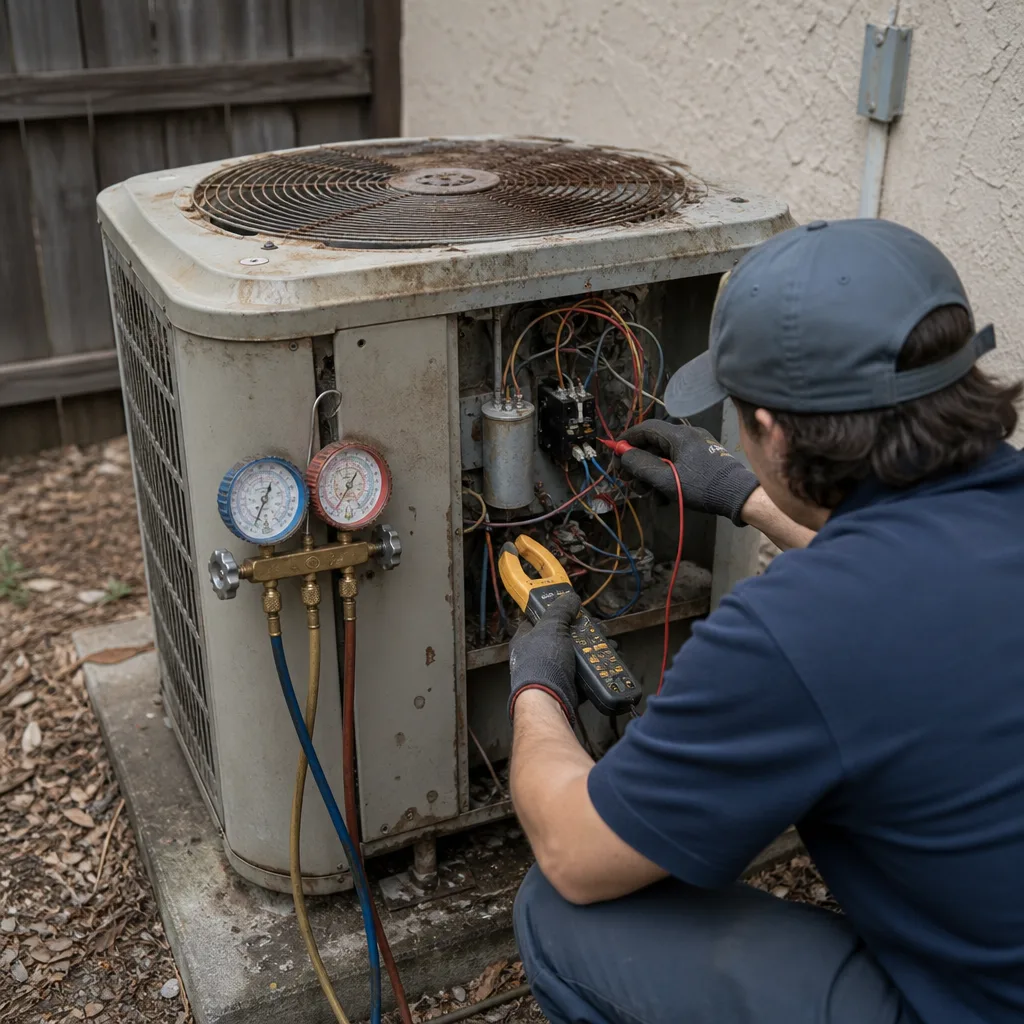 Before
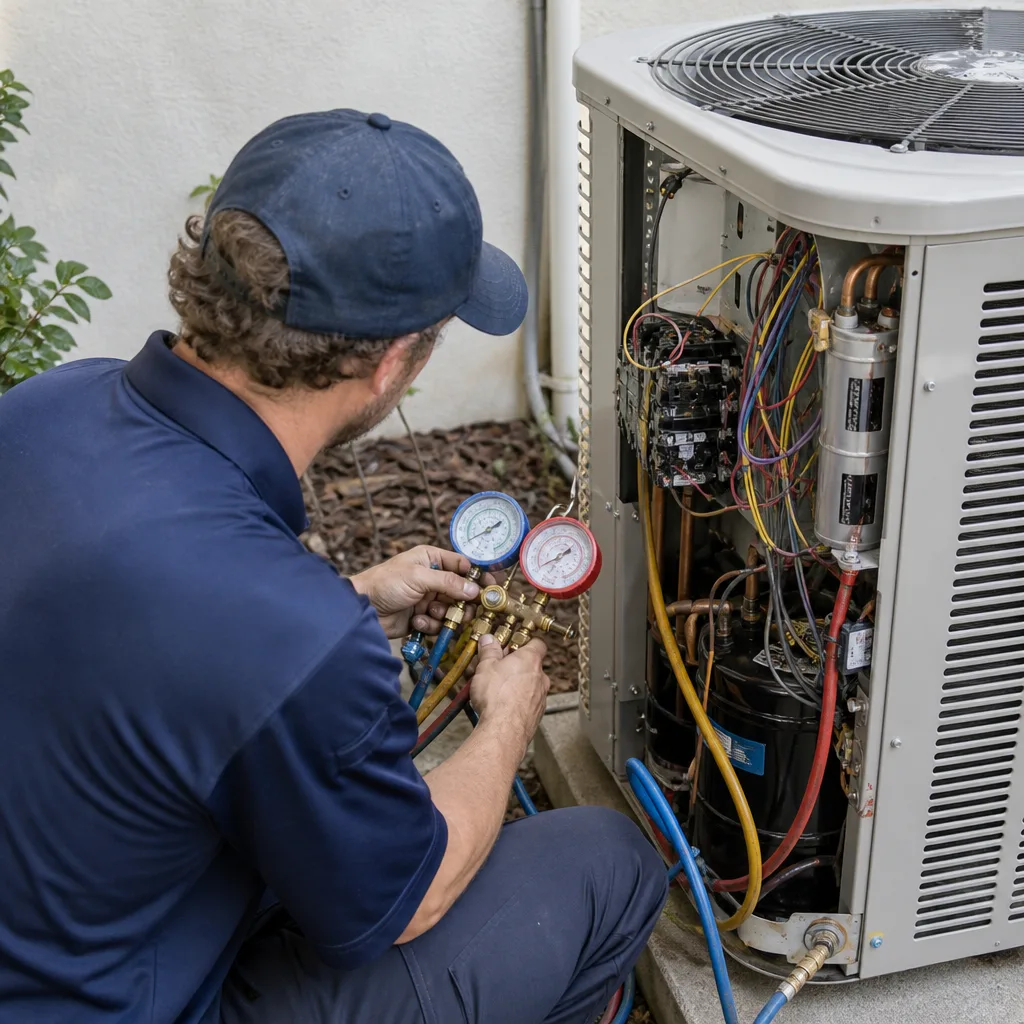 After
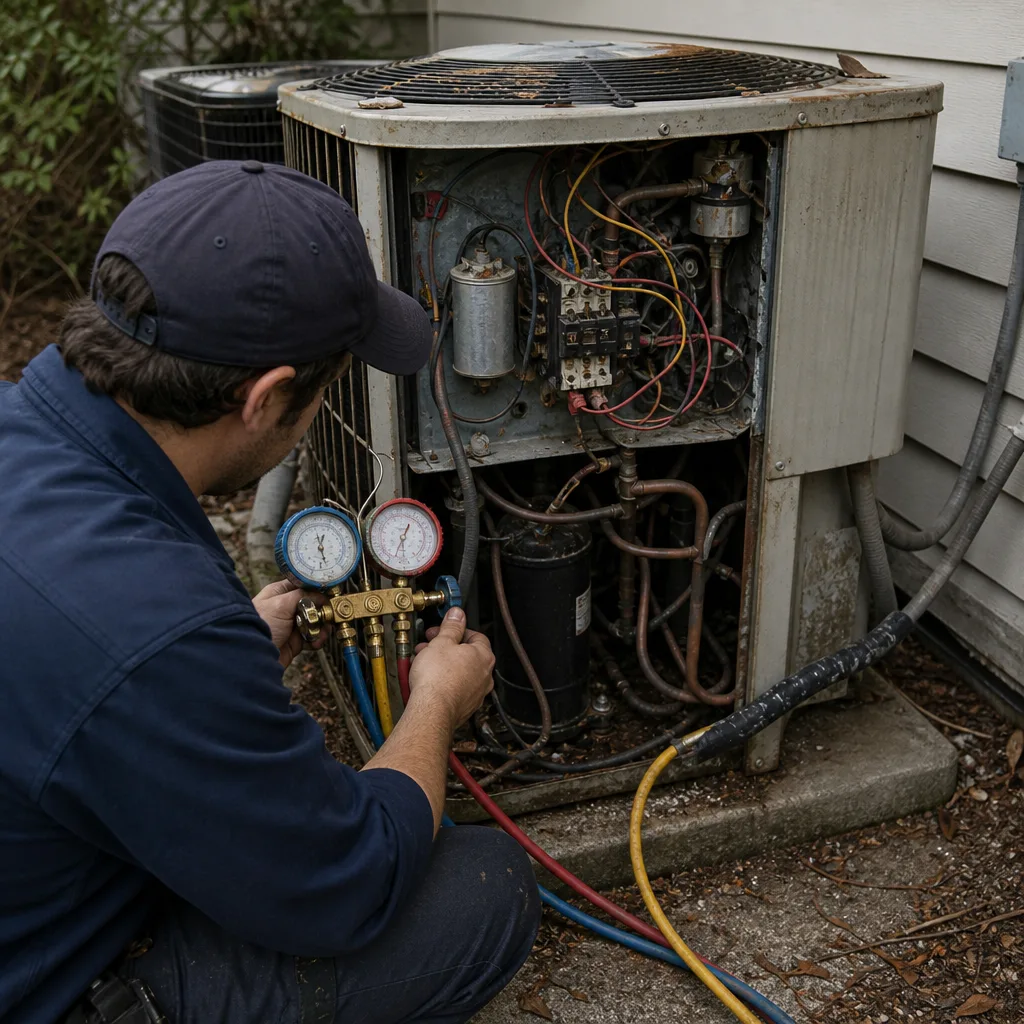 Before
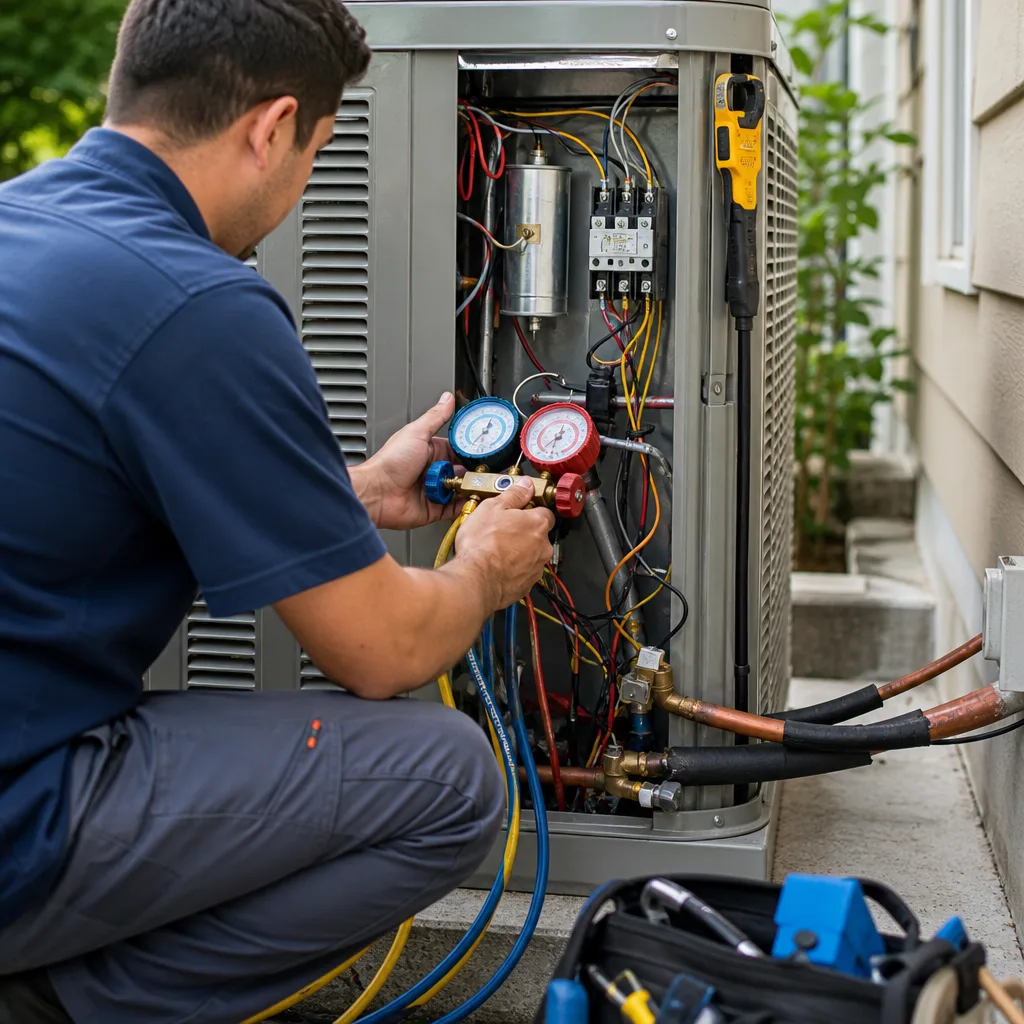 After
Replacement Cost & What’s Included
The part itself is modest: a Goodman-compatible dual-run capacitor runs $15 – $35, whether OEM or a quality aftermarket brand. What you’re really paying for in a Tampa capacitor replacement is the service call, the diagnosis, the install, and the guarantee behind it. Our typical installed capacitor replacement runs $180 – $340, which falls inside the normal AC repair range of $150 – $650 for this market.
That price includes a written quote before we touch anything, the capacitor matched to your Goodman’s exact microfarad and voltage rating, installation, and a system start-up check to confirm the compressor and fan are drawing proper amperage. The 365-Day Done Right Promise covers the work. If something’s not right, we make it right, no runarounds.
What moves the price at the upper end: units in tight attics or hard-to-reach closets, capacitors that require wiring adaptations, or older systems where we find additional wear while we’re there. You’ll know the exact number before the work starts, not after.
DIY or Call Us?
There’s one honest thing to say up front: a capacitor stores enough voltage to hurt you even after the power is off at the breaker. The terminals can hold a charge, and touching the wrong two points completes a circuit through you. If you’re not trained to discharge a capacitor safely, don’t open the service panel. That’s not a scare tactic. It’s the same reason we tell our own families to call us.
What you can safely do: look at the outdoor unit and confirm whether the fan is spinning, listen for that humming or clicking sound, and check whether the capacitor’s top is bulging through the access panel if it’s visible. Tell me what you’re hearing, and I’ll tell you what it means. That phone call costs nothing, and you’ll get a straight answer about whether you’re describing a capacitor or something else. Call us at (728) 212-0500 and we’ll talk through what your Goodman is doing, then set an arrival window that works with your family’s routine.
FAQs
A Goodman capacitor typically lasts 5 – 10 years in Tampa, but Florida’s heat and humidity push capacitors harder than almost anywhere else in the country. The summer heat soak combined with daily run cycles breaks down the internal dielectric faster, which is why 7 years is a realistic average here.
No. Capacitors are sealed units, and once the internal dielectric breaks down, there’s nothing to repair. Replacement is the only fix. The good news is that capacitors are one of the least expensive parts in a Goodman system to replace, and the swap takes under an hour in most Tampa homes.
A typical Goodman capacitor replacement takes 30 – 60 minutes from the time we arrive, including the start-up check that confirms your compressor and fan are drawing correct amperage. Longer jobs usually mean the condenser is in a tight spot or we found something else during the visit.
Yes. We carry a range of Goodman-compatible dual-run and run capacitors in the most common microfarad values (35/5 through 50/5 µF, 370V and 440V), plus hard-start kits for older compressors. If you’re near Hyde Park, Davis Islands, or anywhere in between, there’s a good chance we can replace a failed capacitor on a first visit and have your system cooling again the same day. Call (728) 212-0500 for today’s availability.
Written by Luis Serrano, Owner, Meadowsweet Heating and Air Tampa at Meadowsweet Heating and Air Tampa, serving Tampa and nearby areas.